Snow Villages in Japan: Where to Find the Country’s Most Magical Winter Scenery
Introduction
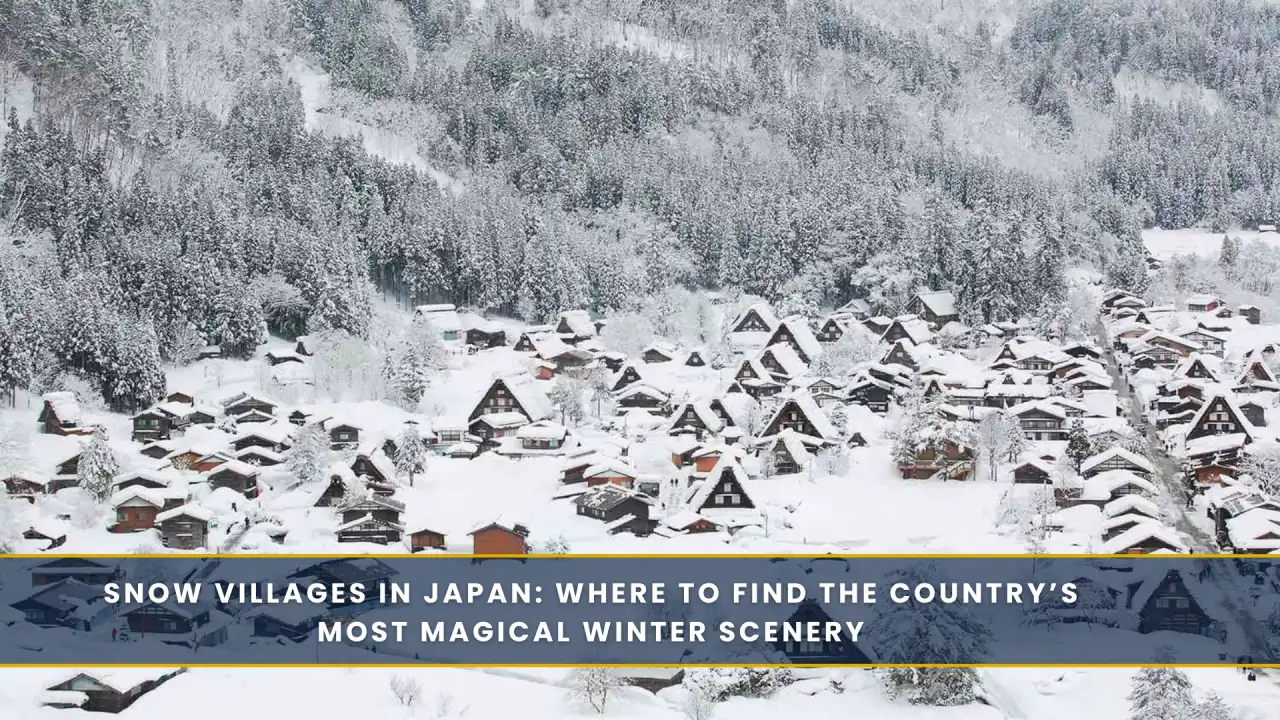
Winter in Japan is not like winter anywhere else. Cities like Tokyo keep buzzing, lights flashing, people rushing, and yet in the countryside, everything just slows down. Quiet. Soft. White. Entire villages vanish under heavy snow. Roofs sag under their weight. Narrow lanes glow faintly in the warm evening light. You can almost hear the snow settling. It’s weirdly peaceful. That’s what people mean when they talk about snow villages in Japan, places where time seems to hit pause, and winter isn’t just endured, it’s actually respected.
This isn’t a guide for snapping Instagram pics of snowbanks. It’s for wandering through villages where locals shovel snow together, where your breath fogs up the window as someone serves a steaming bowl of noodles, and where winter doesn’t feel staged; it feels lived in. So, if you’re ready, let’s wander around some of the most magical snowy corners of Japan, where life and snow exist side by side.
Why Japan’s Snow Villages Are Different
Here’s the thing: Japan doesn’t act like snow is a nuisance. In these villages, it’s part of life. Roads are built for it. Houses are steeped in it. Festivals celebrate it. People just live with it. And somehow, everything still feels organized. Trains run on time in blizzards. Shops open even when the snow is up to your knees. Life doesn’t stop; it just slows down.
Why do these villages stick in your memory:
- Snow doesn’t feel fake or touristy; it’s real.
- Villages are actual communities, not stage sets.
- Traditions continue, like clockwork.
- Sunsets and nightfall change the landscape completely.
Ginzan Onsen: Nights That Glow
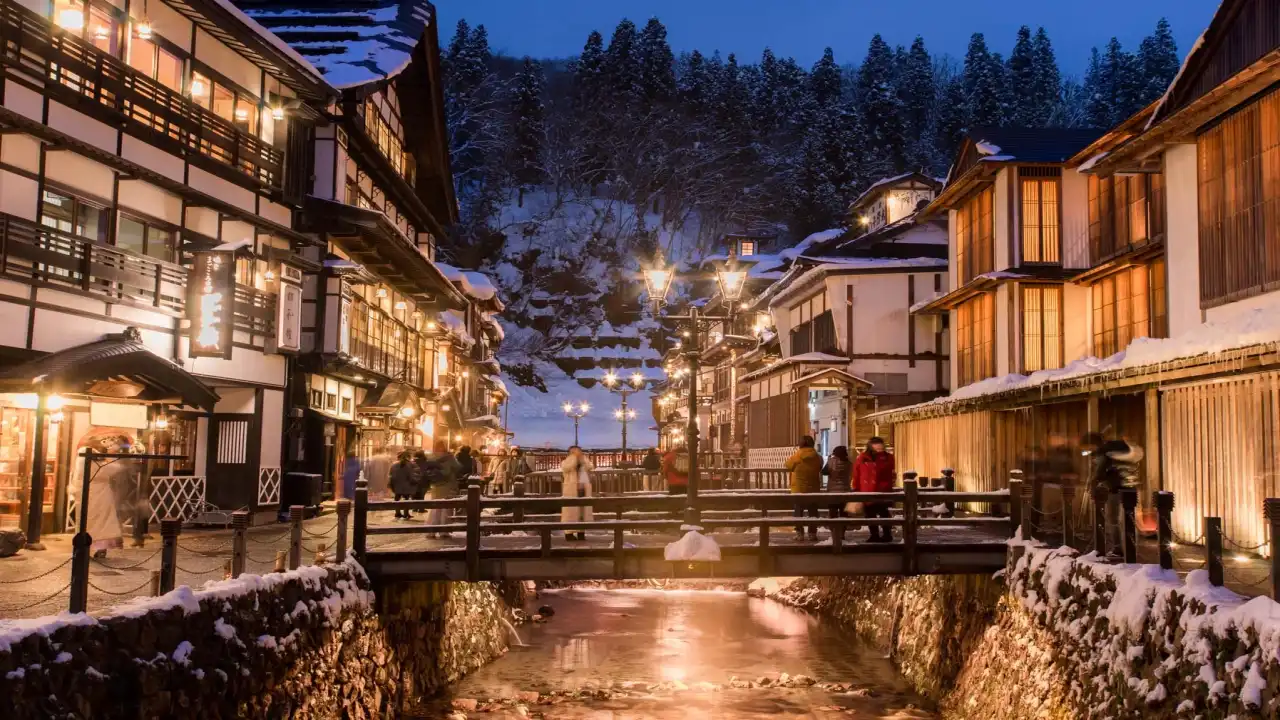
Ginzan Onsen is narrow. Tiny. But atmospheric. Wooden ryokan line a river, bridges dusted in snow, rooftops gleaming white. When the gas lamps flicker on at dusk, it’s like stepping into a scene from an old movie. The place doesn’t feel crowded. People walk slowly and talk quietly. Water murmurs under bridges, footsteps crunch in snow, it’s hypnotic. Honestly, you don’t even want to take photos. You just stop. Watch. Remember.
Why it’s special:
- Traditional inns with hot spring baths.
- Warm lights bouncing off snowy streets.
- Comfort without clutter, simple, cozy, perfect.
Shirakawa-go: Like Walking Into a Fairytale
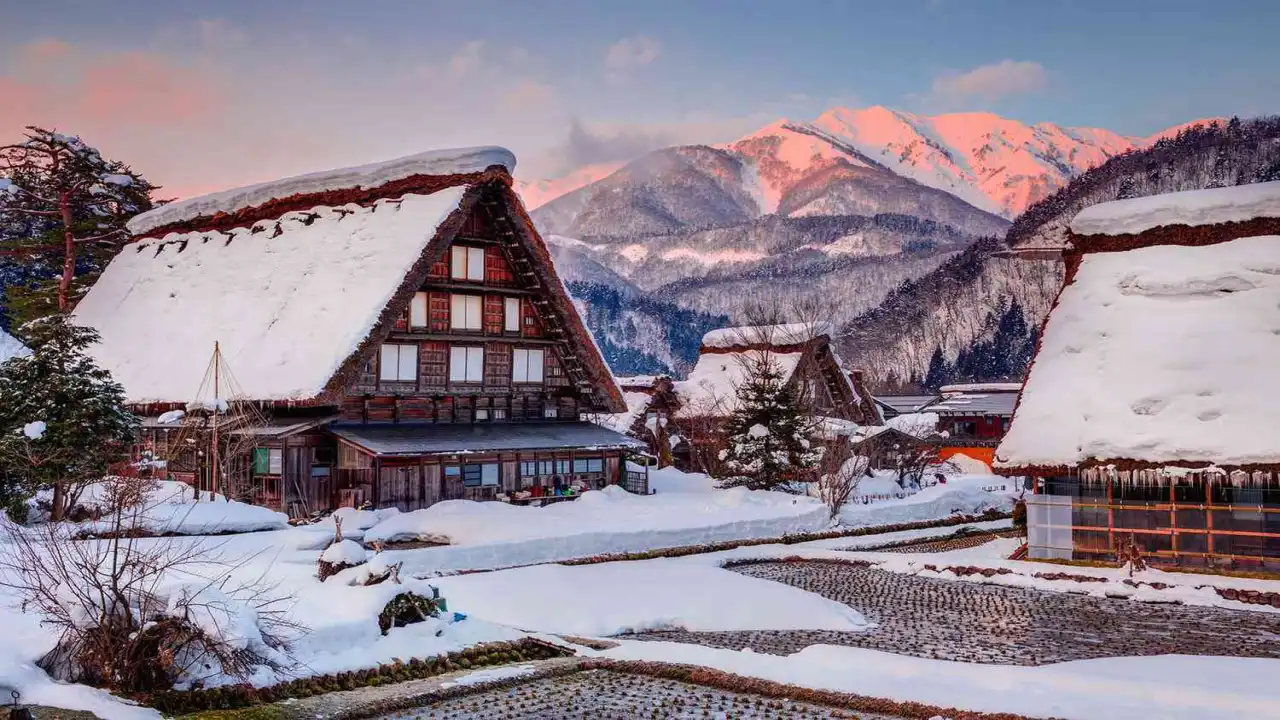
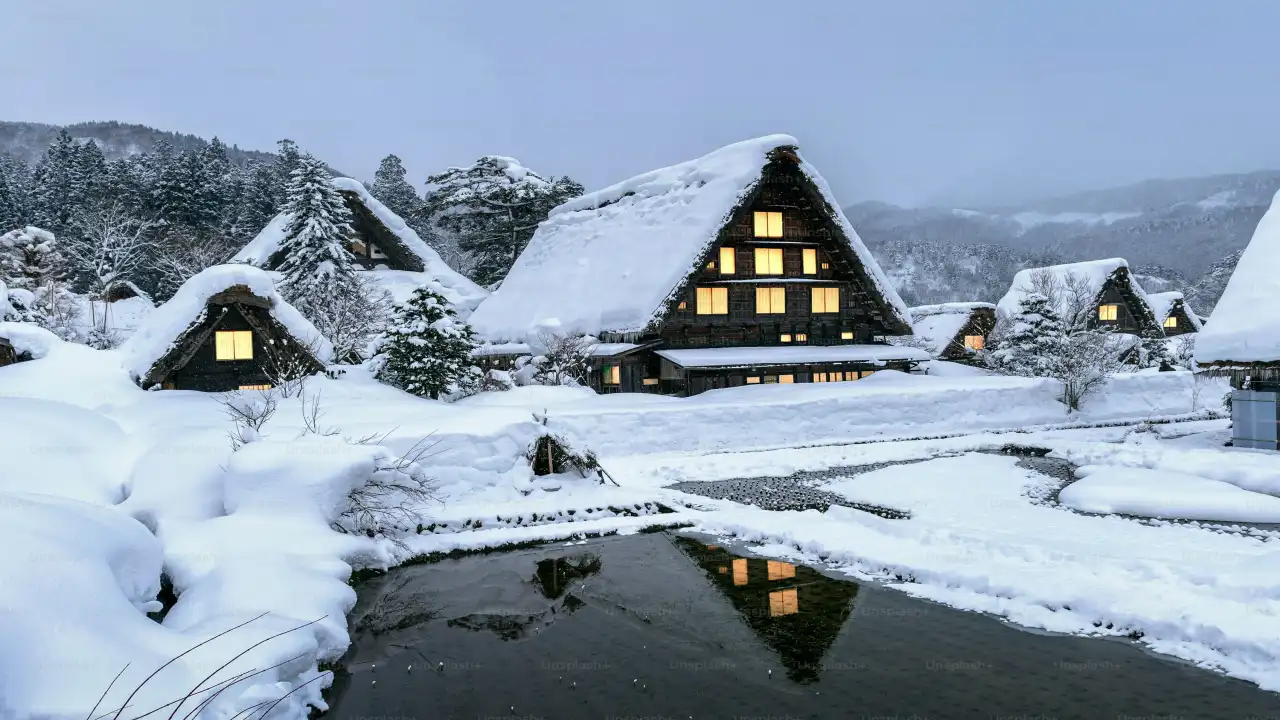
Shirakawa-go is probably the first village that comes to mind when you think of snow in Japan. And honestly. It’s for a good reason. Those gassho-zukuri farmhouses with steep, straw roofs look like they’ve been put right onto a postcard. Winter buries them under snow, and suddenly the roofs look like mountains themselves. Walking here, you can’t help but feel like someone’s photoshopped reality. Snow crunches under your boots, smoke drifts lazily from chimneys, and locals wave politely like nothing unusual is happening.
Why winter is perfect here:
- Evening lights turn the village golden.
- There’s barely any crowd, so the scenery feels yours.
- Snow somehow adds extra depth, like a soft filter over the whole town.
Pro Tip: Go early, before tour buses arrive. It’s a completely different vibe when the village is quiet, almost secretive.
Ouchi-juku: Old Japan in Snow
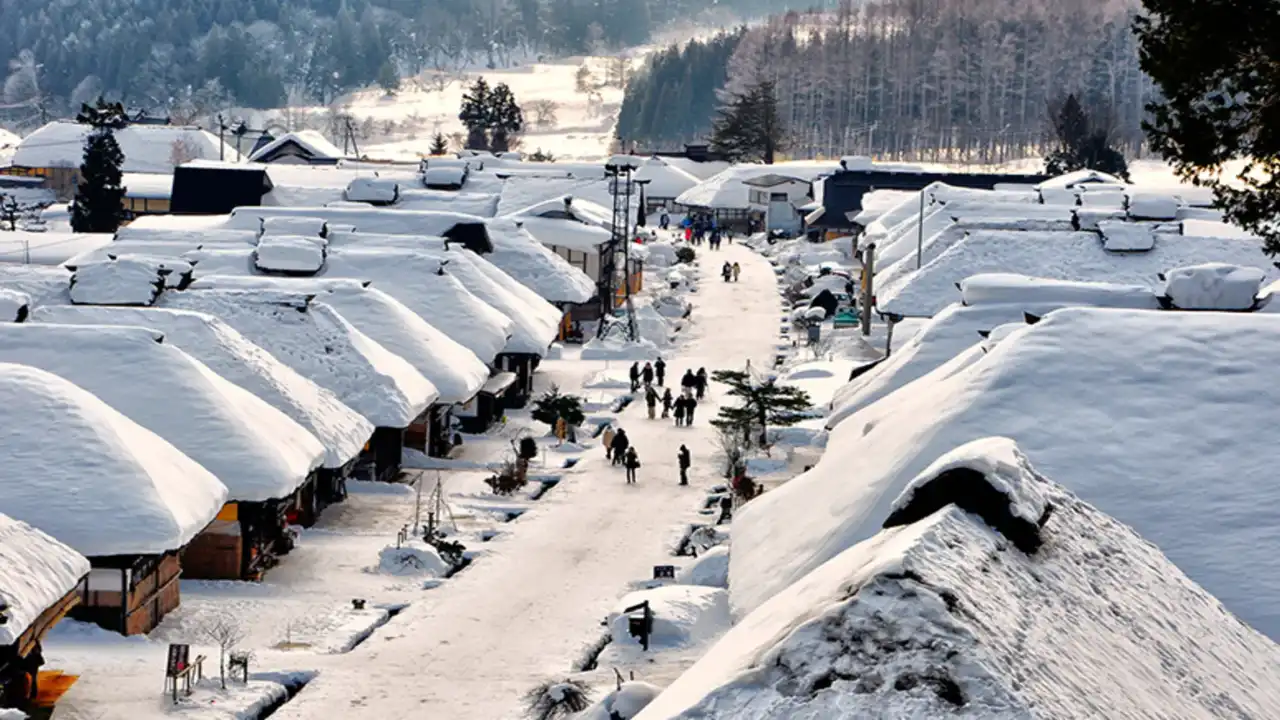
Ouchi-juku is a throwback. Once a post town along the Edo route, now frozen in time. Thatched roofs line one main street, and snow piles along the sides like soft walls. Local shops sell simple snacks, hand-made crafts, and steaming soba noodles. The steam curls from bowls, warming your hands before your fingers even thaw. Locals chat with visitors casually, no fake smiles, just neighborly warmth.
Don’t miss:
- Eating soba with a long green onion instead of chopsticks (yes, really).
- Climbing a small hill for a snow-covered street view that makes your jaw drop.
Nozawa Onsen: Snow, Baths, and Life
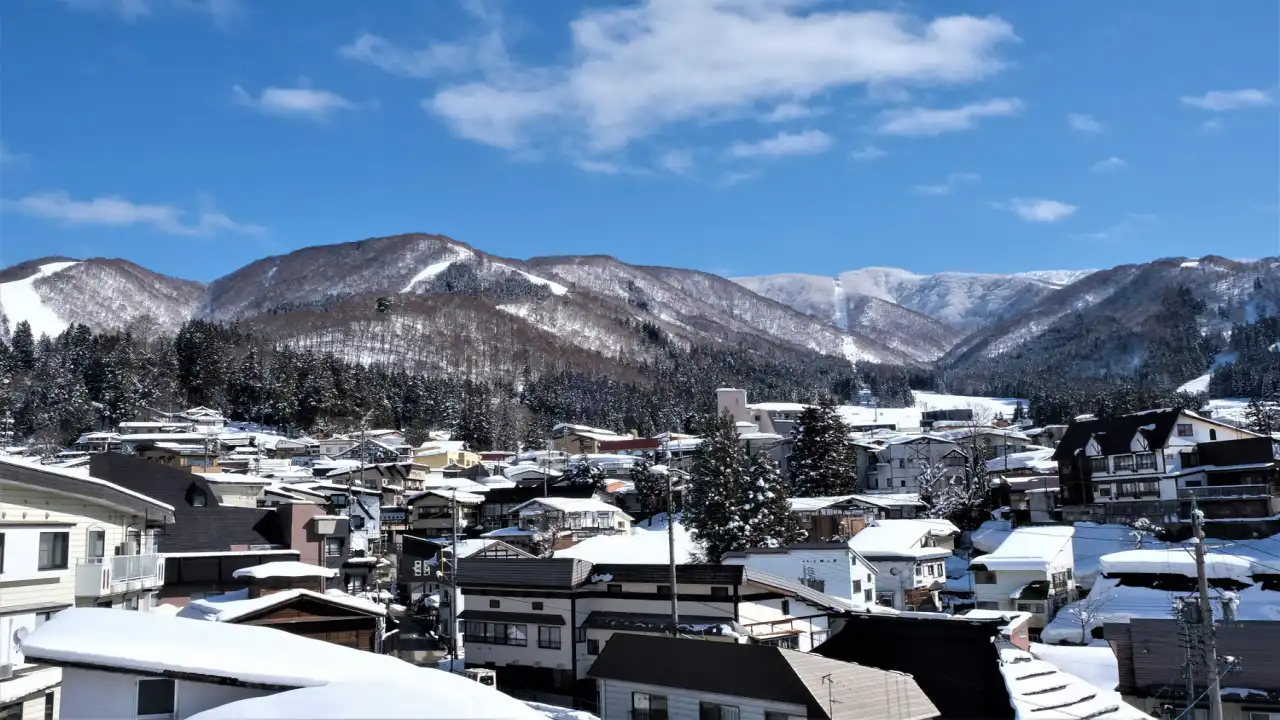
Nozawa Onsen feels a bit more alive than other villages, but not crowded. Snow blankets everything. People move between ski slopes, bathhouses, and small eateries.
Here’s the thing: shared hot springs. Locals and travelers sit side by side, chatting quietly. There’s no luxury pretension, no fancy labels, just hot water and calm conversation.
Why winter works perfectly here:
- Snow piles high for months.
- Warm baths are free and run by the communities.
- Meals are hearty, comforting, and exactly what you need after walking through the snow.
Kakunodate: Samurai and Snow
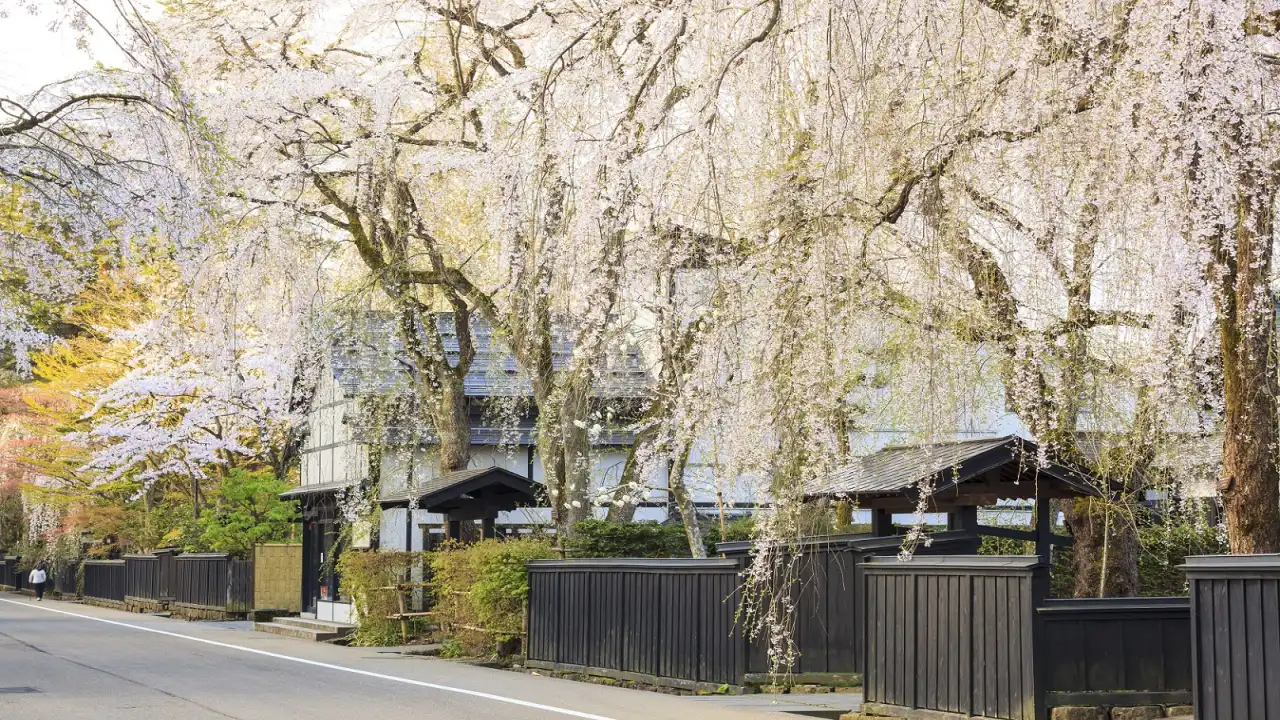
Kakunodate is famous for samurai houses, and in winter, the contrast between black fences and snow is sharp, clean and Beautiful. Walking the streets, the snow doesn’t overwhelm; it highlights everything.
Best winter moments:
- Snow clinging to bare cherry trees.
- Museums are almost empty, so you actually enjoy them.
Hida Furukawa: Quiet, Simple, Honest
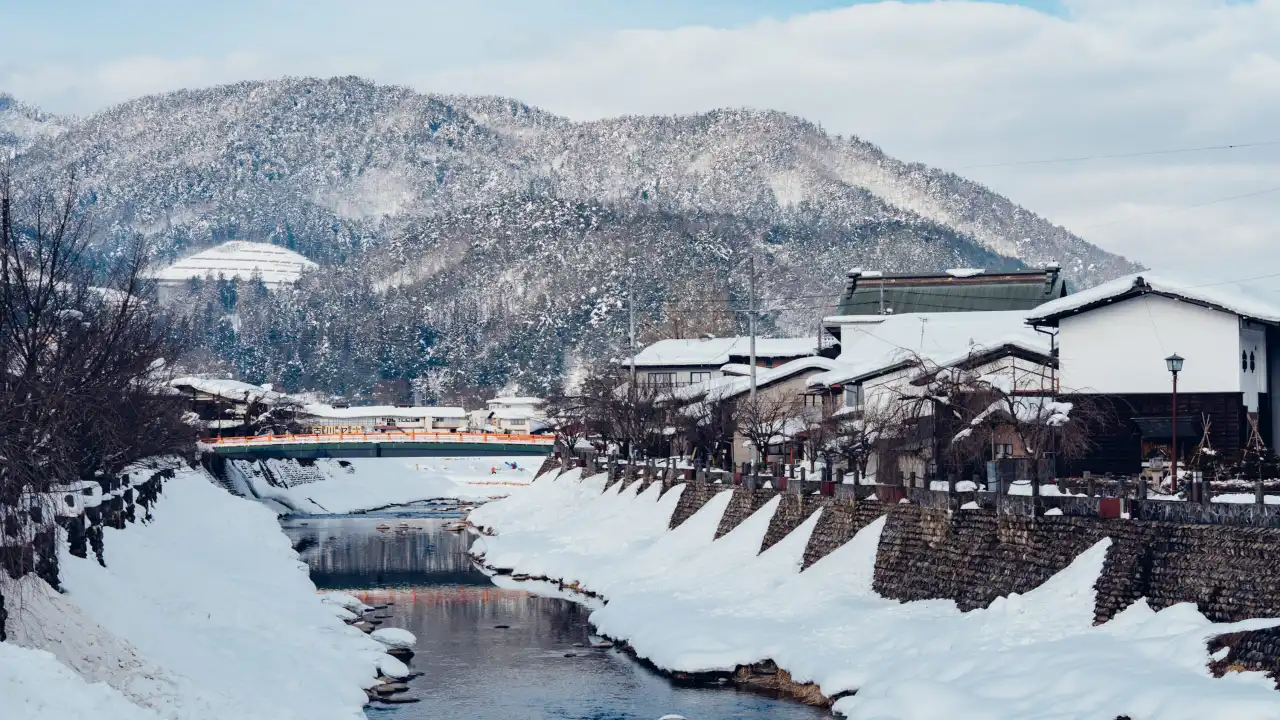
Hida Furukawa often gets overlooked. And maybe that’s why it’s so nice. Snow falls gently. Canals, store signs, and even bicycles outside are coated in white. No rush, no tourist traps. Shops close early. Streets are empty at night. It’s real life under snow, and that’s refreshing. his village is proof: winter villages in Japan don’t need to be dramatic. Calm, simple, lived-in, they can be beautiful just by existing.
Tsumago: History Slumbering Under Snow
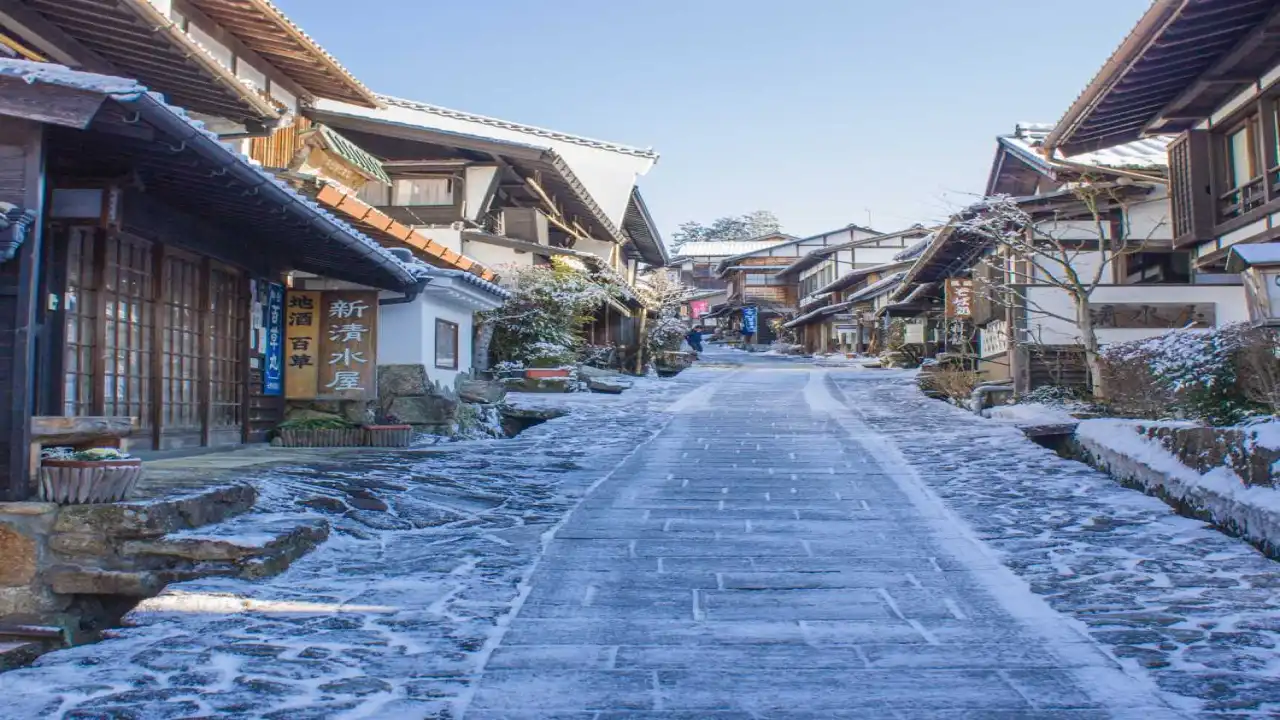
Tsumago sits on the old Nakasendo route, used by travelers between Kyoto and Tokyo centuries ago. In winter, it’s quiet. Roofs, paths, and everything are covered with snow. Shops are simple. Streets are calm. The snow slows everything, perfect for wandering and letting your thoughts drift. This is one of those snowy destinations in Japan that honestly feels untouched by time.
Winter Food That Hits Different
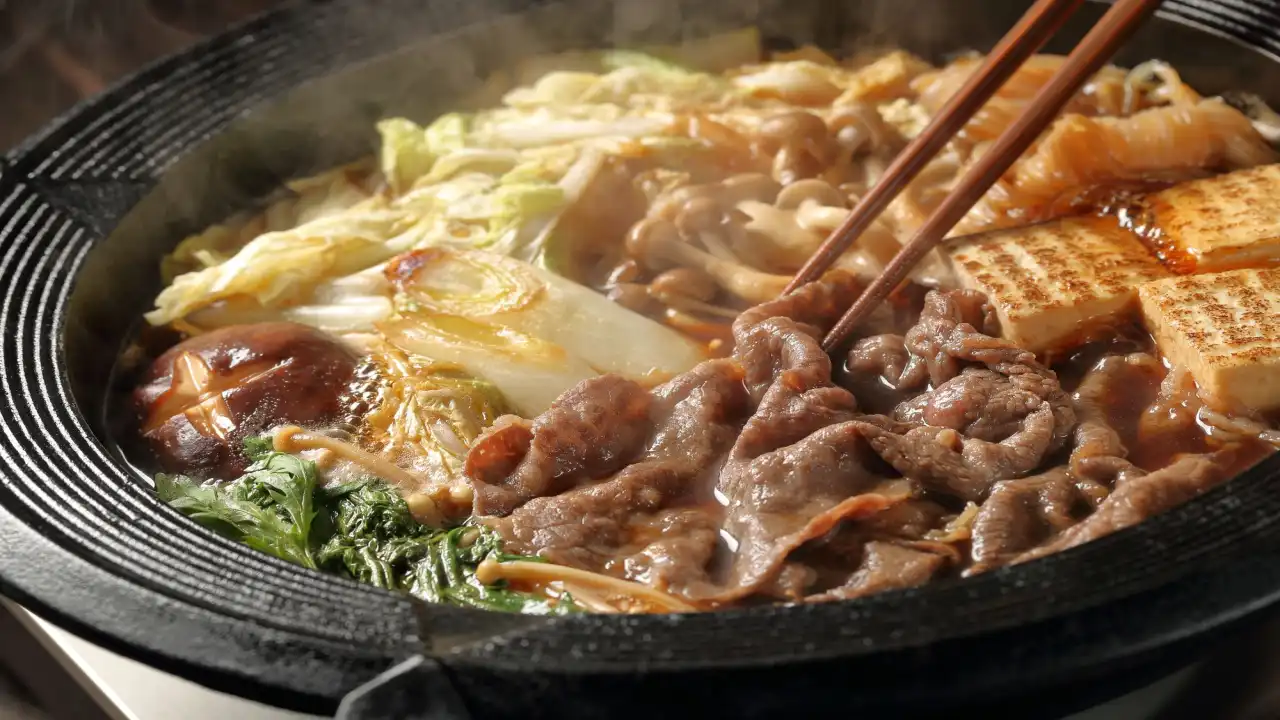
Winter food tastes more intense somehow. Maybe the cold makes your stomach scream for warmth. You’ll find:
- Hot pots shared with friends or strangers
- Grilled rice balls with miso
- Fresh soba noodles
- Local sake served hot
Even basic meals feel extraordinary after a day walking through snow.
What You Should Know Before Going
Winter villages aren’t complicated, but some planning helps.
- Trains work fine; buses less.
- Snow boots beat fashion any day.
- Cash is useful in smaller towns.
- Sunset is early; sightseeing windows are short.
Pro Tip: Stay overnight. Villages feel magical early morning and after dark, empty streets, quiet roofs, and smoke rising from chimneys.
Festivals That Glow Without Crowds
Winter festivals in these villages aren’t about spectacle. They’re small, quiet, and almost meditative. Snow lanterns, small fire rituals, and local parades bring warmth without chaos. Visitors are welcome, but it’s more about witnessing than showing off. Perfect if you want authentic vibes.
Who Will Love These Villages
These places are for slow travelers. People who like:
- Culture
- Quiet scenery
- Real moments, not checklists
Perfect for couples on a honeymoon tour package, families looking for calm, or anyone opting for thoughtful Packages over rushed tours.
Conclusion
Japan’s snow villages aren’t flashy. They don’t try. Snow lands. People adapt. Life keeps moving, just slower. If you want winter travel that sticks with you, that feels grounded and memorable, these villages deliver. Peace without boredom. Beauty without noise. Winter that actually feels real. A Japan tour package that includes these snowy destinations lets you experience this quiet magic firsthand.