12D/10N
12 Days Darjeeling, Gangtok, North Sikkim & Pelling Tour Itinerary




Starting At:
₹68,000
₹84,999
Per Adult On Twin Sharing Basis
Get up to 31% OFF on
Starting at ₹25,000₹35,000
Get up to 31% OFF on
North East Tour Packages
Starting at ₹25,000
Starting At:
₹68,000
₹84,999
Per Adult On Twin Sharing Basis
Starting At:
₹55,000
₹75,000
Per Adult On Twin Sharing Basis
Starting At:
₹34,000
₹49,000
Per Adult On Twin Sharing Basis

Starting At:
₹32,000
₹42,000
Per Adult On Twin Sharing Basis

..+1
Starting At:
₹25,000
₹35,000
Per Adult On Twin Sharing Basis



..+3
Starting At:
₹38,700
₹41,999
Per Adult On Twin Sharing Basis


Starting At:
₹27,999
₹32,999
Per Adult On Twin Sharing Basis
Packages from Rs 25,000 per person | All ILP Permits Arranged | Private Vehicle | 24-Hour Quote | Prices valid for 2026-27 season
Our North East specialists at Travel Junky have collectively covered all eight states across different seasons, different years, and every type of traveller, families with elderly parents, honeymooners, and groups of 20. Travel Junky has been operating North East India tours since 2017. Our team is led by Robin Negi (North East Desk Head), who has driven the Guwahati-Tawang route four times and completed the Gangtok-Lachung-Zero Point circuit in both April and December, with over 200 North East guests managed since 2017. Prabhat (Senior Tour Lead) has led group tours into the Hornbill Festival three years running and knows Kohima's accommodation situation better than most people in the travel industry. Both conduct at least two operational recce trips per year to keep itineraries current.
This page is written from what we have actually seen, not from a template. When we say the Central Range at Kaziranga gives better rhino sightings in November, we know because we have compared it across visits. When we say book Dawki boat rides before 10 am in winter, we know because we made the mistake of going at noon once, and the glare wiped out the transparency entirely.
That is what this page is. Real expertise from people who have been there. Written by: Robin, North East Desk Head, Travel Junky | Prabhat, Senior Tour Lead. Content last reviewed and updated: June 2026. Prices valid for the 2026-27 travel season.
Most Indian travellers have not been to the North East. This is not a criticism. For decades, poor flight connectivity, permit complexity, and a general "it is far and complicated" perception kept it off most holiday lists.
None of those barriers is what they were. Guwahati now has direct flights from Delhi, Mumbai, Bangalore, Kolkata, Chennai, and Hyderabad. Bagdogra connects to Sikkim in 5 hours by road. The Inner Line Permit for Arunachal Pradesh is applied for online and takes 5-7 working days. The Hornbill Festival sells out accommodation, yes, but only because it has become one of the most sought-after cultural events in Asia. These are problems of success, not access.
What the North East offers is genuinely different from anywhere else in India. Not "different" in the way that marketers use the word. Actually, it's different.
The Khasi people of Meghalaya have trained rubber fig tree roots to grow into bridges over 15 to 50 years. These bridges do not rot, do not rust, and do not need maintenance. They get stronger with age. There is nowhere else in the world where this technique exists.
Kaziranga National Park holds 2,613 one-horned rhinos — 70% of the global population of a species that was nearly extinct by 1900, reduced to under 200 animals (Source: WWF India / Census of India Wildlife Survey 2022). A morning jeep safari at Kaziranga is not a wildlife drive. It is an encounter with one of conservation's genuine success stories.
The Apatani people of Ziro Valley have a 10,000-year-old farming system where rice and fish are cultivated in the same field simultaneously. UNESCO has listed it as a proposed World Heritage site (UNESCO Tentative List, 2014). It is a living agricultural tradition that predates most of recorded history.
This is what a north-east tour package is actually about. Not just mountains and monasteries. A region that has been doing extraordinary things for a very long time, largely undisturbed, and is now opening up for travellers who want something with genuine substance.
Meghalaya: The Living Root Bridge at Nongriat gets crowded between 10 am and 2 pm on weekends from November to February. Travel Junky starts the trek at 7 am so guests reach the bridge by 9 am, have it largely to themselves, and return before the descent gets slippery with afternoon rain. The 3,500-step descent takes 90 minutes for a person of average fitness. The ascent takes 2 hours. Factor both into your day plan.
Assam: Kaziranga's Central Range consistently delivers higher rhino density than Western or Eastern Range during November to January. Our guests who have done multiple Kaziranga safaris confirm this. The park is closed from May to October due to flooding. Do not plan an Assam trip expecting Kaziranga access in June.
Sikkim: The Zero Point visit from Lachung is altitude-sensitive. People who flew from sea-level cities and went to Zero Point (4,828m) on Day 2 without acclimatising in Gangtok first have reported serious altitude sickness. Travel Junky's standard Sikkim itinerary builds in a mandatory Gangtok acclimatisation night before the North Sikkim circuit. This is not cautious. It is what keeps the trip from being ruined.
Arunachal Pradesh: The road from Dirang to Tawang via Sela Pass (4,170m) can be closed due to snow between December and February. In 2023, one of our groups spent an unplanned night in Dirang because the pass was shut. We now route winter Arunachal trips through Bomdila first to allow maximum flexibility if the pass closes.
Nagaland: The Hornbill Festival runs from December 1 to 10 at Kisama Heritage Village, 12 km from Kohima. December 1 (opening ceremony) and December 10 (closing ceremony with final performances) are the two days worth prioritising if you can only attend on two days. Mid-week days are less crowded. Accommodation in Kohima for December travel must be reserved by September at the latest. We have had guests try to book in October and find nothing usable within 20 km.
On permits: The most common mistake is not applying for the Arunachal ILP early enough. The online portal (arunachalilp.com) usually processes applications in 5-7 working days, but during peak season (October-November, March-April) it can take 10 days. Travel Junky applies for all guest permits as part of the booking process, usually 3-4 weeks before departure.
The North East is not a destination where winging works. Here is a specific example. The Dawki-Mawlynnong-Shnongpdeng circuit in Meghalaya looks simple on paper. Three locations, one road, 60 km.
In practice: Dawki's transparent river effect is best between October and February when water levels are low, and clarity is maximum. Between July and September, the water is high, fast, and brown from upstream rain. Beautiful in a different way, but not transparent. If seeing the floating-boat effect is your primary reason for going to Dawki, going in August means you will be disappointed.
Mawlynnong is 30 km from Dawki. The road between them passes through the Bangladesh border territory. The Dawki-Mawlynnong road is fine. The direct Mawlynnong-Shillong road via Pynursla saves 40 minutes compared to the Dawki route and is in better condition. Most generic tour operators use the longer route because their drivers know it. Travel Junky's Meghalaya driver uses the Pynursla road, which gives guests an extra hour in Shillong, that kind of granular knowledge, which road, which time of day, which month for which experience, is what 5 years of running North East trips produces. It is also what most travel websites cannot offer because they are aggregating rather than operating.
Recommended circuit: Guwahati-Shillong-Sohra-Dawki-Mawlynnong | 5-7 nights Best months: October to April | Avoid for transparency: July-August (Dawki)
Meghalaya has three districts — East Khasi Hills, West Khasi Hills, and Jaintia Hills with distinctly different landscapes and cultures within each.
Shillong
Most north-east travel packages spend one night in Shillong and call it done. That is not enough. Shillong has India's strongest rock music culture outside Mumbai. The Bob Dylan of the North East, Lou Majaw, has been performing here since the 1970s. Venues like Dylan's Bar and Cloud 9 run live music on weekends. The Don Bosco Museum of Indigenous Cultures has seven floors covering every tribe of the North East with actual artefacts, not replicas. Most visitors skip it because it sounds like a museum. It is the best way to understand the region before you go deeper into it. Two hours here will change the way you see every village you visit afterwards.
Ward's Lake is pretty but crowded. Umiam Lake, 15 km north of the city, is better. Boating is available. The Cherrapunji road south of Shillong passes through Mawkdok Dympep Valley, a gorge with a suspension bridge and waterfalls, worth a 30-minute stop.
Sohra (Cherrapunji)
Sohra is the correct name. Cherrapunji is the colonial one that stuck. Nohkalikai Falls (340m, fourth highest in India) is best viewed from the western viewpoint, not the main viewpoint that all tour buses go to. The western viewpoint requires a 20-minute walk from the road, but the angle is dramatically better. Travel Junky includes this stop in all Meghalaya itineraries.
Seven Sisters Falls is only visible during and just after the monsoon (July to September). In winter, it is dry or a trickle. If seeing all seven cascades simultaneously is your goal, plan for July. If you want Dawki's transparency, come in November. You cannot fully optimise for both.
Mawsmai Cave is walkable in 30 minutes. Siju Cave in South Garo Hills is harder to reach but has bat colonies and underground streams, which is a genuinely wild experience for travellers who want something beyond the circuit.
Dawki and the Umngot River
Umngot is 90 km from Shillong. The transparency effect is real. October to February is when it is at its clearest. November and December are peak clarity months. Boat rides cost Rs 700 to 1,000 per boat for 45 minutes. The boats hold 4-5 people. Do not accept a 20-minute ride; the river has upstream sections where clarity is even better than the main tourist ghat. Travel Junky's Dawki guide takes guests to the upstream bend where the river widens. The floating effect is stronger there.
The Indo-Bangladesh border is 5 km from Dawki. BSF checkpost at the bridge. Tourists can go to the bridge but not cross. Worth seeing.
The Living Root Bridges
The Double Decker Root Bridge near Nongriat village is 3 km from the road, requiring 3,500 steps down and 3,500 steps back. Round trip is 5-6 hours, including time at the bridge. What no travel website tells you: the path to the root bridge passes through the village of Tyrna first. A local guide from Tyrna costs Rs 500-700 and is worth hiring even if you are confident in directions. The path branches four times, and there are no signs after the first kilometre. In 2024, three of our guests who went without a guide spent an extra 2 hours on the wrong paths. The guide knows the shortcuts and knows which stream crossing is safe after rain.
The bridge itself is at the bottom of a gorge. A natural swimming pool called Rainbow Falls is 1 km beyond the bridge. Most day trippers do not have time for it. Guests staying overnight in Nongriat village (basic but clean community homestays, Rs 800-1,200 per person with dinner) can visit Rainbow Falls in the morning and beat the crowds at the bridge entirely.
Best months: November to April | Kaziranga: October to April only (park closes in May)
Kaziranga National Park
430 sq km divided into four ranges: Central, Eastern, Western, and Burapahar. The Central Range (Kohora) is the most productive for rhino sightings in peak season. It has higher grass density and more established rhino zones. On our team's November and December visits, rhino sightings in the Central Range averaged 12-18 animals per safari. Eastern Range (Agoratoli) is less visited and better for birds and tiger sightings. Western Range (Bagori) is compact and good for morning light photography.
The morning jeep safari starts at 6 am. The gate opens at 5:30 am. If your accommodation is more than 15 minutes from the gate, you need to leave by 5 am. Travel Junky books accommodation inside or adjacent to the buffer zone for this reason.
Elephant safaris are available at 5:30 am and 6:30 am. They access areas that jeeps cannot reach. Useful for getting close to rhinos in tall grass. Our team's assessment: do the jeep safari first. If you want more, add the elephant safari on the second morning.
Majuli River Island
Majuli is reached by ferry from Nimati Ghat near Jorhat. Ferries run at 9 am, 10:30 am, and 1 pm (timings change seasonally). The crossing takes 45 minutes to 2 hours, depending on river levels. Majuli is 880 sq km when the Brahmaputra is low. In the monsoon, it floods significantly, and access is limited.
The satras (Vaishnavite monasteries) of Majuli preserve performance traditions found nowhere else in India. Kamalabari Satra hosts performances of Sattriya dance, a form that Vaishnavite saint Srimanta Sankardev codified in the 15th century. Auniati Satra has the largest collection of Ahom-era artefacts. Prior arrangement through a local contact lets you watch the monks in morning prayer, a very different experience from arriving unannounced.
Bamboo bridge building on Majuli: the locals build bamboo bridges across channels every dry season and dismantle them before the monsoon. Watching this is a form of living craft that has no museum equivalent.
Assam Tea: What a Good Estate Visit Looks Like
Assam produces 51% of India's total tea output. The orthodox process (whole leaf, rolled) and the CTC process (Cut-Tear-Curl, used for most commercial bags) both happen in Assam estates. The smell inside a working CTC factory during the first flush (March to May) is something that does not translate to description.
Estates near Jorhat and Dibrugarh that accept visitors include Thengal Manor (heritage bungalow stays available), Borengajuli Tea Estate, and Sewpur Tea Estate. Travel Junky pre-arranges estate visits with factory access, not just the bungalow and a cup of tea at the end.
Best time: March to May (rhododendrons), October to December (clear peaks) | Avoid: Monsoon June-September
The Permit System
North Sikkim, covering Lachung, Yumthang Valley, Zero Point, and Lachen, requires a Protected Area Permit. This can only be arranged through a registered Sikkim tour operator. Travel Junky is registered. The permit is arranged as part of your booking. No extra process for guests.
Nathula Pass (near Tsomgo Lake) requires a separate permit. Only Indian citizens can visit Nathula. The permit is arranged through the Sikkim Tourism office in Gangtok and requires a passport/Aadhaar. Travel Junky arranges this for all guests who want Nathula included.
Zero Point and Altitude
Zero Point (Yumesamdong) is at 4,828 metres. It is the highest road-accessible point in Sikkim.
People who fly from sea level (Delhi, Mumbai, Bangalore) and go to Zero Point without prior acclimatisation commonly experience headache, nausea, and breathlessness severe enough to ruin the visit. Our standard Sikkim itinerary builds in one full night at Gangtok (1,650m) before North Sikkim. Even this is sometimes not enough for guests who are sensitive to altitude.
Signs of altitude sickness to watch: persistent headache not relieved by paracetamol, loss of appetite, difficulty sleeping, and confusion. If any of these appear at Lachung (2,700m), the visit to Zero Point should be cancelled. Descending to a lower altitude is the only remedy. Travel Junky's local driver knows this and has standing instructions to return guests to Lachung if any serious symptoms appear at Yumthang (3,564m) or above.
Rhododendron Season at Yumthang
Yumthang Valley blooms with rhododendrons between mid-March and mid-May. The exact peak varies by year but is usually the first two weeks of April. Travel Junky monitors local updates and adjusts North Sikkim visit timing within client itineraries based on actual bloom reports from our Lachung contacts.
The valley is at 3,564 metres. Snow can be on the ground as late as April. Pack accordingly, even if you are visiting what looks like spring on paper.
Pelling and Kanchenjunga Views
Kanchenjunga (8,586m, the third-highest in the world) is visible from West Sikkim when the sky is clear. Pelling is the standard base. Ravangla has better views from some resorts.
The view is cloud-free most reliably between October and December and between February and April. Monsoon (June-September) and the shoulder weeks before and after are unreliable. Our team visited Pelling in late September and did not see the peak once in three days. We visited in late October and had clear skies every morning. This is not guaranteed, but the probability shifts significantly by month.
Best time: October to April | ILP required: All Indian citizens | Apply at least 10 days before
The Inner Line Permit
Indian citizens apply at arunachalilp.com. Required documents: Aadhaar card, passport-size photos. Fee: Rs 100 per person. Processing: 5-7 working days normally, 10 days in peak season. The permit lists specific districts you are allowed to visit. If Tawang is your destination, the permit must include Tawang and West Kameng districts.
Foreign nationals require a Protected Area Permit (different from ILP) applied through the Ministry of Home Affairs. Processing takes 3-4 weeks. Foreign nationals are also required to travel in groups of at least two.
Travel Junky handles the ILP application for all northeast trip packages covering Arunachal. We need passport/Aadhaar details and photos 3 weeks before departure.
The Tawang Road
Guwahati to Tawang is 540 km. In good conditions, this takes 14 to 16 hours. With road work, one-way restrictions, or any weather event, it becomes 18 to 20 hours.
The standard approach is to break the journey: Guwahati to Bhalukpong (180 km, 5 hours), overnight at Bhalukpong or Nameri. Then Bhalukpong to Dirang (150 km, 4-5 hours through hairpin bends and forest). One night in Dirang. Then, drive to Tawang via Sela Pass (100 km, 5-6 hours). This three-day approach means you arrive at Tawang rested, and you have time to see Dirang (orchid sanctuary, medieval Dirang Dzong monastery) rather than driving through it.
Many north east tour packages from other operators do Guwahati to Dirang in one push (10 hours) and Dirang to Tawang next day. This works physically but misses Bhalukpong-area wildlife (clouded leopard territory) and the Nameri National Park buffer zone.
Sela Pass in Winter
Sela Pass (4,170m) can be closed by snow between December and February. In our team's experience, December closures are less common than January and February closures. When the pass is closed, it is usually for 12 to 48 hours. There is no alternative route to Tawang.
Travel Junky's winter Arunachal itineraries include a minimum one-day buffer in Dirang in case Sela closes. We also have contacts in Dirang who give us real-time road reports.
Tawang Monastery
Built in 1680, the Tawang Monastery (Galden Namgyal Lhatse) is the largest Buddhist monastery in India and the second largest in the world after the Potala in Lhasa. It sits at 3,048 metres on a ridge above the Tawang Valley.
The monastery is an active community. Monks live, study, and practice there. The courtyard prayer sessions at dawn (usually 5 am) and late afternoon (4-5 pm) are when the monastery is at its most alive. Tourists can attend but should enter quietly and not use flash photography. Our guests who attend the dawn prayer consistently describe it as one of the most affecting experiences of the trip.
The monastery's museum has thangka paintings, ancient weapons, manuscripts, and a 9-metre golden Buddha that was installed in 1997. The museum entry fee is Rs 50 per person. Worth the extra hour.
Hornbill Festival: December 1-10 annually | Book accommodation by September
The Hornbill Festival
The Hornbill Festival is named after the hornbill bird, which appears in the headgear and mythology of most Naga tribes. All 16 tribes of Nagaland perform simultaneously at Kisama Heritage Village, 12 km from Kohima.
Our team has attended the festival three times. Here is what we have noticed that you will not read elsewhere.
The morning sessions (9 am to 12 pm) are when actual tribal performances happen: traditional songs, dances, and martial displays. The afternoon is filled with food stalls, music stages, and commercial exhibitions. If cultural depth is your priority, plan your Kisama days around the morning sessions.
Morungs are traditional dormitory structures that each tribe builds and maintains at Kisama throughout the year. The Ao Naga morungs have the most elaborate carvings. The Konyak morungs have the most striking dress. Walking the morungs individually with a local Naga guide (arranged through your hotel or Travel Junky: Rs 1,000-1,500 per day) gives depth to what would otherwise be a surface-level walk.
Naga food at the festival stalls includes smoked pork, fermented bamboo shoots (axone), local rice beer (zutho), and preparations with ghost pepper (Naga chilli, among the hottest in the world). Travel Junky pre-warns guests who are not spice-tolerant.
Dzukou Valley
At 2,452 metres on the Nagaland-Manipur border, Dzukou Valley blooms with Dzukou lilies (Lilium macklineae) in July. The flowers are found nowhere else in the world. Pink, nodding, in vast carpets across the valley floor.
Access is from two sides: the Nagaland side from Viswema village (near Kohima) or the Manipur side from Senapati. The Nagaland approach has better-maintained trails and accommodation at the valley.
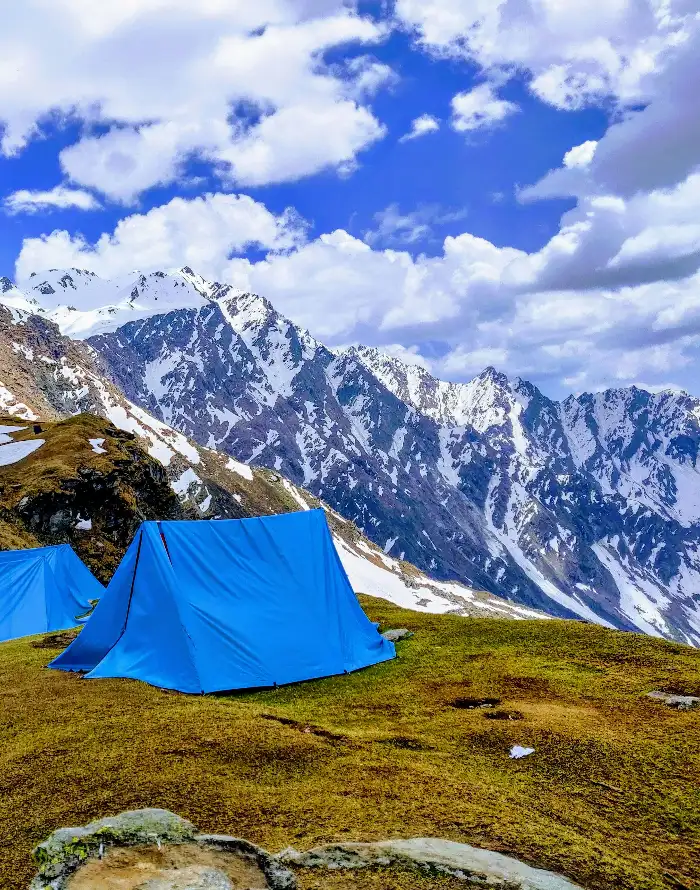
The trek from Viswema to the valley takes 3 to 4 hours. Camping is the standard format. Travel Junky arranges tents, sleeping bags, a guide, and cooking support for all Dzukou camping trips. The minimum recommended stay is one night to catch the valley at sunset and dawn, when the light on the lilies is different from midday.
Most couples do not think of the North East for a honeymoon on the first pass. Goa, Maldives, and Bali take the default slot. The couples who do come here, either because someone told them to or because they wanted something genuinely different, almost universally say it was the right call.
The North East for honeymooners offers something beach destinations cannot: complete nature-based solitude where the landscape changes completely every day, crowds are a fraction of mainline tourist destinations, and the experiences feel earned rather than consumed.
Meghalaya in the monsoon for couples
Meghalaya in July and August is a different world from Meghalaya in January. The waterfalls that trickle in winter become 200-metre cascades. The roads through the East Khasi Hills are lined with waterfalls appearing from cliff faces as if from nowhere. Cherrapunji in peak monsoon has waterfalls from every direction simultaneously. Driving through a cloud on the Shillong-Sohra road with waterfalls visible through both car windows at once is a specific kind of overwhelming that romantic couples tend to find quietly unforgettable.
Dawki in the monsoon is not for the transparency effect. But the river at high water, surrounded by green hills covered in mist, is its own kind of beautiful. Different purpose, different mood, both valid.
Travel Junky's monsoon Meghalaya honeymoon itinerary routes couples through Shillong's boutique stays, a night at a cloud-forest eco-lodge near Sohra with a valley view, and the village of Laitkynsew for access to Nohkalikai Falls in full monsoon flow.
Sikkim for couples
The combination of Lachung's wooden cottage stays (with snowfall visible from the bed window in winter), the rhododendron valley at Yumthang in April, and the Kanchenjunga morning view from Pelling creates a honeymoon that has mountain romance on a genuine scale.
Couples who travel to Sikkim in April specifically for the Yumthang bloom need to book early. The North Sikkim jeep permit system has a daily vehicle limit, and the valley gets competitive in peak rhododendron weeks (usually April 5-25, depending on the year). Travel Junky monitors bloom timing through our Lachung contacts and reserves permits as early as possible for April guests.
The Gangtok stay for honeymooning couples works best at properties with direct Kanchenjunga views from the room. Not all Gangtok hotels offer this. Travel Junky selects only view-facing rooms for honeymoon bookings.
Best Honeymoon Route: Meghalaya and Sikkim Combined
9 nights. Three nights in Meghalaya (Shillong, Sohra, Dawki). Five nights in Sikkim (Gangtok, North Sikkim, Pelling). One transit night in Guwahati.
The contrast between Meghalaya's tropical forest and river culture and Sikkim's alpine monasteries and glacial valleys is significant enough that the trip feels like two complete destinations rather than one continuous experience.
Travel Junky North East Honeymoon Package Meghalaya and Sikkim combined. 9 nights. Private vehicle throughout. The boutique stays in Shillong and Gangtok. Eco-lodge in Sohra. Wooden cottage in Lachung. All permits. Dawki private boat ride. Yumthang Valley timing aligned with the bloom season, where possible.
Starting from Rs 26,999 per person.
For first-time North East travellers: October to February covers Meghalaya and Assam without complications. This is the window we recommend for first trips.
For Sikkim specifically, April beats October by a significant margin if you want rhododendrons and do not need maximum Kanchenjunga view certainty. October beats April if mountain views matter more than flowers.
For Arunachal: October and November are the sweet spot. The apple and orange harvests are on in Bomdila. Tawang is clear. The Sela Pass is reliably open. March and April work nearly as well. Avoid December-February for Tawang unless you are prepared for potential Sela closures.
Guwahati (IATA: GAU) is the primary gateway for Meghalaya, Assam, Arunachal Pradesh, and Nagaland circuits.
Bagdogra (IATA: IXB) is the better entry point for Sikkim-focused trips. Road to Gangtok: 5 hours.
Other airports:
● Dimapur (DMU): for Nagaland. Kolkata connection mostly.
● Imphal (IMF): for Manipur. Direct from Delhi and Kolkata.
● Agartala (IXA): for Tripura. Well-connected via Kolkata.
● Dibrugarh (DIB): for Upper Assam and eastern Arunachal access.
● Tezpur (TEZ): for western Kaziranga access. Limited flights.
Important: There is no airport in Arunachal Pradesh's interior. Itanagar has the new Donyi Polo Airport (HGI) with limited connectivity. Tawang has no airport. All Arunachal travel is by road from Guwahati or Tezpur.
Guesthouses, homestays, and one or two mid-range hotels in cities. Assam-Meghalaya circuit or Sikkim only. Private vehicles in some legs, shared Sumo in others.
3-star hotels, boutique guesthouses, eco-lodges. Private vehicle throughout. Kaziranga jeep pre-booked. All permits included.
This is where most Travel Junky North East tour packages are priced.
Tea estate heritage bungalows in Assam (Thengal Manor, Dilkhush Country Home). Luxury tented camps at Kaziranga (Diphlu River Lodge, Iora Resort). Premium Gangtok properties with dedicated Kanchenjunga views. Brahmaputra river cruise packages. Boutique eco-lodges in Meghalaya.
Route: Guwahati-Shillong-Sohra-Dawki-Mawlynnong-Kaziranga-Guwahati
Covers every essential in the most-booked north east travel package circuit. Living Root Bridge (morning start, before crowds), Dawki boat ride (upstream section for best transparency), Mawlynnong village, Kaziranga Central Range jeep safari (pre-booked). Private vehicle throughout. All activities arranged in advance.
What sets our version apart: We use the Pynursla road from Mawlynnong to Shillong (saves 40 minutes). We book the Nongriat local guide in advance. We place guests in the Central Range for Kaziranga.
[Get a Free Quote at traveljunky.in]
Route: Bagdogra-Gangtok-Tsomgo-Lachung-Yumthang-Zero Point-Pelling-Bagdogra
Gangtok and Rumtek Monastery. Tsomgo Lake and Nathula Pass (Indian citizens only, permit arranged). Overnight at Lachung. Yumthang Valley (bloom timing advisory where applicable). Zero Point at 4,828m. Pelling with the Kanchenjunga morning view. Pemayangtse Monastery.
What sets our version apart: One mandatory acclimatisation night at Gangtok before North Sikkim. Room selection with Kanchenjunga view in Pelling. Bloom timing advisory from our Lachung contacts for April travel.
[Get a Free Quote at traveljunky.in]
Route: Guwahati-Shillong-Sohra-Dawki-Gangtok-Lachung-Yumthang-Pelling
Built for couples. Boutique hotel in Shillong. Eco-lodge with valley view near Sohra. Dawki private boat ride. Wooden cottage in Lachung. Yumthang Valley visit timed to bloom where possible. Pelling Kanchenjunga morning view from the room. Private vehicle throughout all nine days. All permits are arranged.
[Get a Free Quote at traveljunky.in]
Route: Guwahati-Nameri-Bhalukpong-Dirang-Tawang-Bomdila-Kaziranga-Guwahati
The slow Tawang approach via Bhalukpong and Dirang. Nameri National Park buffer zone. Dirang Dzong monastery and orchid sanctuary. Tawang Monastery (including dawn prayer session, arranged in advance). Sela Pass. Bomdila market and monastery. Kaziranga Central Range safari. ILP applied a minimum of 3 weeks ahead of departure.
What sets our version apart: Bhalukpong stop that most operators skip. One-day Dirang buffer built in for Sela Pass weather contingency. Dawn prayer at Tawang Monastery arranged through our local contact.
[Get a Free Quote at traveljunky.in]
Route: Dimapur-Kohima-Kisama-Dzukou-Dimapur | December 1-10 only
December 1 opening ceremony and December 10 closing ceremony covered. Morning performance sessions prioritised in day planning. Kohima War Cemetery. Dzukou Valley day trek or overnight camping (your choice). ILP arranged. Accommodation in Kohima is confirmed well in advance.
Contact us by August for December travel. We cannot guarantee accommodation if approached later.
[Get a Free Quote at traveljunky.in]
Route: Guwahati-Meghalaya-Kaziranga-Majuli-Arunachal-Sikkim-Guwahati
The complete circuit. Meghalaya's root bridges and Dawki. Kaziranga safari. Majuli River Island homestay. Tawang via Sela. Sikkim's Yumthang and Pelling. All permits across all states. Our most complex and most rewarding itinerary.
[Get a Free Quote at traveljunky.in]
Day 1 — Arrive at Guwahati, Travel Junky vehicle at the airport. Evening Brahmaputra sunset cruise from Fancy Bazar ghat (1 hour, pre-booked). Assamese dinner — try masor tenga (sour fish curry) and pitika (mashed potato and mustard preparation). Early sleep for Day 2 morning.
Day 2 — Guwahati to Shillong via Kamakhya Morning: Kamakhya Temple on Nilachal Hill. Go before 9 am to avoid queues that build through the day. The temple's inner sanctum is a natural rock cleft representing the goddess. One of the most atmospheric Shakti temples in India. Drive to Shillong (3 hours). Check in. Afternoon: Don Bosco Museum (2 hours, the best tribal culture overview in the North East). Evening: Ward's Lake walk, Police Bazar for local shopping. If the visit is on a Friday or Saturday, ask us about live music venues.
Day 3 — Shillong to Sohra (Cherrapunji) 1.5 hours by road. Morning: Nohkalikai Falls from the western viewpoint (not the bus-tour viewpoint). Mawsmai Cave. Afternoon: Seven Sisters Falls viewpoint (if visiting July-September, this is at peak flow). Wei Sawdong natural pools for a swim if the season allows. Night in Sohra with valley view. On a clear evening, the lights of Bangladesh are visible from the ridge.
Day 4 — Living Root Bridge and Dawki, 7 am start. Drive to Tyrna village (45 min from Sohra). Pick up a local guide (pre-arranged by Travel Junky, Rs 600). Trek 3,500 steps down to the Double Decker Root Bridge. 90 minutes down, 2 hours up. The bridge itself: take 20 minutes minimum. Sit on it. Look at how the roots have grown into the structure over decades. It is not dramatic from a distance. It is extraordinary up close. Afternoon: drive to Dawki (1.5 hours). Upstream boat ride on the Umngot River. Night at Dawki or drive to Mawlynnong.
Day 5 — Mawlynnong and Long Drive to Kaziranga Morning: Mawlynnong village walk. Skywalk platform over the Bangladesh plains. Drive back via Pynursla road to Guwahati (4 hours). Continue to Kaziranga (3.5 hours). Arrive in the evening. Early sleep.
Day 6 — Kaziranga Central Range Safari 5 am wake-up. The vehicle leaves for the park gate by 5:20 am. The safari jeep enters at 6 am. Central Range recommended. 3-hour safari. One-horned rhinos are consistently visible in November-March in this range, our team's visits average 12-15 sightings. Elephants, wild buffalo certainly. Tigers possible. Afternoon: rest or visit a tea estate nearby. Optional elephant safari next morning if time allows.
Day 7 — Kaziranga to Guwahati, Fly Home, Drive to Guwahati (3.5 hours). Evening flight home.
These are written by our North East team from direct experience. They answer the specific questions our guests ask most.
Waterfalls of Meghalaya: Complete Travel Guide 2026
https://www.traveljunky.in/blog/waterfalls-of-meghalaya-complete-travel-guide-2026 Best Waterfalls in Meghalaya You Shouldn’t Miss. From Nohkalikai Falls to Elephant Falls.
Guidelines for North East India: Everything You Need to Know Before You Go
https://www.traveljunky.in/blog/guidelines-for-north-east-india-everything-you-need-to-know-before-you-go Travelling through the Northeast is not so much about checking famous destinations off a list. It’s about small moments.
Exploring the Rich Tribal Heritage of Northeast India
https://www.traveljunky.in/blog/exploring-the-rich-tribal-heritage-of-northeast-india Some places stay with you because of what you see. Others stay because of the people they meet. Most travellers first notice the dramatic landscapes, misty hills, rivers and fields of gray trees, villages
Serene Monasteries in Sikkim Away From Crowds
https://www.traveljunky.in/blog/serene-monasteries-in-sikkim-away-from-crowds Sikkim has plenty of famous attractions, but the quieter monasteries reveal a softer side of the mountains that many travellers miss. These places are not loud or overly polished.
Best Places to Visit in Gangtok at Night
https://www.traveljunky.in/blog/best-places-to-visit-in-gangtok-at-night Gangtok at night is not trying to impress people loudly. That is exactly why it works. The city gives you quieter memories instead. Warm soup in cold weather. Music drifting through fog.
Packages from Rs 25,000 per person. Quote within 24 hours. (Prices valid for 2026-27 season. Last updated: June 2026.)
At Travel Junky, the team planning your North East travel package has been there. Robin has done the Guwahati-Tawang road four times. Prabhat has attended Hornbill for three years running. We know which Kaziranga range to book, which Lachung guesthouses have heating that works, and what the ILP portal does when it freezes mid-application.
That is not marketing. That is the difference between a north east trip that works and one that has expensive problems halfway through a mountain road at 3,500 metres.
Every Travel Junky North East tour package includes:
All Inner Line Permits and Protected Area Permits were applied for well in advance, with our team tracking each application. Private vehicle with local drivers who know state-specific roads, routes, and seasonal conditions. Accommodation selected and personally vetted not aggregated from a database. Kaziranga Central Range jeep safari pre-booked in peak season. North Sikkim jeep permits are reserved as early as the system allows. 24/7 on-ground support throughout your trip with contacts in each state. The price we quote is the price you pay.
Departures from Delhi, Mumbai, Bangalore, Kolkata, Hyderabad, Chennai, Pune, and Ahmedabad.
Visit traveljunky.in or call us on +91-9871597736 (9 am-7 pm IST, Mon-Sat). Full personalised north east trip package itinerary and pricing within 24 hours. Registered Office: 209a, Guneet Kashyap Marg Rd, South Extension II, Block A, New Delhi, Delhi 110049.
Kaziranga morning safaris fill up 2-3 weeks in advance in peak season. North Sikkim jeep permits have daily limits and go fast in April. Hornbill Festival accommodation disappears before October. The sooner your dates are fixed, the better your options. Booking Terms and Policies: A 25% advance payment is required to confirm a booking. The balance is due 30 days before departure. Cancellation policy: cancellations made 45+ days before departure receive a 90% refund; 30-44 days, a 60% refund; 15-29 days, a 30% refund; under 15 days, no refund. All itineraries include a force majeure clause covering road closures, permit delays, and weather disruptions. Full Terms and Conditions: traveljunky.in/terms | Cancellation and Refund Policy: traveljunky.in/cancellation | Privacy Policy (how we handle your Aadhaar, passport, and personal data): traveljunky.in/privacy
Your Next Adventure
Is A Click Away
Let our specialists build a journey that fits your life, not the other way around. No cookie-cutter tours — just thoughtful, personalised travel.