5D/4N
A Perfect Family Getaway: Shimla Manali Trip




..+2
Starting At:
₹21,000
₹31,000
Per Adult On Twin Sharing Basis
Get up to 49% OFF on
Starting at ₹11,500₹22,500
Get up to 49% OFF on
Himachal Tour Packages
Starting at ₹11,500
..+2
Starting At:
₹21,000
₹31,000
Per Adult On Twin Sharing Basis

..+3
Starting At:
₹41,500
₹51,000
Per Adult On Twin Sharing Basis


..+4
Starting At:
₹29,000
₹39,999
Per Adult On Twin Sharing Basis

..+4
Starting At:
₹29,000
₹39,000
Per Adult On Twin Sharing Basis


..+4
Starting At:
₹27,500
₹37,500
Per Adult On Twin Sharing Basis

..+3
Starting At:
₹27,500
₹37,500
Per Adult On Twin Sharing Basis


..+3
Starting At:
₹11,500
₹22,500
Per Adult On Twin Sharing Basis

..+4
Starting At:
₹11,500
₹22,499
Per Adult On Twin Sharing Basis


..+3
Starting At:
₹11,500
₹21,000
Per Adult On Twin Sharing Basis
Himachal Pradesh sits in the western Himalayas, stretching from pine-covered lower hills near Shimla to the high-altitude cold desert of Spiti Valley. It's one of the few Indian states where Himachal tour packages can be built around either a relaxed weekend getaway or a demanding three-week mountain circuit, with good reason to choose either. Families head to Shimla and Manali for orchards, toy trains and manageable day trips. Couples looking for a quieter time often choose Dalhousie, Kasol, the meadows around Khajjiar. Adventure travelers come for paragliding at Bir Billing, skiing near Solang, and treks that range from an easy overnight at Triund to multi-day routes like Hampta Pass.
Himachal tour packages are usually built around this variety rather than a single fixed template. A short trip might cover Shimla and Manali in five or six days; a longer one might add Dharamshala and Dalhousie or push further into Spiti and Kinnaur. Travel Junky puts together Himachal tour packages and Himachal Pradesh holiday packages across these combinations, with itineraries that can be adjusted for group size, budget and the number of days available. The right time to visit, how to get there, and what there is to see and do all depend on which part of the state you're headed to and that's really the starting point for planning any Himachal trip.
A Himachal trip package can run anywhere from a quick four-day break to a two-week itinerary covering several districts. Shorter packages typically stay within Shimla and Manali, since both are well connected by road and don't require long transfers between hotels. Longer Himachal travel packages often bring in Dharamshala, Dalhousie, Kasol, and for travelers with more time, Spiti Valley and Kinnaur open up a completely different side of the state high-altitude villages, monasteries and landscapes that look more like Ladakh than the greener hill stations further south.
Most Himachal travel packages are built around a mix of sightseeing, local experiences and some amount of free time, since mountain travel involves more driving than people sometimes expect. Families tend to prefer itineraries with fewer long transfers and more time at each stop, while honeymoon packages usually lean toward quieter destinations like Kasol, Khajjiar, the outskirts of Manali rather than the busiest market areas. Adventure-focused trips build in specific activities rafting on the Beas, paragliding at Bir, or a trek around which the rest of the schedule is planned.
Budgets vary quite a bit depending on season, hotel category and how many destinations are covered in one trip. Travel Junky's Himachal tour packages can be adjusted on most of these fronts, whether that means swapping a hotel category, adding an extra night somewhere, or building a custom route from scratch. Before booking, it helps to have a sense of the best time to visit, how to reach each part of the state, and what sightseeing and activities are realistically possible in the time available. all of which is covered further down this page.
A Himachal Pradesh trip usually means a mix of hill stations, valleys and, depending on how far you go, high-altitude terrain that feels closer to Tibet than to the rest of India. The lower and mid-altitude regions Shimla, Kullu, Manali, Dharamshala are green for most of the year and get snow in winter, while Spiti and parts of Kinnaur are cold desert countries with very different rules around road access and season. Local food ranges from the everyday Himachali dham to Tibetan dishes around McLeod Ganj. Culturally, the state mixes Hindu hill traditions with a strong Tibetan Buddhist presence in the Dharamshala–McLeod Ganj belt and in Spiti's monastery towns. This range is what makes it workable for a family wanting a simple hill-station break, a couple looking for a quiet retreat, or a trekker planning a harder mountain route.
Dharamshala is set on a forested hillside in the Kangra Valley, with McLeod Ganj. its upper section known for the Tibetan community that has been based there since the 1960s. The Dalai Lama's residence and the adjoining Tsuglagkhang temple complex are the main draw, alongside prayer wheels, monasteries, and a market that sells Tibetan handicrafts and thangka paintings. Bhagsu waterfall and the walk toward Triund are common add-ons for travelers who want to combine sightseeing with a short hike. Many Himachal itineraries include Dharamshala for this cultural layer, which is different from what Shimla or Manali offer.
Shimla, the state capital, still carries a lot of its colonial-era character Mall Road and the Ridge remain the centre of activity, lined with old buildings, cafés and viewpoints over the surrounding hills. Jakhoo Temple, reached by a short walk or cable car, sits at one of the highest points in town. Kufri, a short drive away, is popular for pony rides and, in winter, basic snow activities. Shimla works well for families and couples alike since distances between attractions are short and the town itself is easy to walk around without much planning.
Manali is usually the base for Himachal's more active side. Solang Valley handles paragliding, zorbing and skiing in season, while the Atal Tunnel has made it faster to reach Lahaul's Sissu and Keylong from Manali than it used to be. Hidimba Temple, set inside a cedar forest close to the main town, is one of the more distinctive sights in the area, and Old Manali's café-lined lanes are popular with younger travelers and backpackers. Manali suits a wide mix of visitors families sticking to easier sightseeing, couples looking for scenic stays, and adventure travelers using it as a launch point for treks and road trips further north.
Dalhousie was developed as a British-era hill station and still has that quieter, slower pace compared to Shimla or Manali. Chamera Lake, a reservoir a short drive from town, is used for boating, and Khajjiar is typically visited as a day trip from here. The town itself is spread across several hills with pine and oak forests, and it tends to draw travelers who want a relaxed few days without a packed sightseeing schedule.
Khajjiar is a small meadow ringed by forest, with a lake at its centre and the Khajji Nag Temple on its edge. It's commonly paired with Dalhousie as a half-day or full-day trip. Horse riding and short zorbing rides are available around the meadow, and the nearby Kalatop Wildlife Sanctuary offers a quieter walk through cedar forest for those who want to extend the visit. The comparison to Switzerland's landscapes is the reason it's often called the "Mini Switzerland of India," though the meadow itself is fairly compact and best visited as an add-on rather than a standalone destination.
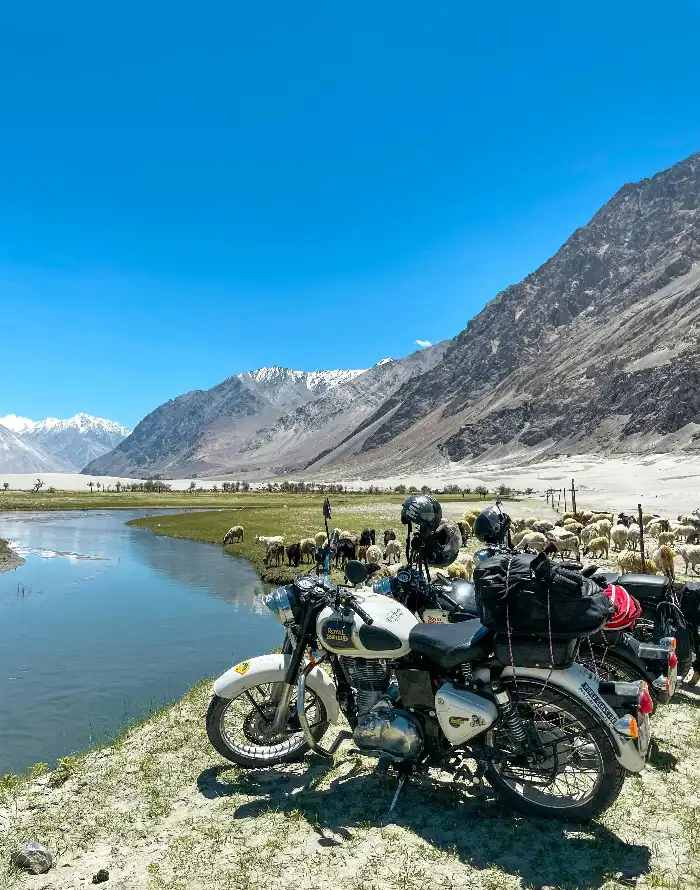
Spiti is a high-altitude cold desert in the northeastern part of Himachal, closer in feel to Ladakh than to the state's greener hill stations. Kaza serves as the main base, with monasteries at Key, Dhankar and Tabo among the region's oldest, and Chandratal Lake a common highlight for those doing a longer loop. Roads into Spiti are seasonal winter snow cuts off several routes so most travelers visit between roughly June and October. Because of the altitude, it's worth building in acclimatization days rather than moving too fast between stops and checking current road conditions before finalizing a Spiti itinerary.
Kasol sits in the Parvati Valley along the Parvati River and has grown into a base for both casual travelers and trekkers heading further up the valley. Its cafés and riverside guesthouses are the main draw for a short stay, while Kheerganga, Chalal and Tosh are common extensions for those willing to walk a bit further or stay an extra night or two. It's popular with backpackers in particular, partly because the valley offers a mix of easy village walks and longer treks within a fairly small area.
Chail is a smaller, quieter hill station not far from Shimla, known for the Chail Palace once a royal retreat and a cricket ground built at an unusually high altitude. Surrounded by deodar forest, it works well for short treks and casual camping without the crowds you'd find in bigger towns nearby. Because it's close to Shimla, Chail often gets added as a day trip or a one-night stop rather than a full base for a longer stay.
Beyond these, Himachal has several smaller destinations worth knowing about depending on the kind of trip you're planning: Jibhi and Tirthan Valley for quieter nature stays, Kasauli for an easy short break near Chandigarh, and Kinnaur, Sangla, Kalpa, Fagu, Solan, Narkanda and Palampur for travelers looking to go beyond the usual Shimla–Manali route.
Check International Tour Packages: Maldives Tour Package | Dubai Tour Package | Bali Tour Package | Europe Tour Package | Singapore Tour Packages | Thailand Tour Packages | Sri Lanka Tour Packages | Nepal Tour Package | Switzerland Tour Packages | France Tour Packages | Spain Tour Packages | Germany Tour Packages | Mauritius Tour Package
Dham is the traditional festive meal of Himachal Pradesh, typically served on banana or pattal leaves during weddings, festivals and religious occasions. It's a vegetarian spread usually including rice, dal, rajma or black chana, a yogurt-based curry, and a couple of side preparations cooked by specialist cooks known as botis. The exact dishes vary somewhat between regions, but the meal is meant to be eaten together, often seated on the floor, and it's one of the more authentic ways to try local food if you happen to be around during a local celebration.
Siddu is a steamed, slightly leavened bread from the Kullu-Manali belt, usually stuffed with a filling of walnuts, poppy seeds, seasonal greens, though a plain version is also common. It's traditionally served with ghee and a side of dal or mint chutney and works as a filling snack rather than a light bite. Homestays and local eateries around Manali and Kullu are the more reliable places to find it, since it's less common on general restaurant menus.
Tudkiya Bhath is a spiced rice dish cooked with lentils and vegetables, closer to a hearty khichdi than a plain pulao. It's typically served with curd and pickle on the side and tends to show up as a one-pot meal in Himachali households, particularly useful during colder months when a warm, filling dish is preferred over something lighter.
Madra is a curry made with chickpeas or kidney beans cooked in a yogurt-based gravy, flavored with a specific blend of spices rather than the standard onion-tomato base used in most Indian curries. It's a common part of the Dham spread but also appears as an everyday dish in Himachali homes, usually paired with rice.
Chha Gosht is a mutton preparation cooked in a gram flour and yoghurt-based gravy, giving it a thicker, slightly tangy consistency compared to more common North Indian mutton curries. It's found in the Chamba region in particular and is usually served with rice or local bread.
Babru is Himachal's take on the kachori, a stuffed, deep-fried bread, traditionally filled with a black gram (urad dal) mixture rather than the spiced potato or moong dal fillings used elsewhere. It's typically served with tamarind or mint chutney and works well as a snack rather than a full meal.
Mittha is a sweet rice preparation, usually rice cooked with sugar or jaggery, ghee and dry fruits, sometimes coloured with saffron. It's served as the dessert component of a Dham meal and occasionally on its own during festive occasions.
Around Dharamshala and McLeod Ganj, Tibetan food is as easy to find as Himachali food, given the area's long-established Tibetan community. Thukpa, a noodle soup usually made with vegetables or meat in a light broth, is a common cold-weather order, alongside momos and thuk, a hand-pulled noodle soup. These dishes are widely available at small Tibetan-run eateries in McLeod Ganj and make a practical, warming option after a day of sightseeing or a short hike. Kullu and Manali's rivers are also known for trout, a freshwater fish rather than seafood, which shows up on menus in that area separately from the state's more traditional vegetarian dishes.
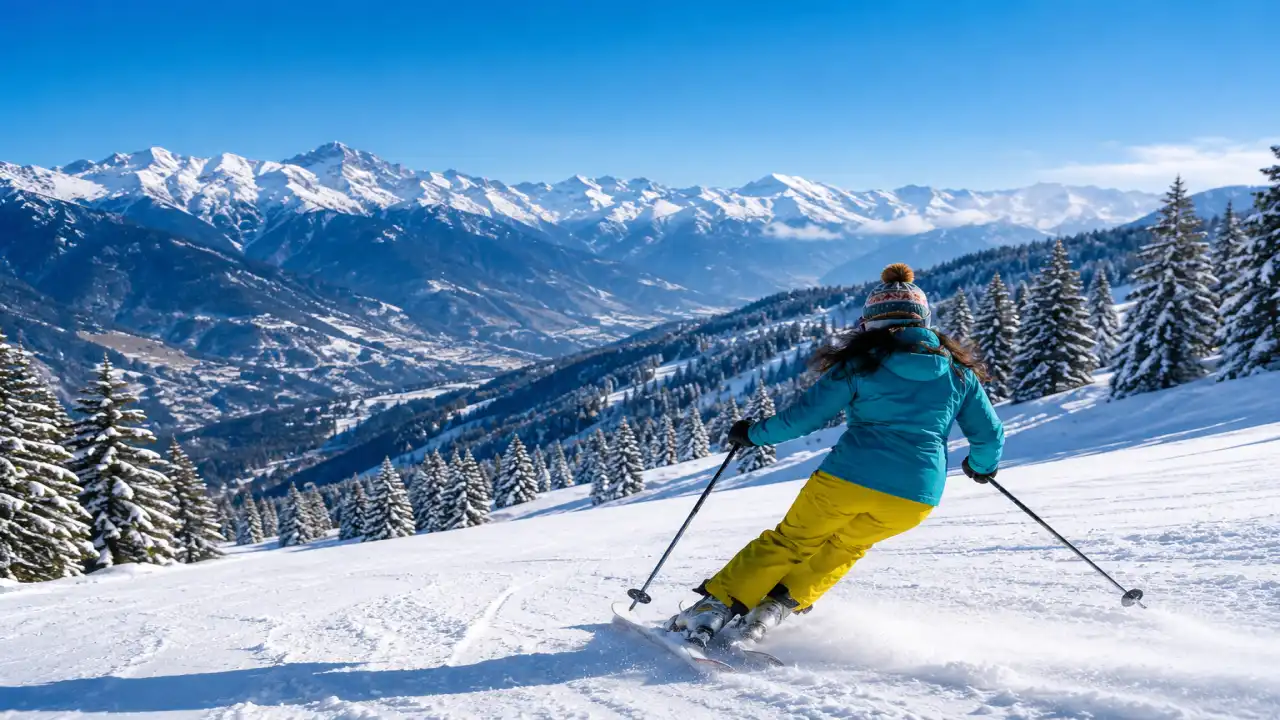
Solang Valley, near Manali, is the most accessible spot for basic skiing and snow activities, usually operational from around December through February depending on snowfall. Narkanda, closer to Shimla, is a quieter alternative with its own ski slopes. Conditions depend heavily on how much snow has fallen that year, so it's worth checking current conditions before planning a ski-focused trip, especially if the visit is timed for the early or late part of the season.
Bir Billing, in the Kangra district, is regarded as one of India's better-known paragliding sites, with tandem flights available for beginners and longer cross country flights for licensed pilots. Solang Valley near Manali also offers shorter tandem paragliding sessions, generally more suited to a quick first-time experience than Bir's longer flights. Both are weather-dependent, so flights can be cancelled or rescheduled on short notice.
Rafting on the Beas River around Kullu is the most commonly booked version of this activity, typically run in stretches suited to beginners and casual travellers rather than expert-level rapids. It's usually available outside the peak winter months, when water levels and temperatures make it more practical, though exact operating windows can shift year to year.
Himachal has treks across a wide difficulty range. Triund, above Dharamshala, is a short and relatively easy overnight trek popular with first-timers. Hampta Pass and Beas Kund, both near Manali, involve more altitude gain and multiple days on trail. Kheerganga, from Kasol, sits somewhere in between a moderate day-and-a-half hike to a hot spring. Pin Parvati is a considerably harder, longer route meant for experienced trekkers rather than casual travellers, and it's worth being clear-eyed about fitness and experience before signing up for anything beyond Triund or Kheerganga.
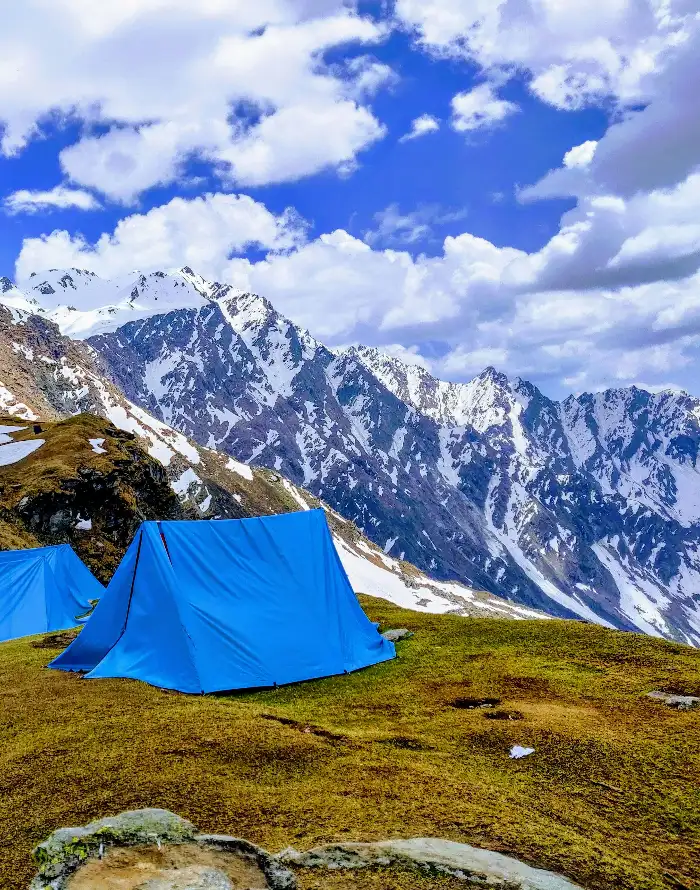
Riverside and forest camping is common around Kasol, Jibhi, Tirthan Valley and the outskirts of Manali, usually set up with tents, bonfires and sometimes basic adventure activities on site. These spots tend to work well as a one- or two-night addition to a longer itinerary rather than the sole purpose of a trip, particularly in Jibhi and Tirthan Valley, which are quieter than the more built-up camping areas near Manali.
Smaller-scale climbing and bouldering spots exist around Manali and a few other adventure hubs, generally organised through local operators rather than as a widely marketed standalone activity. Difficulty varies a lot by route and rock face, so it's usually done as a guided session rather than something travellers attempt independently.
The Kangra Valley, particularly around Palampur, has been a tea growing region for well over a century, and walking through the tea gardens is a fairly low-key but distinctive activity compared to Himachal's more adventure-heavy offerings. A few estates allow visitors to walk through the gardens and, at some, see part of the processing process, making it a good half-day addition for travellers passing through Palampur or Dharamshala.
McLeod Ganj and Dharamshala together form the centre of Tibetan life in Himachal, built around the Dalai Lama's residence, the Tsuglagkhang complex, and a number of monasteries and Tibetan cultural institutions in the area. Beyond the temples themselves, the local markets, Tibetan-run cafés, and craft shops give a sense of the community that's grown here since the 1960s. It's a different kind of sightseeing compared to the rest of Himachal, closer to a cultural visit than a scenic one.
Himachal is known for woollen products shawls, mufflers, and the distinctive Himachali cap (topi) are widely sold across Shimla, Manali and Kullu. Kullu is particularly associated with hand-woven shawls and woollen goods, while local markets across the state also carry wooden handicrafts, handmade textiles and other regional handicraft items. Prices and quality vary a fair bit between government emporiums and smaller local shops, so it's worth comparing a couple of stores before buying anything at scale.
Check Honeymoon Packages in India: Honeymoon Packages | Goa Honeymoon Tours | Andaman Honeymoon Tours | Kerala Honeymoon Tours | North East Honeymoon Tours | Kashmir Honeymoon Tours | Himachal Honeymoon Tours
Check International Honeymoon Packages: International Honeymoon Packages | Singapore Honeymoon Tours | Europe Honeymoon Tours | Thailand Honeymoon Tours | Bali Honeymoon Tours | Baku Honeymoon Tours | Vietnam Honeymoon Tours | Maldives Honeymoon Tours | Almaty Honeymoon Tours | Dubai Honeymoon Tours | Mauritius Honeymoon Tours | Philippines Honeymoon Tours
Not every Himachal trip package needs to look the same the right mix of destinations usually depends on who's travelling.
Shimla and Manali are the easiest starting points for a family trip, given short distances between attractions and a good spread of family-friendly hotels. Kufri and Solang Valley offer manageable outdoor activities for children, and neither destination requires the long mountain drives that places like Spiti or Kinnaur involve.
Kasol, Khajjiar, Dalhousie, and the quieter parts of Manali tend to suit couples looking for a slower pace. Himachal honeymoon packages usually combine two or three of these destinations rather than packing in a long list of sightseeing stops.
Manali and Bir Billing cover most of the state's adventure activities: paragliding, rafting, trekking and skiing in season, while Spiti appeals to those looking for a longer, more demanding road trip through high-altitude terrain.
Shimla and Manali are generally the most practical combination for a first Himachal trip, since both are well connected and don't require the extra planning that Spiti or Kinnaur do. Dharamshala can be added on for travellers who want a cultural stop alongside the more standard hill-station sightseeing.
This is the most popular season for Shimla, Manali, and Dharamshala, with pleasant daytime temperatures and clearer mountain views. It's also the main window for outdoor activities like paragliding and rafting in the lower and mid-altitude regions.
Rainfall increases across most of the state during these months, and landslides can affect road travel in hill areas, particularly around Kullu-Manali and parts of Kinnaur. Spiti, sitting in a rain-shadow zone is often less affected by monsoon rainfall and can actually be a reasonable time to visit that specific region.
Higher-altitude areas like Manali, Kufri and Narkanda get snowfall through winter, drawing visitors specifically for that experience, while lower towns like Shimla stay cooler but don't always guarantee snow every year. Spiti effectively shuts down to most travellers in deep winter, since several access roads become impassable.
Shimla, Kullu (Bhuntar, serving Manali) and Dharamshala (Gaggal) each have small airports with limited flight connectivity, mostly from Delhi and a few other major cities, and flights can be cancelled in bad weather. Chandigarh Airport is a more reliable option with better connectivity, from where onwards travel to most Himachal destinations is by road.
Himachal's own rail network is limited to narrow-gauge lines like the Kalka-Shimla toy train, which is more of a scenic journey than a practical way to cover distance. For most destinations, the nearest useful railheads are outside the state: Kalka for Shimla and Pathankot for Dharamshala and Dalhousie, with the rest of the journey completed by road.
Delhi and Chandigarh are the two main starting points for road travel into Himachal, with Chandigarh generally offering a shorter drive to Shimla and Manali. Roads into higher altitude areas like Spiti and Kinnaur are narrower, slower, and weather-dependent, so travel times there can vary a lot more than a straightforward Shimla or Manali drive.
Enough for a short, focused trip to either Shimla or Manali alone, without trying to cover both.
A reasonable window for Shimla and Manali together, or one of them combined with a nearby add-on like Kufri or Solang Valley.
Allows for a slightly wider circuit in Shimla, Manali, and Dharamshala, for instance, without rushing between stops.
Suitable for a multi-destination trip that includes Dalhousie, Khajjiar, and Kasol alongside the more common Shimla-Manali route.
Needed for itineraries that include Spiti Valley or Kinnaur, since road travel in and out of these regions takes considerably longer than moving between the state's lower hill stations.
Because distances between Himachal's destinations can take several hours to cover even when they look close on a map, it's worth building in buffer time rather than scheduling back-to-back sightseeing every single day.
Check weather and road conditions before travelling, particularly for Spiti, Kinnaur, any winter trip involving snow-prone routes. Carry layered clothing, since temperatures can swing significantly between day and night in the hills. Pack basic medicines and any essentials that might not be easily available in smaller towns. Build buffer time into your itinerary rather than scheduling long drives back-to-back. Follow local regulations and be mindful of the culture in religious and Tibetan community areas. Avoid littering, especially around lakes, meadows, trekking routes. Carry some cash, since digital payments aren't always reliable in remoter areas, and check permit requirements in advance for any restricted-area travel, particularly in parts of Kinnaur and Spiti.
Once you've settled on the destinations, the season, roughly how many days you have, putting together a Himachal tour package usually comes down to matching the itinerary to those constraints rather than picking from a fixed list. Travel Junky's Himachal travel packages can be adjusted on most fronts route, hotel category and number of nights at each stop. whether you're looking at a short Shimla-Manali break or a longer trip built around Spiti and Kinnaur. For anyone still comparing options, it's worth checking a few different Himachal trip package combinations before finalizing one, since even small changes in sequencing can save a day of travel or add one back for a destination that deserves more time.
For couples planning a honeymoon, explore Himachal Honeymoon Packages, Kashmir Honeymoon Tours, Kerala Honeymoon Packages, Goa Honeymoon Tours.
Yes, it is safe to visit high-altitude regions like Spiti or Kinnaur with the right preparation. We recommend gradual altitude gain, proper acclimatization, and 4x4 vehicles. Our local partners ensure safety with real-time weather and road updates. But you should always avoid these regions during heavy snow or monsoon months for safety.
Your Next Adventure
Is A Click Away
Let our specialists build a journey that fits your life, not the other way around. No cookie-cutter tours — just thoughtful, personalised travel.