9D/8N
9- Day Japan Trip Itinerary: Tokyo, Kyoto & Osaka




Starting At:
₹2,98,999
₹3,13,000
Per Adult On Twin Sharing Basis
Get up to 9% OFF on
Starting at ₹1,97,999₹2,17,899
Get up to 9% OFF on
Japan Tour Packages
Starting at ₹1,97,999
Starting At:
₹2,98,999
₹3,13,000
Per Adult On Twin Sharing Basis

Starting At:
₹1,97,999
₹2,17,899
Per Adult On Twin Sharing Basis
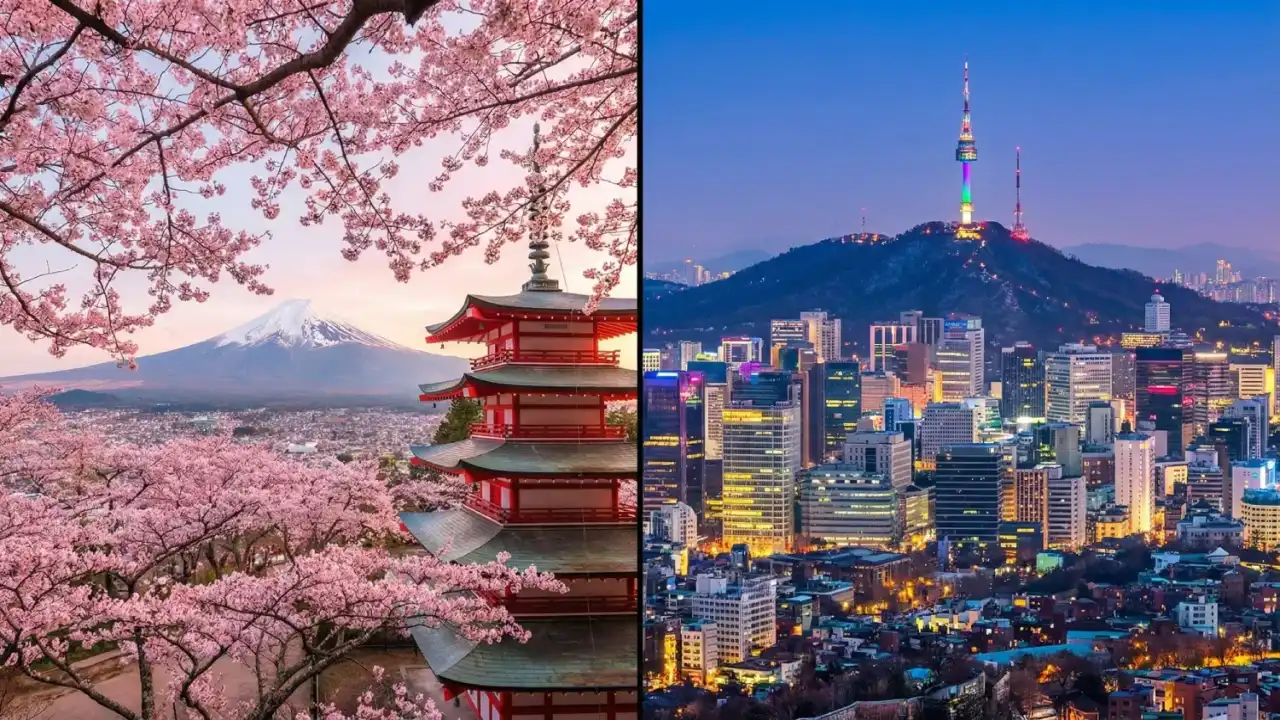
Japan tour packages from India have surged in demand over the last two years, and the reason is straightforward: Japan delivers an experience that no other Asian destination does. Ancient Buddhist temples stand within walking distance of skyscrapers. A bullet train covers the 500 km between Tokyo and Kyoto in 2 hours 15 minutes. The street food at a Tokyo convenience store is better than a sit-down restaurant in most cities. And every season — spring cherry blossoms, summer festivals, autumn foliage, winter hot springs — reframes the entire country.
At Travel Junky, we have personally planned and reviewed Japan itineraries for Indian travellers across all budgets — from ₹1 lakh backpacker trips to ₹3 lakh premium ryokan-and-bullet-train packages. Everything in this guide reflects on-ground research, not recycled blog content.
Japan's reputation for being expensive is half-true. Yes, flights cost more than Thailand or Bali. But once on the ground, Japan is remarkably good value: fresh restaurant meals for ₹500–₹800 at ramen shops and convenience stores, unlimited bullet train travel for ₹28,000–₹32,000 with the JR Pass, and many of Japan's most extraordinary experiences — Shinto shrines, bamboo groves, mountain walks — are free or under ₹500.
The Japan trip from India becomes expensive only when flights are booked late, hotels are chosen without location logic, or the JR Pass (which must be purchased in India before arrival) is skipped. None of these are unavoidable. With lead time and the right consultant, Japan fits into budget ranges most Indian travellers do not expect.
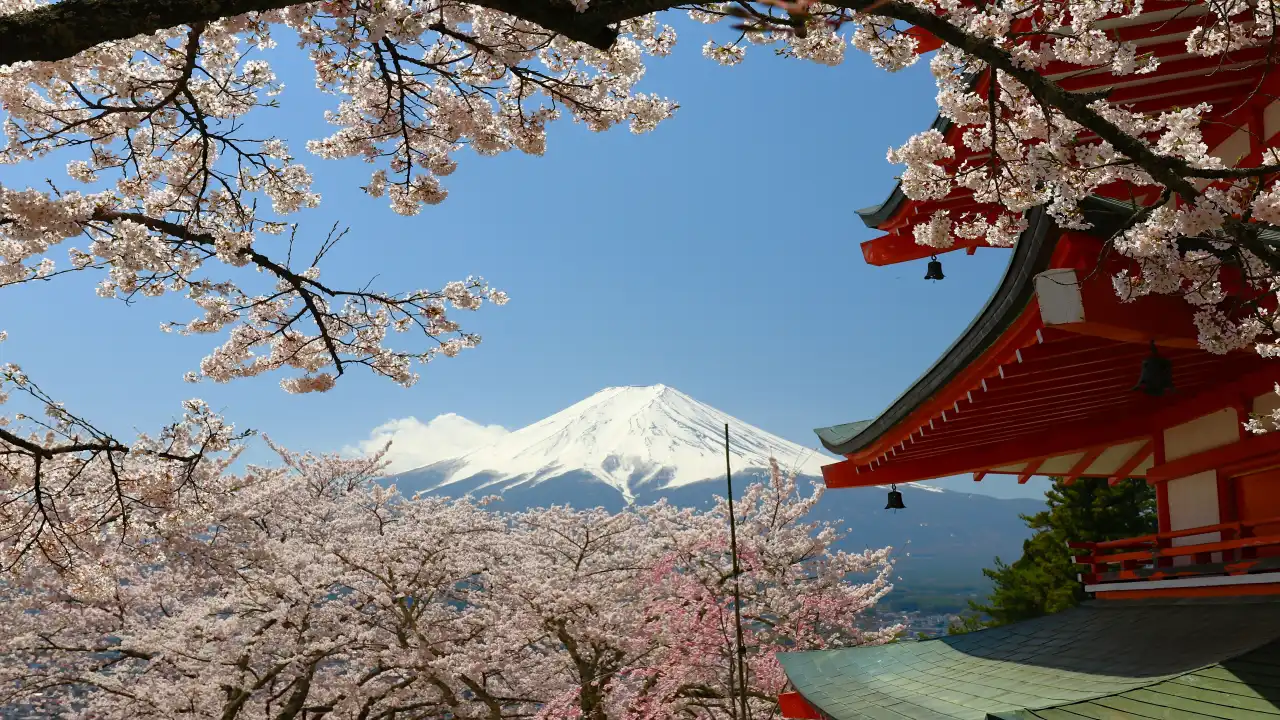
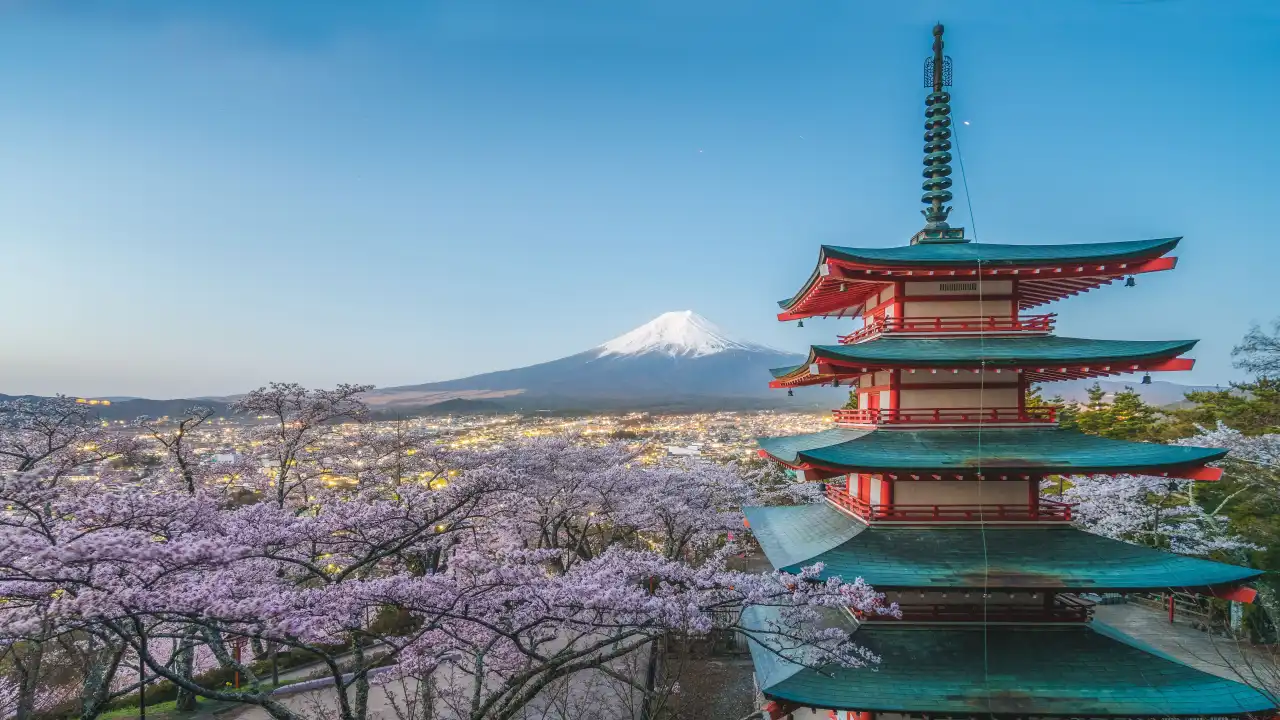
Spring (late March to mid-April): Cherry blossom season is Japan's peak, and for good reason. In 2026 the bloom was projected to peak in Tokyo around the last week of March, and in Kyoto in early April. Hotels and package slots fill months in advance. Book at least 3–4 months ahead for cherry blossom trips.
Autumn (October to November): Japan's second great seasonal spectacle — autumn maple foliage — is equally stunning, slightly less crowded, and more affordable than spring. October temperatures in Tokyo average 14–22°C, making it the physically most comfortable time to sightsee.
Summer (June to August): Hot and humid in major cities (Tokyo regularly hits 35°C+ in August), but aligns with Indian school holidays and Japan's festival calendar — fireworks displays and outdoor summer matsuri are spectacular. Families who must travel in summer should plan early mornings and use the efficient indoor air-conditioning network strategically.
Winter (December to February): Best for Hokkaido snow travel, ski packages, and onsen (hot spring) resort stays. Major cultural sites like Kyoto's Kinkaku-ji in snow are uncrowded and visually extraordinary.
Searching for a Japan tour package for a family of 4 from India is one of the most specific and high-intent queries in the Japan travel category — and most content fails to actually answer it with real numbers. Here is what a family of 4 (2 adults + 2 children under 12) should realistically expect.
A 7-night/8-day Japan family holiday package covering Tokyo, Hakone, and Kyoto — mid-range standard, 4-star hotels, daily breakfast, JR Pass, guided sightseeing, airport transfers — runs approximately ₹7,00,000–₹8,80,000 for the full group of 4 (including return flights from Delhi or Mumbai). Broken down: roughly ₹1,75,000–₹2,20,000 per adult, with children's pricing typically discounted 15–25% on accommodation and some attractions.
For families watching budget: a 5-night/6-night version covering Tokyo and Kyoto only (no Hakone overnight) reduces total cost to approximately ₹5,80,000–₹7,00,000 for 4 persons. The quality of the experience remains strong — you lose one night at a ryokan and the Fuji view, but you do not lose Japan.
Tokyo DisneySea (Urayasu, outside Tokyo): Ranked by theme park industry reviewers as the most immersive Disney park in the world — uniquely Japanese, not replicated anywhere else globally. Unlike Disneyland, DisneySea has zones and rides designed for older children and adults as much as younger ones. Plan a full day; book tickets at least 3–4 weeks in advance through official channels or your travel consultant.
teamLab Borderless (Odaiba, Tokyo): A 20,000 sq.m. digital art museum where moving projections of flowers, light, and animation cover every floor, wall, and ceiling. Children walk through it slack-jawed; adults stand in silence. It is the single most frequently mentioned Japan experience by Indian travellers who visited with families. Advance booking is mandatory — the site sells out days ahead.
Nara Deer Park (day trip from Kyoto): Over 1,000 free-roaming sika deer across the park and temple grounds. Children can purchase deer crackers and hand-feed them directly. The deer bow when presented with food — a result of trained behaviour over centuries, and universally delightful for children of any age. Tōdai-ji temple next door houses the 15-metre Great Buddha, the world's largest bronze Buddha statue, inside the world's largest wooden building.
Universal Studios Japan (Osaka): Home to The Wizarding World of Harry Potter — the most detailed themed environment at any Universal park globally. It is larger than Universal Studios Singapore and adds value even for families who have visited USS. Full-day planning required; Express Pass strongly recommended for families with young children to avoid 60–90 minute queue times for headline rides.
Hakone Ropeway and Lake Ashi: A cable car ride over active volcanic vents at Owakudani (children love the sulfur steam and black eggs boiled in volcanic springs), followed by a Lake Ashi pirate cruise with Mount Fuji in the background. A 90-minute experience that children talk about for years.
Japanese restrooms in major cities, shopping centres, train stations, and tourist sites are universally clean and well-stocked — a genuine comfort for families with young children. ATMs at 7-Eleven branches (open 24 hours) accept Indian debit cards reliably. Baby formula, nappies, and children's medicines are widely available at drugstore chains (Matsumoto Kiyoshi) in all major cities.
For families with elderly members: Japan's accessibility infrastructure is excellent. Major train stations have elevators and clearly signed accessible routes. Most major attractions offer wheelchair access. The Shinkansen has wheelchair spaces and accessible toilets.
Japan is one of the most underrated honeymoon destinations for Indian couples — which is precisely why it works so well. Unlike Maldives or Bali, where nearly every couple at every resort is on a honeymoon, Japan delivers genuine privacy: a private bamboo forest at 6 AM, a ryokan room with your own garden-view onsen, or a kaiseki dinner in a stone-walled cellar restaurant in Kyoto's Gion district.
A well-designed Japan honeymoon package from India for 2 persons for 6 nights/7 days covers Tokyo (2 nights), Hakone ryokan (1 night with private onsen and kaiseki dinner), and Kyoto (3 nights). At a mid-premium level, this runs approximately ₹3,00,000–₹3,80,000 for two persons including return direct flights and 4-star hotels in Tokyo and Kyoto. The Hakone ryokan night typically adds ₹25,000–₹40,000 per couple above a standard hotel night — and is almost universally described by couples as the best single night of the trip.
Private onsen at a Hakone ryokan: Most premium ryokan in Hakone offer private rotemburo (outdoor onsen baths) accessible only from your room or by private booking. Soaking in mineral-rich volcanic spring water with a mountain view, in complete privacy, is the defining ryokan experience. Request a room with a private outdoor bath — standard rotemburo rooms exist in the mid-premium range.
Gion at dusk, Kyoto: The historic geisha district is best walked at golden hour on a weekday. The stone-paved Ishibe Alley — a narrow passage between traditional wooden machiya townhouses — is arguably the most romantic street in Japan and free to walk.
Philosopher's Path in cherry blossom or autumn season: A 2 km canal-side stone path between ancient temples in northern Kyoto. In late March it is lined with cherry blossom; in October it burns red with maple. It is never crowded before 9 AM.
Arashiyama bamboo grove at dawn: The grove is 5 minutes on foot from Tenryu-ji temple and is extraordinary — but only before 8 AM, when the tourist volume is low enough to have long bamboo corridors nearly to yourselves. By 10 AM on any day in cherry blossom or autumn season, it becomes difficult to photograph without strangers in every frame.
Shibuya Sky observation deck, Tokyo: The rooftop observation platform of the Shibuya Scramble Square offers a 360-degree view of Tokyo at night — the city stretches in every direction without visible horizon. Timed-entry tickets should be booked in advance.
Each serves a different travel personality. Maldives prioritises private beach and overwater seclusion. Bali blends spiritual environment with resort comfort and Southeast Asian warmth. Japan delivers cultural intensity, extraordinary cuisine, and experiences genuinely unlike anything else in the world — at a comparable price point to Maldives for a 6-night package, and with far more to do for active couples who find resort-only trips under-stimulating. For couples who have already done Maldives or Bali, Japan is consistently described as the destination that exceeded expectations most dramatically.
Japan group tour packages from India have grown significantly in popularity since 2023, primarily among corporate travel groups, college reunion trips, and extended family groups of 12–25 people. Japan handles group travel with characteristic efficiency — but the logistics require specific planning decisions that individual bookings do not.
For groups of 15 or more, Japan tour packages from India offer genuine economies in three areas: hotel room-block rates (typically 10–15% below individual booking rates at the same property), group-rate Shinkansen seating (reserved seats together, pre-allocated before arrival), and group-rate entrance fees at major attractions including Universal Studios Japan, Osaka Castle, and teamLab Borderless.
An affordable Japan group tour package for 15 pax, 7 nights/8 days (Tokyo + Kyoto + Osaka), mid-range hotels, JR Pass, group guide, guided sightseeing: approximately ₹1,55,000–₹1,80,000 per person excluding international flights. Add return economy flights from Delhi (group-rate booking, ideally 8–10 weeks in advance): approximately ₹48,000–₹60,000 per person. Total all-in: ₹2,00,000–₹2,40,000 per person for a group of 15+.
JR Pass for groups: Must be purchased in India before travel as individual exchange vouchers — one per person. There is no group JR Pass. However, Travel Junky handles bulk procurement and ensures every traveller has their pass activated correctly at the designated JR ticket office on arrival (typically at Narita Airport's JR East Travel Service Centre). This is a step that self-booking groups frequently fumble.
Group Shinkansen seating: Reserved-seat carriages keep the group together. For the Tokyo–Kyoto Shinkansen leg (the key inter-city move on any Japan group itinerary), Travel Junky books reserved seats on a specific Hikari service as part of the package. The Hikari is JR-Pass-covered (unlike the Nozomi, which requires a supplement) and takes approximately 2 hours 45 minutes — fast enough to be comfortable, slow enough to allow group photography at Fuji glimpse points.
Group meals and vegetarian logistics: For Indian groups with a significant vegetarian contingent, the most practical approach is pre-booked group meals at Indian restaurants in Tokyo and Kyoto, combined with hawker-style Japanese meals where the group can self-select. Travel Junky's Japan group packages include pre-booked group dinners at verified vegetarian-friendly Indian restaurants on key nights, reducing the daily food logistics burden considerably.
Group guide: English-speaking Japanese guides are available in Tokyo, Kyoto, and Osaka and add significant value for cultural context at temples and historical sites. For groups with Hindi-speaking preference, Hindi-speaking guides are available in Tokyo and Kyoto through specialist India–Japan tour operators — Travel Junky's network includes verified Hindi-speaking guides in both cities.
Delhi–Tokyo is India's most-served Japan route. Air India, ANA (All Nippon Airways), and Japan Airlines (JAL) all operate direct daily services from Indira Gandhi International Airport (DEL) to Tokyo's Narita (NRT) and Haneda (HND) airports. Flight time: approximately 7 hours 30 minutes. Round-trip economy airfare: ₹48,000–₹65,000 booked 6–8 weeks in advance; ₹70,000–₹90,000 during cherry blossom season (late March to April).
A complete Japan trip package from Delhi — 7 nights/8 days, 4-star hotels, JR Pass, guided sightseeing, daily breakfast — including return direct flights: ₹1,80,000–₹2,20,000 per person.
ANA operates a direct Mumbai (BOM) to Tokyo Narita service. Flight time approximately 8 hours 15 minutes. Air India offers connectivity via a short Singapore or Bangkok connection. Round-trip fares from Mumbai: ₹50,000–₹68,000 standard; higher in peak season.
Travel Junky's flagship Japan package starting from ₹1,97,999 per person is built around the Mumbai departure on the ANA direct service. This figure is land + sightseeing; airfare is additive.
JAL (Japan Airlines) now operates a direct Bangalore (BLR) to Tokyo Narita service — a significant connectivity upgrade for South India's largest aviation market. Flight time: approximately 8 hours. This route is competitive and frequently offers better value than Delhi or Mumbai direct services when booked in advance. Round-trip fares: ₹48,000–₹62,000.
Bangalore is Travel Junky's second-largest Japan departure market, and we have handled several corporate group departures from BLR for groups of 20–50 pax.
Travellers from these cities connect to Tokyo via Singapore (Singapore Airlines, Scoot, IndiGo), Bangkok (Thai Airways, Thai AirAsia), or Hong Kong (Cathay Pacific). Total journey times range from 11–16 hours. One-stop round-trip fares frequently start at ₹35,000–₹55,000 — lower than direct routes, though the additional travel time matters more for families and groups than for solo travellers.
Tokyo is the world's largest city and one of its most walkable. Its 23 special wards each have a distinct character — Asakusa preserves the atmosphere of Edo-era Tokyo; Shibuya is the commercial and cultural pulse of modern Japan; Yanaka in the north-east is narrow lanes and craft shops unchanged since the 1950s.
For first-time visitors from India, the non-negotiable Tokyo experiences are:
Senso-ji Temple (Asakusa): Tokyo's oldest Buddhist temple, founded in the 7th century. The outer gate — Kaminarimon — with its famous red lantern is Tokyo's most photographed image. The Nakamise shopping street leading to the main hall sells traditional sweets, fans, ceramics, and keychains. Visit before 8:30 AM to have the main precincts relatively quiet.
Tokyo Skytree: At 634 metres, Japan's tallest structure. The Tembo Deck at 350m and Tembo Galleria at 450m offer views across the entire Kanto plain on clear days — on exceptionally clear winter mornings, Mount Fuji is visible from the observation level. Book tickets online in advance.
Shibuya Crossing: The world's busiest pedestrian crossing, with an estimated 500,000–1,000,000 people crossing daily. Best viewed from the Starbucks second floor (northeast corner of the crossing) or from the Scramble Square rooftop. The crossing is most dramatic at evening rush hour (6–8 PM).
Akihabara: Tokyo's electronics and pop culture district, a genuine multi-generational experience. Multi-storey electronics stores, manga libraries, retro gaming arcades, and themed cafes. The density of neon, audio, and product is an experience in itself regardless of any purchases.
Kyoto was Japan's imperial capital for over 1,000 years. Its 17 UNESCO World Heritage Sites, 1,600 Buddhist temples, and 400 Shinto shrines make it the most historically dense city in Japan by a wide margin.
Fushimi Inari Taisha: Ten thousand vermilion torii gates winding up a forested mountain south of Kyoto. One of Japan's most visited and most photographed places — for good reason. The lower section (first 30–45 minutes of the climb) is what most visitors see. The full circuit to Inari mountain peak and back takes approximately 2–2.5 hours and involves a significant altitude gain. Best visited before 8 AM to photograph the lower tunnel of torii before the first coach-tour groups arrive.
Kinkaku-ji (Golden Pavilion): A Zen Buddhist temple whose upper two floors are covered in gold leaf. The pavilion reflects in its mirror pond — the image changes character entirely with the season and lighting. One of the most genuinely beautiful individual structures in Japan.
Arashiyama Bamboo Grove: A towering corridor of mature bamboo on the western edge of Kyoto, 5 minutes on foot from Tenryu-ji temple. Early morning visits (before 8 AM) allow the experience of the bamboo in relative quiet; by 10 AM on any peak season day, it is very crowded.
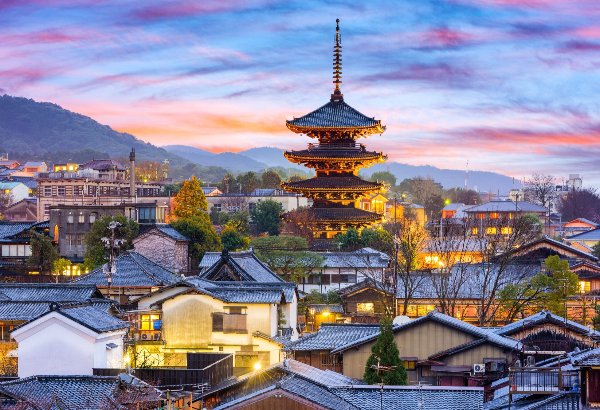
Gion — Kyoto's Geisha District: Hanamikoji Street in Gion is the best-preserved historic streetscape in Japan — wooden machiya townhouses, paper lanterns, stone pavement. The area still functions as a working geisha district with active okiya (geisha houses). Patient evening walks on weekdays occasionally yield the sight of a maiko (apprentice geisha) in full kimono and white makeup moving between engagements.
Hidden Kyoto — Daitoku-ji and Philosopher's Path: Daitoku-ji is a complex of 24 Zen sub-temples in Kyoto's north that receives roughly 1% of Fushimi Inari's visitor volume. Several sub-temples are open to the public and charge nominal entry — the dry landscape gardens (karesansui) at Ryogen-in and Zuiho-in are masterworks of Zen spatial composition. The Philosopher's Path (Tetsugaku no Michi), a 2 km stone canal towpath between Nanzen-ji and Ginkaku-ji, is extraordinary in cherry blossom and autumn season and pleasant year-round.
Osaka is food-first: Dotonbori's covered street of takoyaki, okonomiyaki, and kushikatsu stalls; Kuromon Ichiba Market for fresh seafood and produce; Shinsekai district for a nostalgic retro atmosphere. Universal Studios Japan anchors the western part of the city for families. Ōsaka Castle park is expansive and free to walk; the castle museum interior costs approximately ₹700.
Nara (45 minutes from Kyoto by express train) is the deer park and Tōdai-ji — already covered in the family section above. Half a day is enough; most visitors combine Nara with a Kyoto temple day or use it as a stopover en route to Osaka.
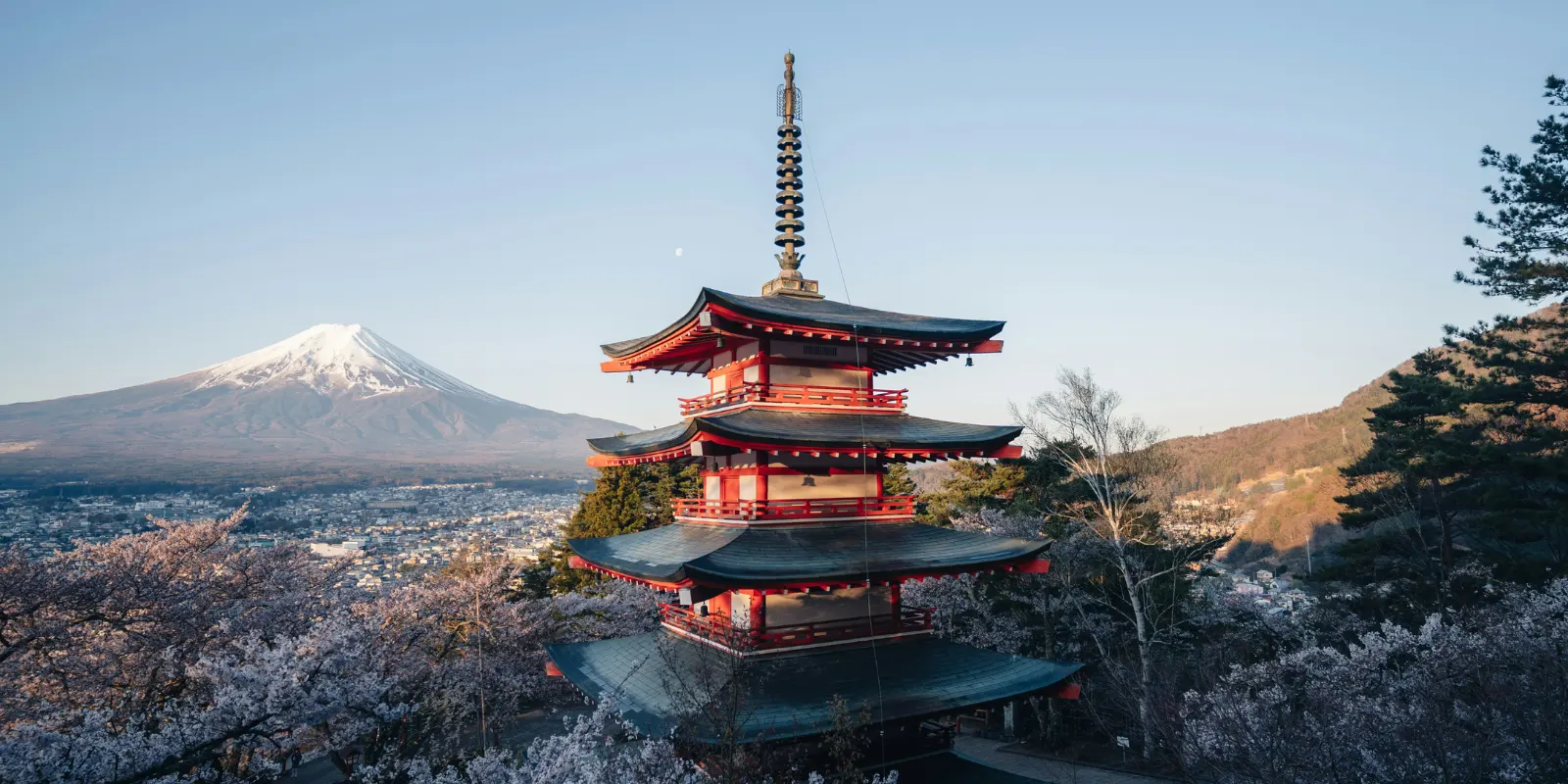
Mount Fuji and Hakone are covered in the itinerary section below. The short version: Hakone is the most practical base for the classic Fuji view for travellers on a time-limited Japan package. The Kawaguchiko lake area offers the postcard reflection view for those who want more time around the mountain itself.
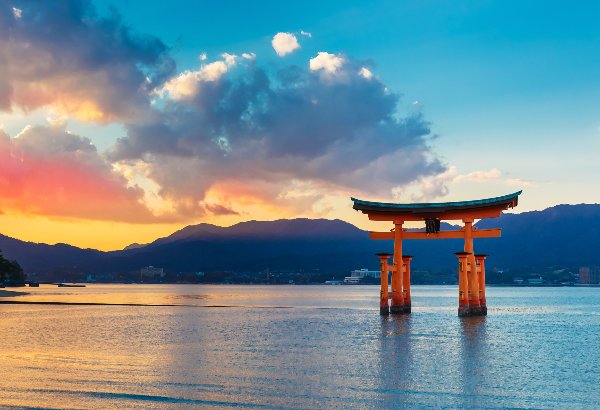
Hiroshima and Miyajima Island is a combination that most standard Japan packages skip — and one that genuinely rewards inclusion. The Peace Memorial Museum is sobering, important, and well-designed. Miyajima Island's floating torii gate at Itsukushima Shrine, 30 minutes by ferry, is among the most photographed images in Japan and is best seen at high tide when the gate appears to rise from the sea.
This itinerary is the backbone of Travel Junky's Japan packages and covers Japan's urban, cultural, and natural highlights at a pace that does not exhaust. It is the configuration most Indian travel agents use because it works — the city sequencing is logical, the distances are manageable, and nothing feels rushed.
Day 1 — Arrival in Tokyo | Neighbourhood Orientation Arrive at Narita or Haneda Airport. Activate JR Pass at the JR ticket office inside the airport (Travel Junky's consultants prep you for this step before departure). Take the Narita Express (JR Pass covered) into central Tokyo. Check in and head to Shinjuku for an evening orientation walk — Omoide Yokocho (Memory Lane), a narrow post-WWII alley of grilled skewer restaurants; Kabukicho entertainment district; or a quieter walk through Shinjuku Gyoen park if you land early.
Day 2 — Tokyo Sightseeing (Asakusa, Shibuya, Harajuku) 8:30 AM: Senso-ji Temple in Asakusa before crowds build. Walk Nakamise shopping street. Subway to Akihabara by 10:30 AM. Lunch. Afternoon: Shibuya Crossing (cross it; view it from above at Scramble Square or the Starbucks second floor). Harajuku's Takeshita Street for a cultural observation. Evening: Tokyo Skytree for the city view at sunset or dusk — pre-book timed entry.
Day 3 — Tokyo Experience Day (Choose Your Focus) Families: Full day at Tokyo DisneySea (Urayasu — 30 minutes from central Tokyo on the Keiyo JR line). Arrive before 10 AM opening. Culture and art: teamLab Borderless in Odaiba — immersive digital art museum, requires advance booking. Combine with an afternoon at Odaiba's Palette Town or the adjacent Diver City (life-size Gundam statue). Food lovers: Tsukiji Outer Market for a breakfast of fresh tuna hand-rolls and tamagoyaki, then a day exploring Yanaka's craft shops and Nezu Shrine in northeastern Tokyo.
Day 4 — Hakone (Mount Fuji Views + Ryokan Night) Morning Romancecar express from Shinjuku to Hakone-Yumoto (90 minutes; Japan Rail Pass accepted on Odakyu Railway's Romancecar with a seat reservation supplement of approximately ¥1,000). Hakone Ropeway from Sounzan to Togendai over the Owakudani volcanic valley — active sulphur vents, black volcanic eggs cooked in thermal springs (for non-vegetarians). Lake Ashi pirate cruise with Mount Fuji backdrop (clear weather dependent — autumn and winter mornings offer the best visibility). Check into Hakone ryokan by 3 PM. Yukata robes, private onsen, multi-course kaiseki dinner served in your room.
Day 5 — Bullet Train to Kyoto | Fushimi Inari After ryokan breakfast (included, typically 7:30–9 AM), Shinkansen from Odawara Station to Kyoto (2 hours 45 minutes on Hikari, JR Pass covered). Arrive Kyoto late morning. Store luggage at hotel or coin lockers. Head directly to Fushimi Inari Taisha by 1 PM (the afternoon light on the red torii is photogenic). Plan 90 minutes for the lower and mid-mountain section. Evening: walk Hanamikoji Street in Gion at dusk.
Day 6 — Kyoto Full Day Morning: Arashiyama bamboo grove (be there by 7:30 AM; return by 9 AM to Tenryu-ji temple opening). Lunch at a local Arashiyama restaurant. Afternoon: Kinkaku-ji (Golden Pavilion) and Ryoan-ji zen garden. Optional: Nishiki Market for street food and local products (covered market, open daily). Evening: Philosopher's Path for a sunset walk if autumn foliage or cherry blossoms are active.
Day 7 — Nara + Transfer to Osaka Morning express from Kyoto to Nara (45 minutes). Tōdai-ji temple and the deer park (2.5–3 hours). Afternoon: Kintetsu Line from Nara to Osaka (40 minutes). Check into Osaka hotel. Evening at Dotonbori — the covered entertainment district along the canal, best experienced on foot with minimal agenda. Street food, neon signs, the giant Glico running man billboard.
Day 8 — Osaka + Departure Families: Morning at Universal Studios Japan (USJ). Leave by 2–3 PM for Kansai Airport. Other travellers: Kuromon Ichiba Market breakfast, Ōsaka Castle museum, and Shinsekai district for lunch. Afternoon transfer to Kansai International Airport (KIX). Most Delhi and Mumbai return flights depart Osaka in the evening, allowing a partial departure day.
Day 1: Tokyo arrival + Shinjuku evening. Day 2: Full Tokyo sightseeing (Asakusa, Shibuya, Harajuku, Skytree). Day 3: Tokyo experience day (DisneySea or teamLab). Day 4: Bullet train to Kyoto, Fushimi Inari afternoon. Day 5: Full Kyoto day (Arashiyama, Kinkaku-ji, Gion). Day 6: Morning Nishiki Market, afternoon transfer to Osaka/Kansai Airport.
This is Travel Junky's recommended configuration for first-time visitors with a tighter budget or time constraint. It sacrifices Hakone, the ryokan night, and Osaka, but delivers Japan's two most important cities at a pace that allows genuine absorption.
This is the most searched Japan cost query from India, and it almost never receives a genuinely specific answer. Here is one.
Budget 5N/6D (Tokyo + Kyoto, 2 persons): Round-trip connecting flights (2 persons): ₹70,000–₹90,000 3-star hotels (5 nights, 1 room): ₹35,000–₹50,000 JR Pass (2 × 7-day passes): ₹56,000–₹64,000 Food (2 persons × ₹2,500/day × 6 days): ₹30,000 Sightseeing entries + local transport: ₹20,000–₹25,000 Visa fees (2 persons × ₹1,450): ₹2,900 Total estimate for 2 persons: ₹2,10,000–₹2,30,000
Mid-Range 7N/8D (Tokyo + Hakone + Kyoto + Osaka, 2 persons): Round-trip direct flights (2 persons): ₹96,000–₹1,30,000 4-star hotels + 1 ryokan night (7 nights, 1 room): ₹1,00,000–₹1,40,000 JR Pass (2 × 7-day passes): ₹56,000–₹64,000 Food (2 persons × ₹3,500/day × 8 days): ₹56,000 Sightseeing entries, experiences, local transport: ₹40,000–₹55,000 Visa fees (2 persons): ₹2,900 Total estimate for 2 persons: ₹3,50,000–₹3,90,000
Premium 8N/9D (Full circuit, ryokan, private transfers, 2 persons): Round-trip direct flights on JAL/ANA full-service economy (2 persons): ₹1,30,000–₹1,60,000 5-star hotels + premium ryokan nights (8 nights): ₹1,80,000–₹2,40,000 JR Pass (2 × 14-day passes): ₹80,000–₹96,000 Food (kaiseki dinners, sit-down restaurants): ₹1,00,000–₹1,40,000 Sightseeing, curated experiences, private transfers: ₹60,000–₹90,000 Total estimate for 2 persons: ₹5,50,000–₹7,30,000
Booking through Travel Junky for a Japan trip for 2 persons versus doing it independently typically saves ₹15,000–₹30,000 on hotel-rate differentials alone (contracted hotel rates for repeat-booking agents are lower than individual OTA rates). Add the JR Pass handling, visa documentation support, and on-ground problem resolution, and the value proposition is strong — particularly because a Japan itinerary mistake on the ground (missed JR Pass activation, hotel location error, wrong Shinkansen booking) costs significantly more to fix than it costs to avoid.
All prices are indicative for 2025–26 and are subject to seasonal variation and airfare fluctuation. Contact Travel Junky for current quotes specific to your travel dates.
Food in Japan is simultaneously one of the world's great culinary traditions and the most navigated topic among Indian travellers. The core challenge: Japanese cuisine is built on dashi — a broth of dried fish and kombu seaweed that forms the base of miso soup, udon, soba, sauces, and most savoury cooking. Dishes that appear vegetarian often are not.
The practical reality, however, is far more manageable than the anxiety:
T's Tantan at Tokyo Station (100% vegan ramen): Operates inside Tokyo Station on the Keiyo Street concourse. Entirely meat-and-fish-free menu with sesame-based and soy-based ramen broths. English menu available. Queue by 11:30 AM — it fills quickly on any day. This is the single most recommended vegetarian restaurant in Japan by Indian travellers who have been, and it has been visited and verified by Travel Junky's Japan desk.
Shojin Ryori (Buddhist temple cuisine): The purest vegetarian tradition in Japan, originating in Zen monasteries. Prepared without meat, fish, onion, garlic, or five pungent roots — aligning closely with Jain dietary requirements. Shigetsu at Tenryu-ji temple in Kyoto's Arashiyama serves shojin ryori lunch in a tatami room overlooking the temple's historic garden pond. Reservations required and should be made through your travel consultant.
Indian restaurants across major Japan cities:
Japan's official vegetarian index: The Japan National Tourism Organization (JNTO) maintains a verified list of vegetarian and vegan restaurants across Japan at japan.travel — this is the most authoritative reference and is updated regularly.
Apps to use on the ground: HappyCow (global, filters by vegan/vegetarian, verified user reviews) and Vegewel (Japan-specific, English interface). Both function on Japanese mobile data which you can access via a pocket WiFi device rented at the airport.
The convenience store solution: Japan's 7-Eleven and FamilyMart stores offer fresh-made food that is far above the global convenience store standard. While most onigiri contain fish or chicken, most convenience stores carry vegetarian-labelled options including plain rice balls with pickled plum (umeboshi), vegetable sandwiches, and a range of fresh fruit cups. Breakfast for two from a Japanese convenience store — including coffee — costs approximately ₹400–₹600.
Before signing a booking agreement for any Japan tour package from India, get these specifics confirmed in writing:
Exact hotel names and neighbourhood: Location matters more in Japan than almost anywhere else because the sightseeing circuits in Tokyo and Kyoto are geographically distributed. A hotel in Shinjuku or Shibuya in Tokyo saves 20–30 minutes in daily commute versus a peripheral location. In Kyoto, proximity to Karasuma Oike station puts you 5 minutes from the metro network; a hotel near Kyoto Station adds 15–20 minutes to most temple visits.
JR Pass type and coverage: Confirm whether the package includes a 7-day or 14-day JR Pass, and confirm it is the nationwide JR Pass (not a regional pass like the JR East or JR West pass, which do not cover the full Tokyo–Kyoto–Osaka route). Confirm that the exchange voucher is delivered in India before travel.
Flight specifics: Airline name, flight number, whether it is direct or connecting, and layover duration if connecting. A "low-price" Japan package with a 6-hour Dubai or Bangkok layover each way adds 12 hours of unnecessary travel. Know what you are buying.
Ryokan details: If a ryokan night is included, confirm whether the quoted price includes dinner and breakfast (typically it does at a proper ryokan; a minshuku guesthouse may not). Confirm whether the room has a private outdoor onsen (rotemburo) or shared facilities.
Visa documentation support: Confirm what your agent handles versus what you are responsible for. Travel Junky's Japan packages include full visa documentation preparation — document checklist, cover letter drafting, and submission logistics. We have handled hundreds of Japan visa applications from India with a rejection rate consistently below the industry average.
Our Japan consultants do a minimum one annual Japan recce trip. The vegetarian restaurant recommendations in this guide are personally verified within the last 12 months. The Shinkansen logistics, ryokan check-in process, and JR Pass activation steps are built into a pre-departure brief document sent to every Travel Junky Japan traveller before they board.
If you have a Japan query — cost for a specific travel date, city combination, or group size — reach us at +91-9871597736 or through the Travel Junky website. We respond with real numbers, not ranges.
Content researched and written by the Travel Junky Japan desk. Prices reflect 2025–26 market conditions. Visa and regulatory information current as of June 2026. Individual quotes vary by travel date, group size, and hotel availability — contact us for current pricing.
Your Next Adventure
Is A Click Away
Let our specialists build a journey that fits your life, not the other way around. No cookie-cutter tours — just thoughtful, personalised travel.