Places That Look AI-Generated But Are Actually Real
Some places are so unusual that the first thought is, “This has to be edited.” The spiky rocks of Cappadocia, the colourful mountains at Zhangye Danxia, or the endless reflections at Salar de Uyuni. Yet, these Unreal Places in the World are completely real, and you can literally book a flight and visit anytime.
Each of these spots looks interesting for a completely different reason. Some got carved out by water over thousands of years. Others got worn down by wind, slow and steady, like sandpaper on a rock for centuries. A couple of them just have odd minerals sitting in the ground, or catch sunlight in a way that plays tricks on your eyes. Here are six places that honestly look too perfect to be real but are.
1. Cappadocia, Turkey – A Landscape Full of Fairy Chimneys
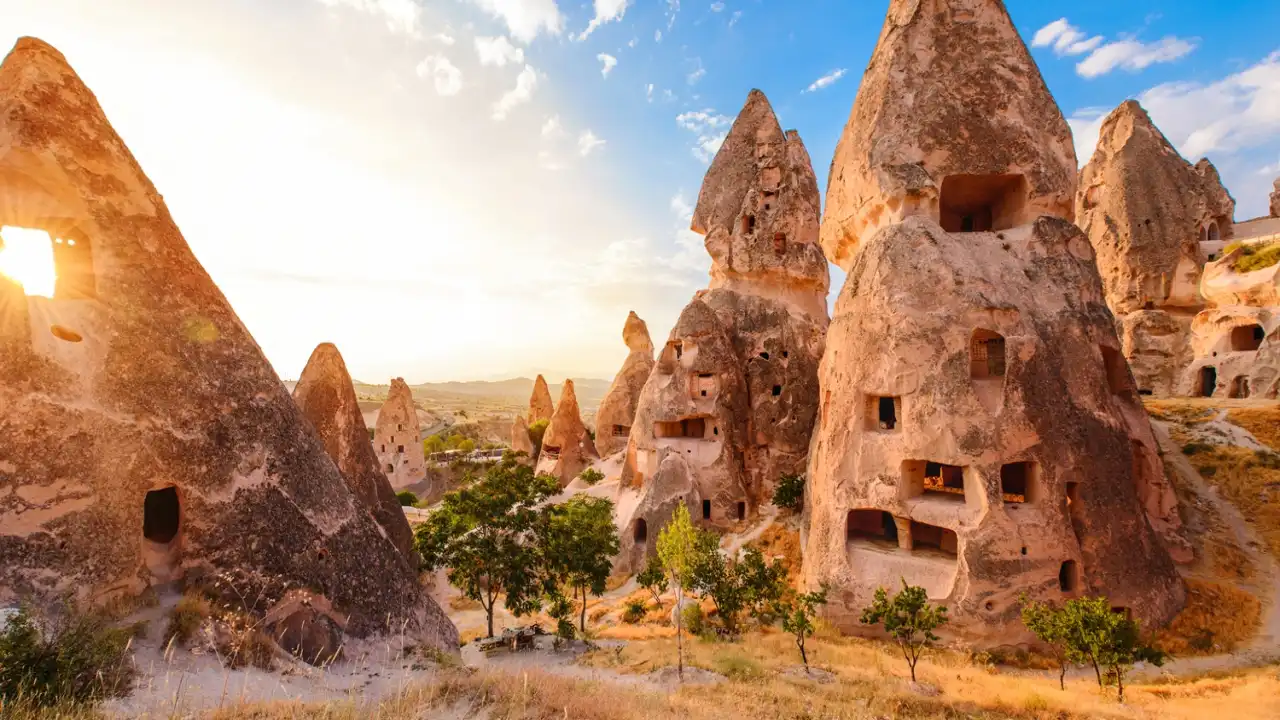
Cappadocia doesn't look like your usual mountain-trip photo dump. It's packed with tall pointy rocks, odd little valleys, cave houses dug right into the hillsides, and hills shaped by thousands of years of erosion. The fairy chimneys are the main event. These pointed towers started with volcanic eruptions, and then wind and water kept shaping them for ages after.
People even carved homes, churches, and hotels into the rock itself, all tucked inside stone that's been standing forever. And then, the balloons. Sunrise comes and suddenly the whole sky's full of color while the valley below slowly wakes up. It's the kind of scene that looks edited in pictures and but the landscape really does look like this.
Things to experience
- Hot-air balloon ride
- Göreme Open-Air Museum
- Underground cities
- Cave hotels
- Red and Rose Valley
- Sunset viewpoints
Pro tip: Try to stay at least two nights if your schedule allows it. Early mornings and evenings are when this place really turns it on.
2. Zhangjiajie, China – Mountains That Look Like a Fantasy World
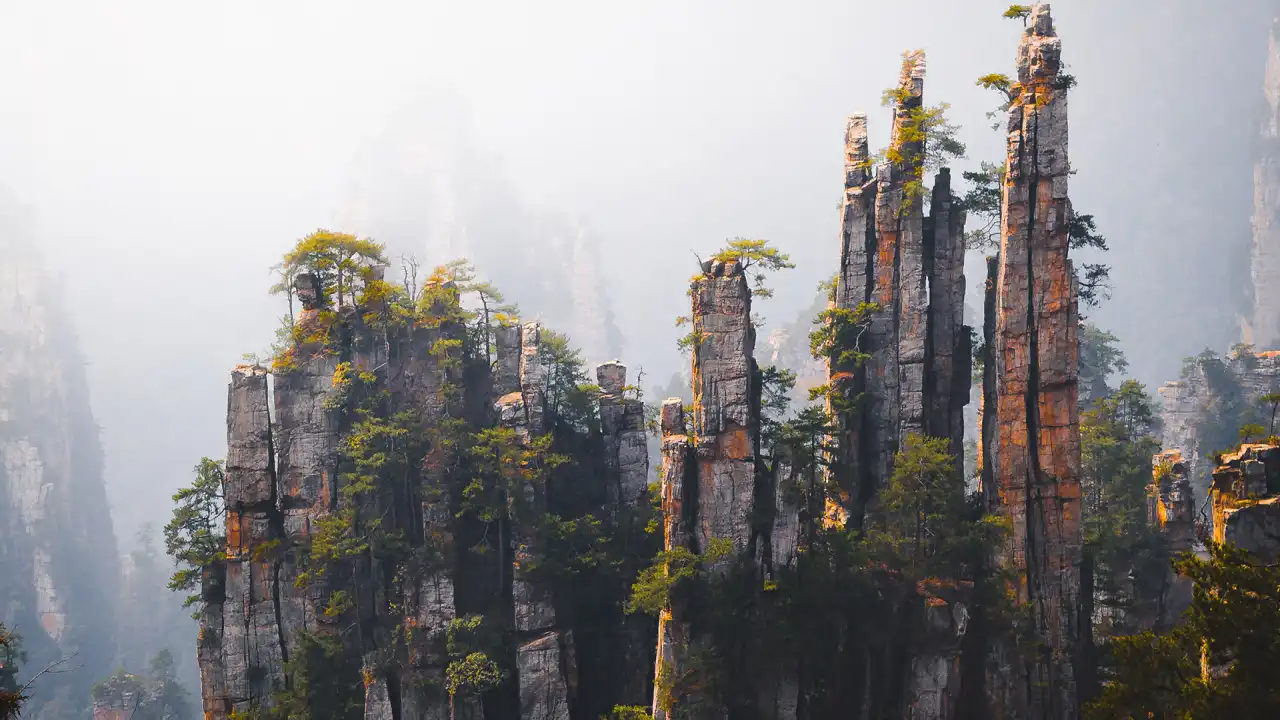
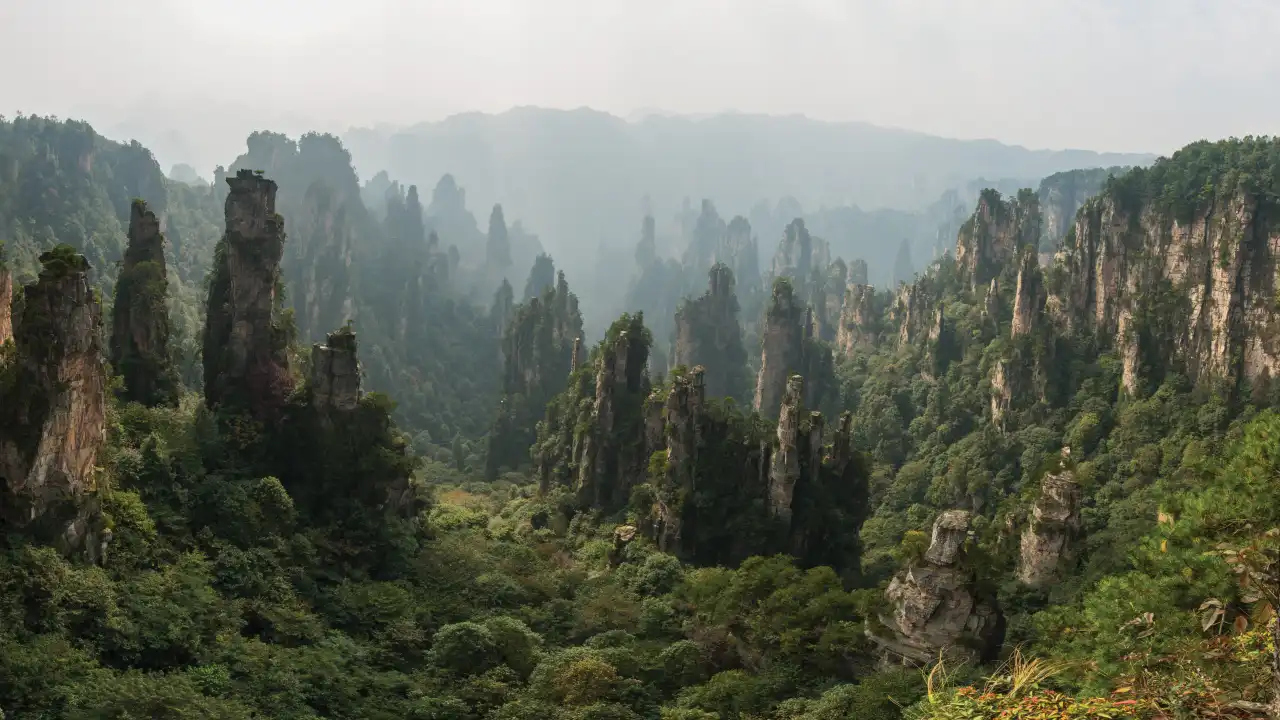
Tall stone pillars rising through green forests make Zhangjiajie one of China's most unusual natural destinations. Add in the mist that rolls through most days and honestly the whole scene stops looking real pretty fast. Zhangjiajie National Forest Park is home to the famous sandstone pillars. The landscape was formed naturally over millions of years through erosion.
Fun bit of trivia: people link these mountains to the floating peaks in Avatar, and once someone points that out, you can't really unsee it. There's more to do than just stand around staring at rocks, though. Cable cars, walking trails, bridges stretched between peaks, viewpoints to explore. Tianmen Mountain is worth a separate trip mostly for that huge natural rock arch and the twisty mountain road leading up to it.
Don't miss
- Zhangjiajie National Forest Park
- Tianzi Mountain
- Tianmen Mountain
- Bailong Elevator
- Glass skywalk
- Mountain cable cars
Pro tip: Bring proper shoes. There's a ton of stairs and walking involved, and your feet will absolutely let you know about it later.
3. Pamukkale, Turkey – White Terraces That Look Like Snow
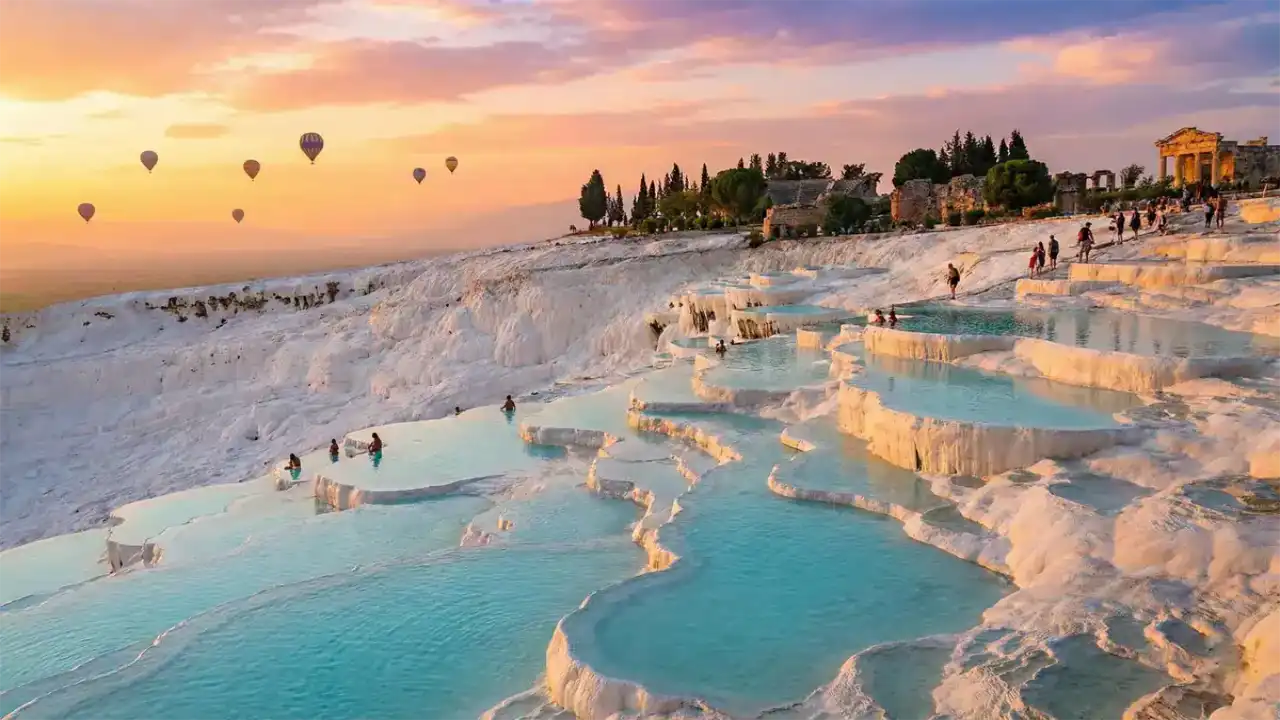
From a distance, Pamukkale really does look like a snowy hillside someone dropped in the middle of Turkey. Get up close, though, and it clicks that it's not snow at all. Those white terraces are travertines, built up slowly by mineral-rich hot water flowing down the slope for thousands of years.
It left behind calcium deposits that gradually formed the terraces. Small pools of blue water sit scattered across the white rock, and honestly the contrast is stunning in person, more than any photo really captures. Right next door sits the ancient city of Hierapolis too, a solid bonus if old ruins and history are your thing.
Highlights of Pamukkale
- Natural white travertine terraces
- Thermal pools
- Ancient Hierapolis
- Historic ruins
- Sunset views
- Natural hot springs
Pro tip: Check the local access rules before heading out; some areas and sections may have restrictions to protect the fragile formations.
4. Salar de Uyuni, Bolivia – Where the Sky Meets the Ground
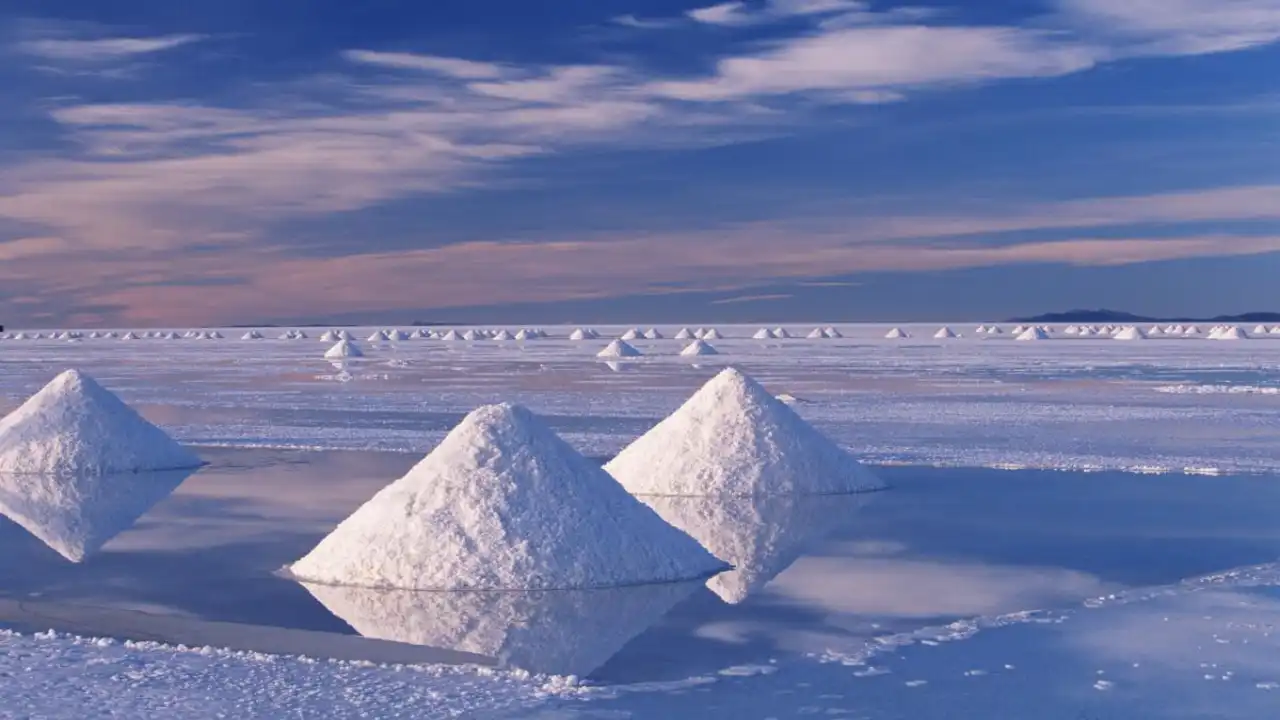
Salar de Uyuni is one of those places where photographs can be genuinely confusing. During the wet season, a thin sheet of water spreads across the salt flat and it turns into one giant mirror. You literally cannot tell where the ground stops and the sky starts. Walk out there and it honestly feels like you're floating in midair. The horizon just vanishes. That's the famous "mirror effect" that everyone's photos are chasing.
Dry season looks completely different: no water at all, just a massive white stretch of salt, sometimes cracked into natural hexagon shapes across the ground, kind of like dried mud but on a much bigger scale. Either way you look at it, it's the largest salt flat on the planet, stretching across thousands of square kilometers.
What makes it special?
- Huge white salt landscape
- Mirror effect during wet conditions
- Natural hexagonal salt patterns
- Isla Incahuasi
- Giant cacti
- Unique photography opportunities
Pro tip: The mirror effect isn't guaranteed; it depends heavily on rain and weather. Keep your plans flexible.
5. Antelope Canyon, USA – Rock Walls Shaped by Water
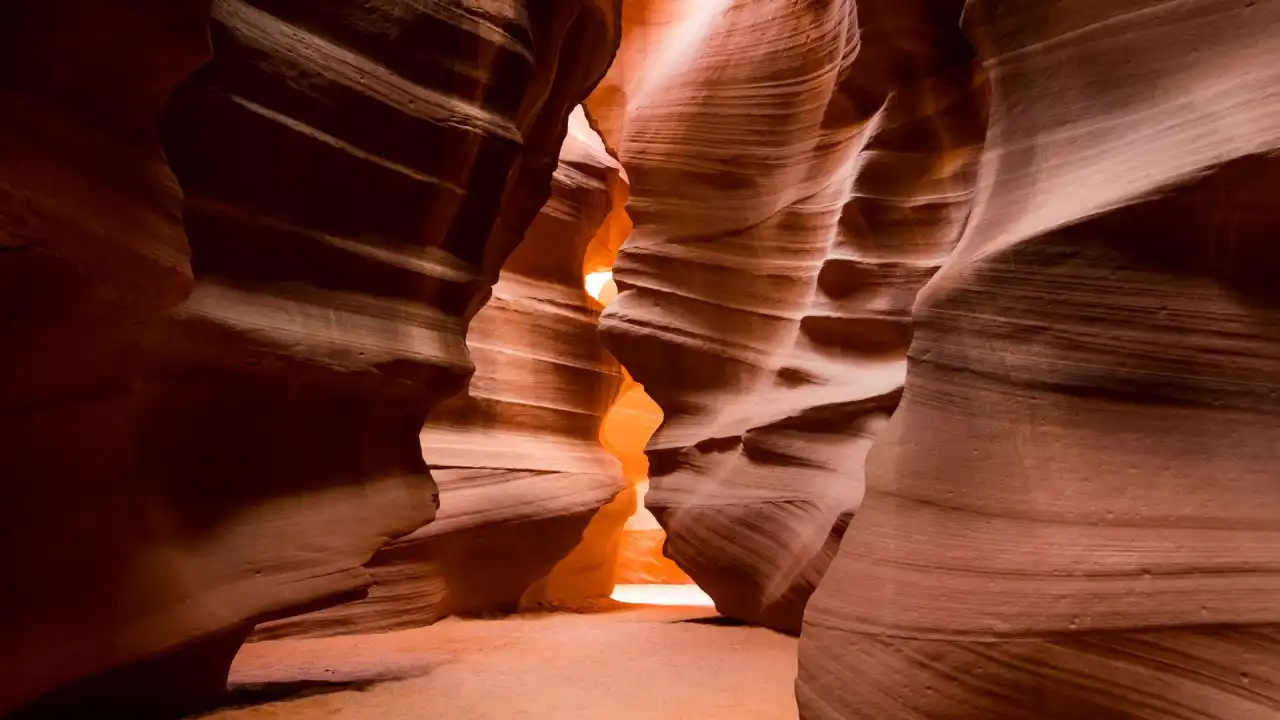
Antelope Canyon in Arizona looks like someone sat down for years carving waves into the canyon walls by hand. Smooth curves, shifting shades of orange and red it's one of the most photographed spots in the whole country, and for pretty obvious reasons once you see it. Water actually did all the carving here. Flash floods, over a long stretch of time, slowly cut through the sandstone and left behind those flowing, wavy patterns everyone recognizes now.
Sunlight sneaking in through the narrow gap up top makes the whole thing look even more dramatic. Depending on the time of day and what the sky's doing, the colors and shadows shift around quite a bit, sometimes within minutes. The canyon splits into Upper and Lower sections, and either way you'll need a guide to actually get in.
Before visiting
- Book a guided tour in advance
- Wear comfortable shoes
- Carry water
- Follow photography rules
- Check seasonal weather conditions
Pro tip: If photography matters to you, timing is everything here. The way light pours in can completely change how the rock looks in just a few minutes.
6. Zhangye Danxia, China – Mountains With Natural Colours
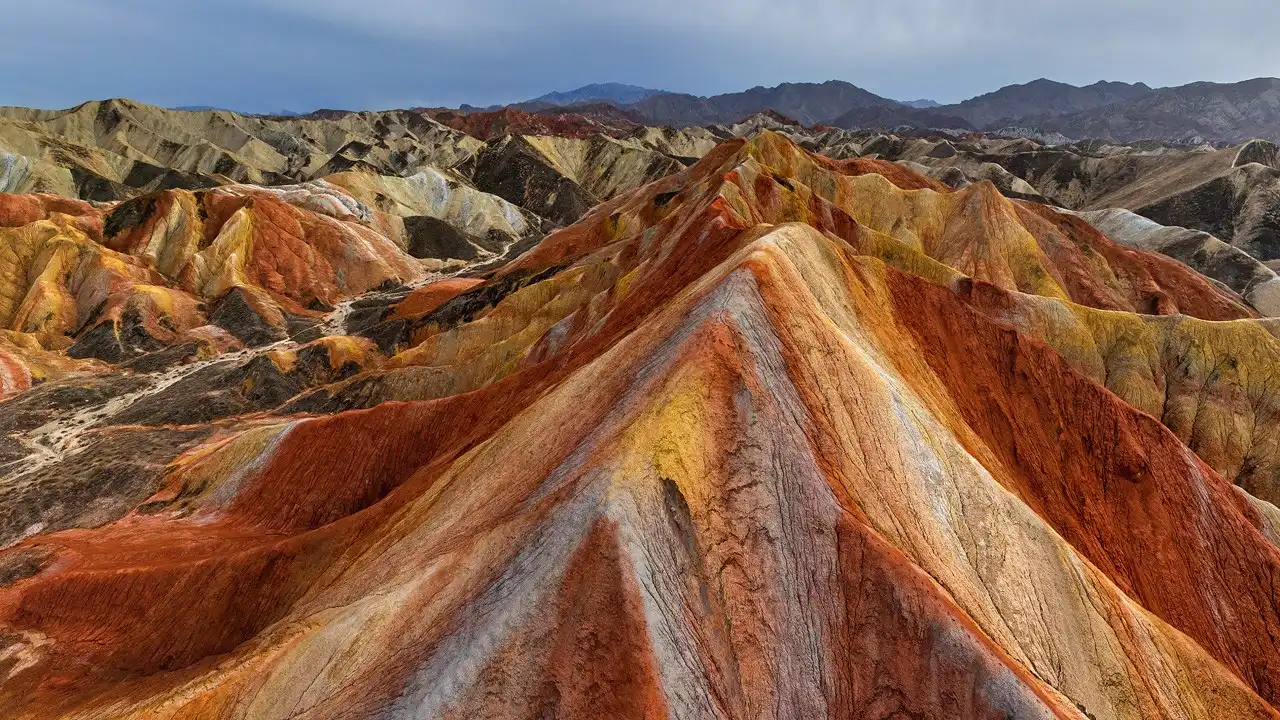
Red, yellow, orange, and brown stripes of color run across these mountains as if someone painted them on purpose. Those patterns come from layers of different minerals and rock types that built up over millions of years. Wind and water slowly wore away at the surface and exposed the layers hiding underneath,
Several viewing platforms are scattered around the geopark so you can catch the formations from different angles. When the sunlight hits just right, the colors get even more intense, almost glowing. Among the Beautiful Places in the World, Zhangye Danxia really stands apart; it just doesn't resemble any other mountain range out there.
Things to see
- Rainbow-coloured mountain formations
- Multiple viewing platforms
- Layered rock landscapes
- Sunrise and sunset views
- Wide panoramic scenery
Pro tip: Try catching it around sunrise or sunset; the shifting light really pulls the colors out.
Conclusion
From the rock spires of Cappadocia to the mirror-flat surface of Salar de Uyuni, these places prove nature's still stranger than anything a screen could ever cook up. Some feel like fantasy movie sets. Others just look too perfectly colored to be real. But that's really the whole point: none of it's computer-generated.
These are real places, with real landscapes, real people living around them, and real experiences just waiting once you actually book the flight. With the right planning, Travel Junky can help turn that hard-to-believe photo on your screen into an actual trip. Whether you're chasing a quiet nature escape or a full International trip package, sometimes it's the places that look the least real that end up being the ones most worth seeing in person.
A Few Things to Keep in Mind
Before planning anything, check:
- Best season to visit
- Local weather conditions
- Entry and tour requirements
- Travel time between attractions
- Whether booking is needed
- Walking requirements
- Local photography rules
If you're after Unique Places to Visit, these spots are a solid reminder: the world's still packed with landscapes that don't need a single filter.