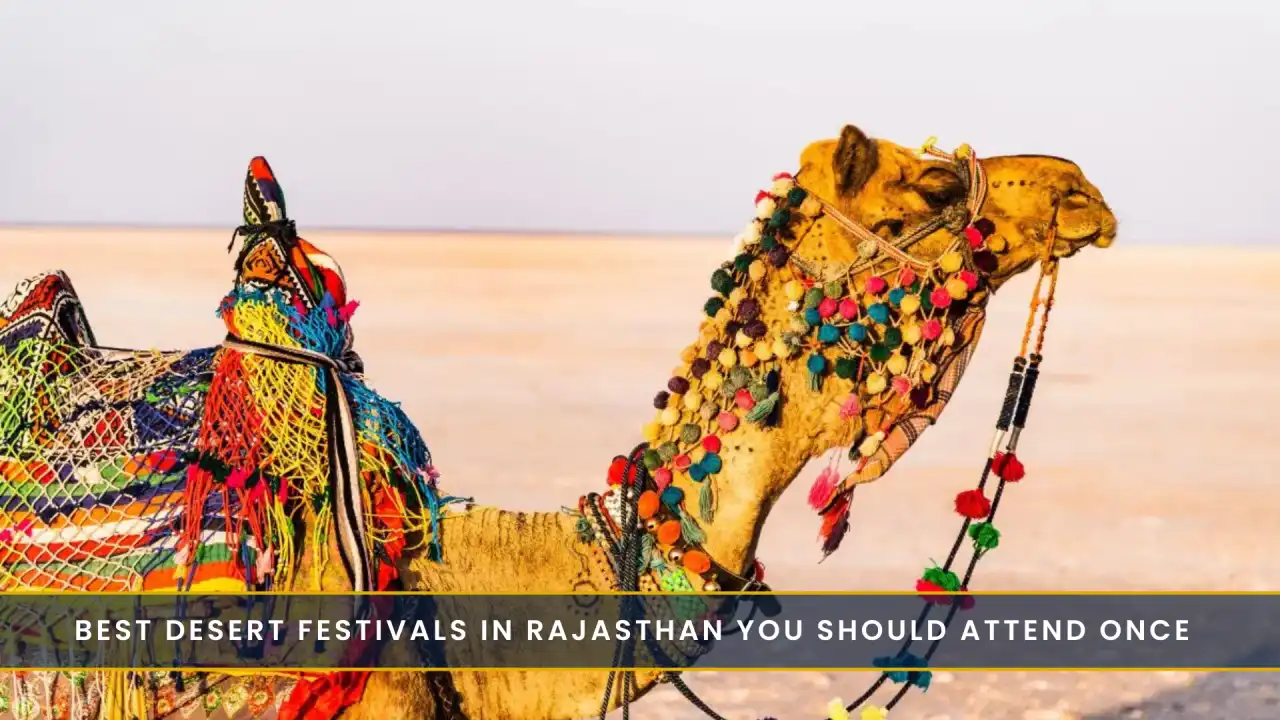
Best Desert Festivals in Rajasthan You Should Attend Once
Introduction
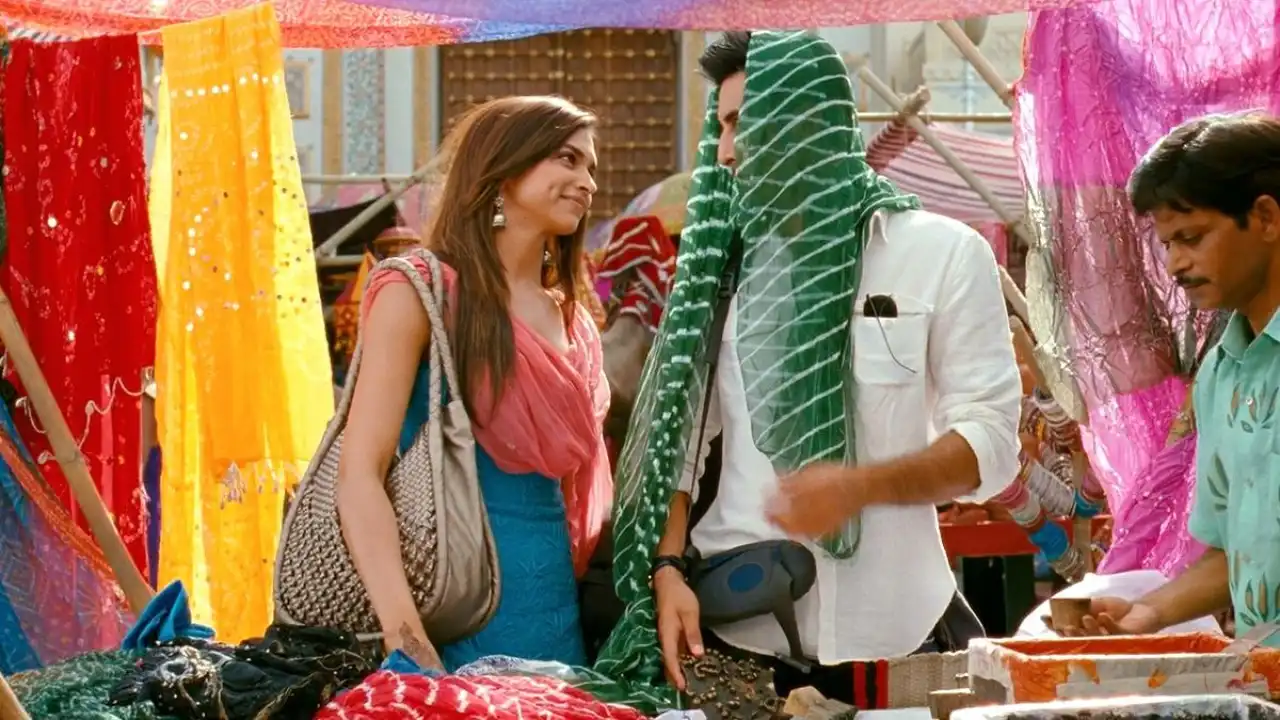
Rajasthan doesn’t hit you all at once. It sneaks up on you. You notice the colors before anything else, deep red turbans, dusty yellows, doors painted in shades you didn’t know had names. Then comes the quiet. Not peaceful exactly. Heavy. Until it’s broken by a laugh, a drum somewhere far off, or a camel bell you didn’t see coming. The forts feel rooted, like they belong there, and the villages nearby don’t feel dressed up for tourists. They feel used. Lived in. Normal.
If you actually want to understand this place, not just pass through it, you have to be here when the festivals happen. They’re not tidy, well-behaved events. Things start late, pause randomly, and pick up again. It feels less planned, more instinctive. Music carries across open ground, camels steal attention without effort, and shops open when they feel like it. That’s when the desert festivals of Rajasthan stop being something you watch and turn into something you feel, long after you’ve left.
1. Jaisalmer Desert Festival
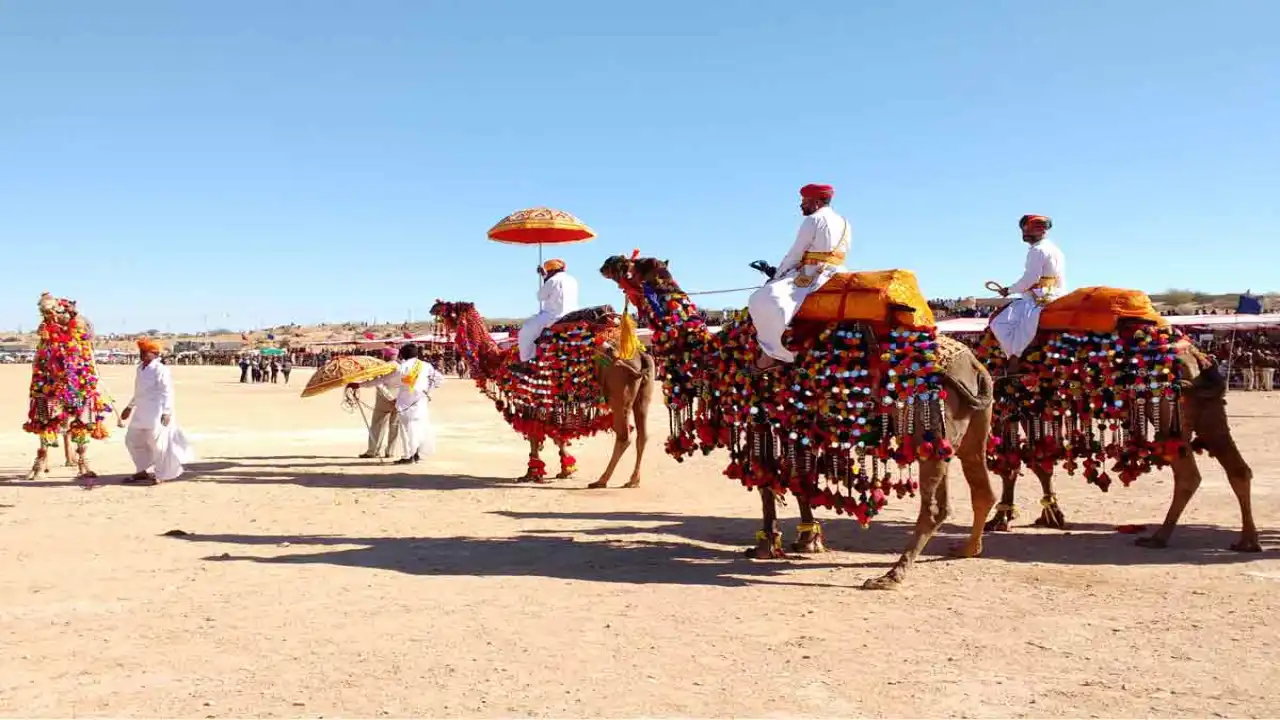
Jaisalmer already feels slightly unreal on a normal day. A golden city sitting in the middle of sand doesn’t make much sense, yet there it is. During the festival, usually around February or March, that strange feeling multiplies. The desert stops being quiet. It starts talking back. For three days, the dunes around the city don’t rest. Camels appear everywhere, some painted, some decorated, all of them treated like celebrities. Folk musicians set up wherever there’s room. Sometimes you hear music before you see anyone, and sometimes you never find the source at all. That confusion is part of the experience.
You’ll probably stumble into things like:
- Camel races and camel polo that are far more intense than they sound on paper
- Ghoomar and other folk dances are performed by local groups who aren’t worried about perfect steps
- Turban tying and mustache contests that people take very personally
- Craft stalls selling fabrics and handmade items that still carry the smell of dye and desert dust
Pro tip: Step into the dunes early in the morning or just before sunset. Midday heat drains your energy fast. And don’t trust the sun. It looks calm. It isn’t.
2. Pushkar Camel Fair
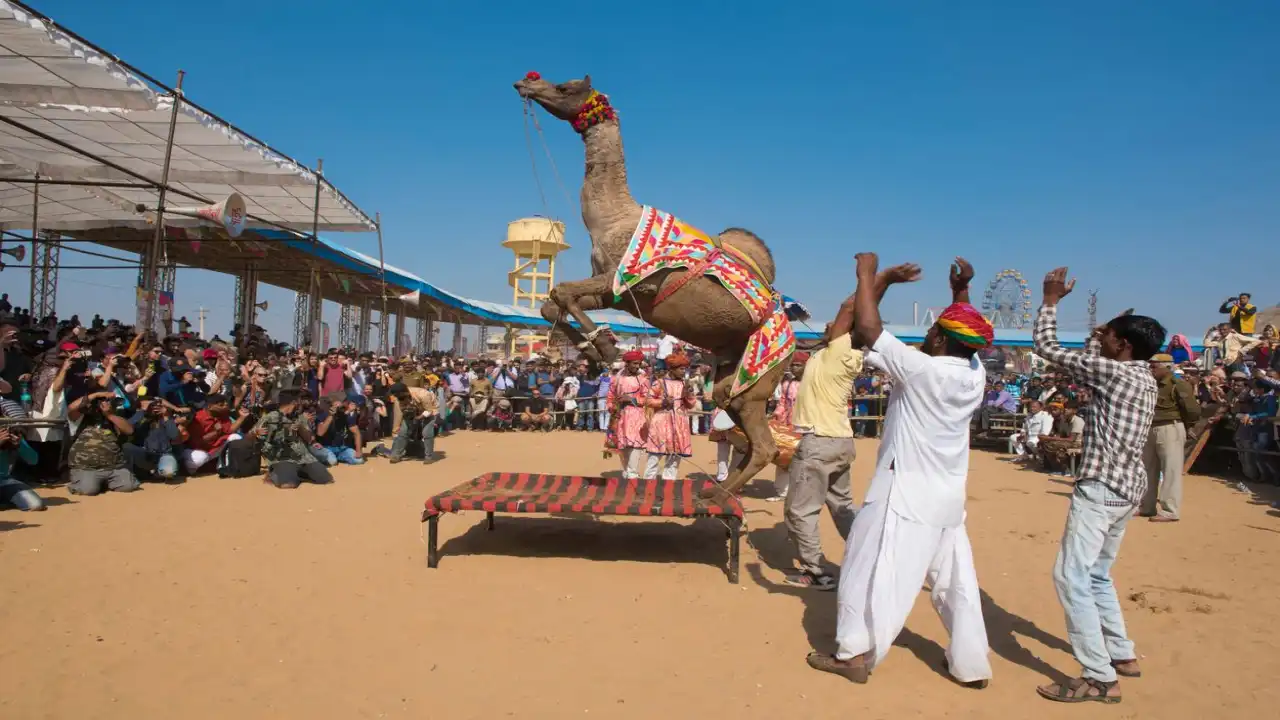
Pushkar already has a strange balance to it. There’s peace around the lake, a quiet rhythm to daily life. Then the fair arrives, usually in October or November, and everything overlaps: prayers, bargaining, music, shouting, and laughter. The Pushkar Camel Fair is noisy, crowded, and oddly beautiful at the same time. Yes, camels are everywhere. Thousands of them. But the fair doesn’t stop there. It spills into performances, small competitions, and moments that don’t feel organized at all.
You’ll see:
- Camel races and local contests are pulling in huge crowds
- Folk musicians, puppet shows, and storytellers
- Hot air balloons floating above the chaos, quiet and slow
What really stays with you is the contrast. One minute you’re surrounded by noise, the next you’re standing by the lake watching pilgrims perform rituals in complete silence.
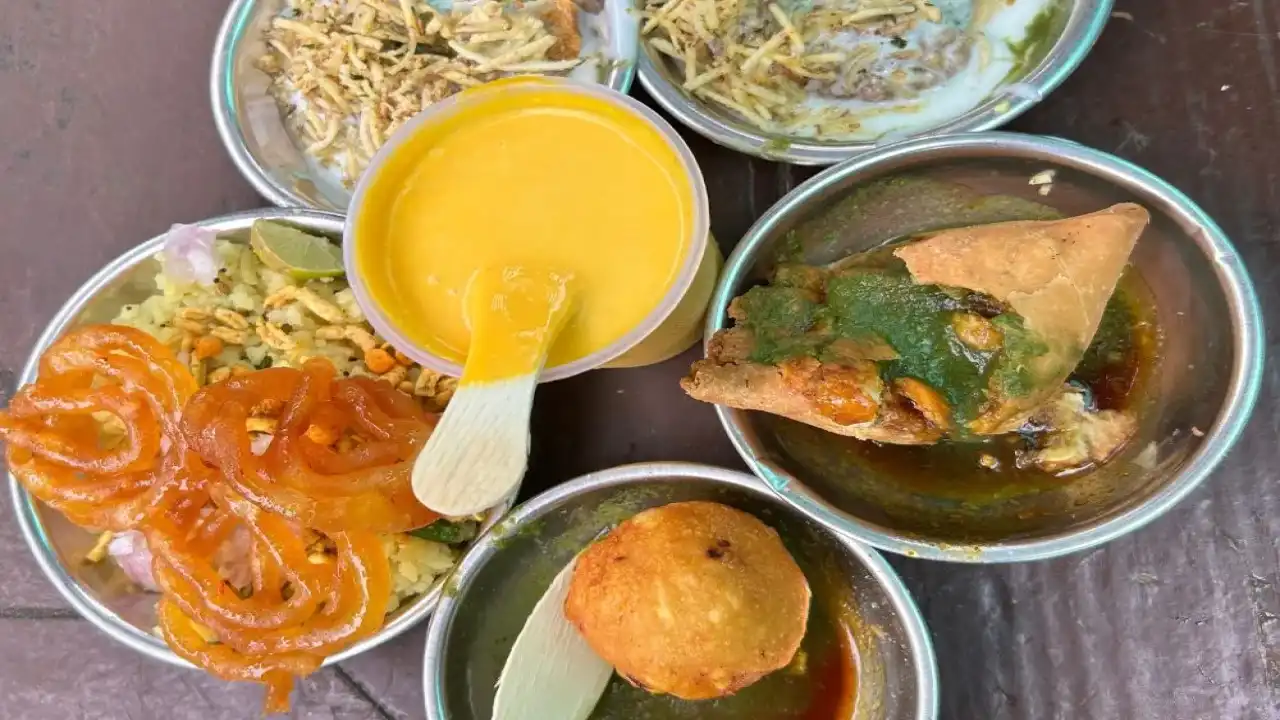
Pro tip: Walk away from the main fairground once in a while. The nearby lanes serve some of the best food, kachoris dripping oil, and dal baati churma that’s heavy but unforgettable.
3. Desert Festival of Bikaner
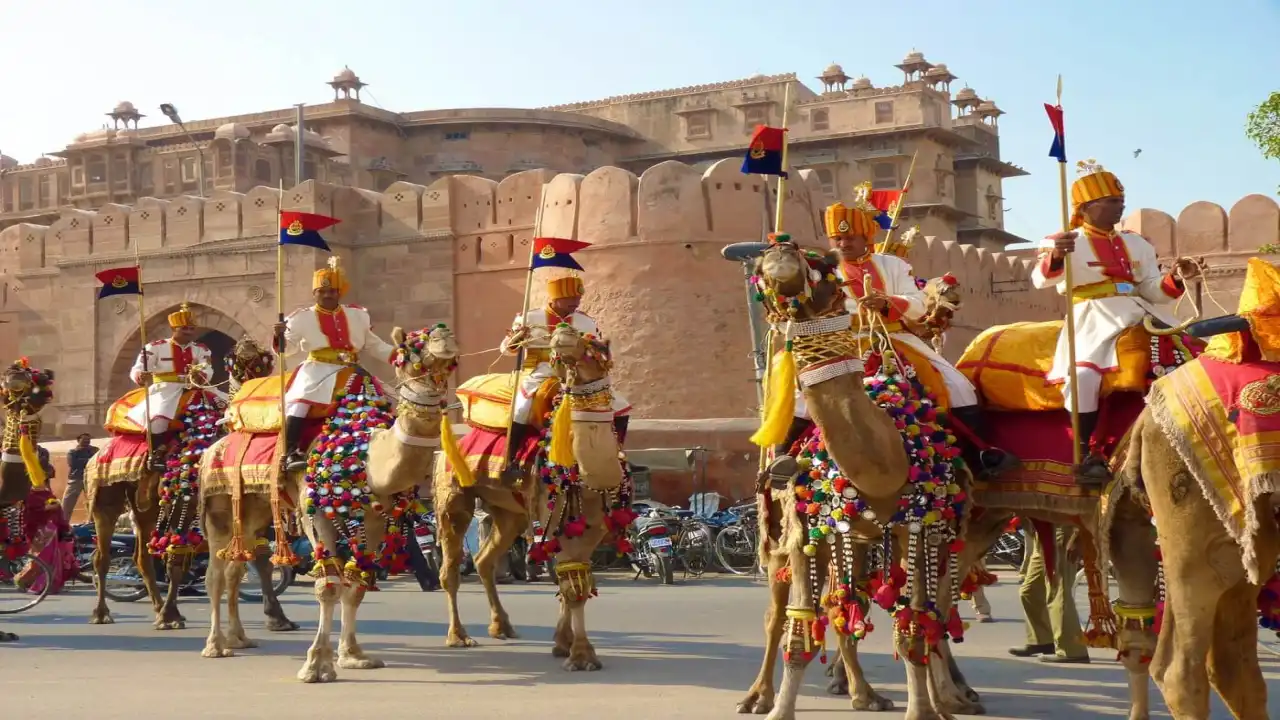
Bikaner doesn’t try very hard to sell itself, and maybe that’s why it works. Often called the camel capital, the city fully embraces that title during the Bikaner Camel Festival in January. The mood here is festive, but grounded. Less spectacle. More everyday life. The festival celebrates camels, yes, but it also quietly celebrates desert living.
You’ll likely come across:
- Camel beauty contests with animals decorated in unexpected ways
- Continuous folk music and dance performances that don’t feel rushed
- Exhibitions of local crafts and food that people actually eat at home
If you enjoy photography, this place keeps giving. Faces, colors, movement, it all comes together without trying too hard.
Pro tip: Try camel milk sweets if you spot them. It sounds strange.
4. Nagaur Cattle Fair
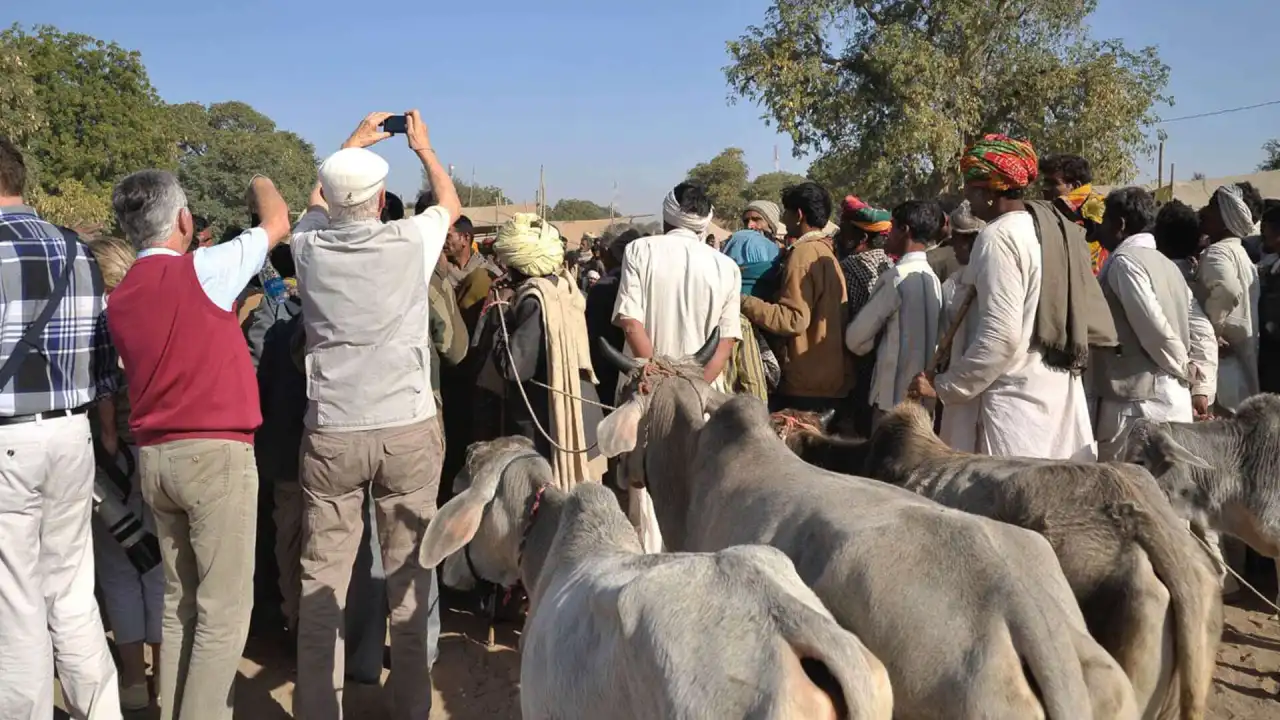
Nagaur doesn’t advertise loudly, and neither does its cattle fair. Held in February, the Nagaur Cattle Fair feels more like something you’re allowed to witness rather than invited to. That’s exactly what makes it interesting. Farmers and traders come from nearby regions, but if you hang around, there’s more happening than just buying and selling.
You’ll notice:
- Horse and bull races that are fast, loud, and over before you’re ready
- Traditional games like wrestling and tug-of-war
- Folk music playing through the day, sometimes planned, sometimes not
It’s not polished. It’s not curated. People are simply going about their lives, with a festival happening around them.
Pro tip: Stay nearby instead of rushing off the same day. Evenings are quieter, and conversations tend to happen naturally.
5. Teej Festival
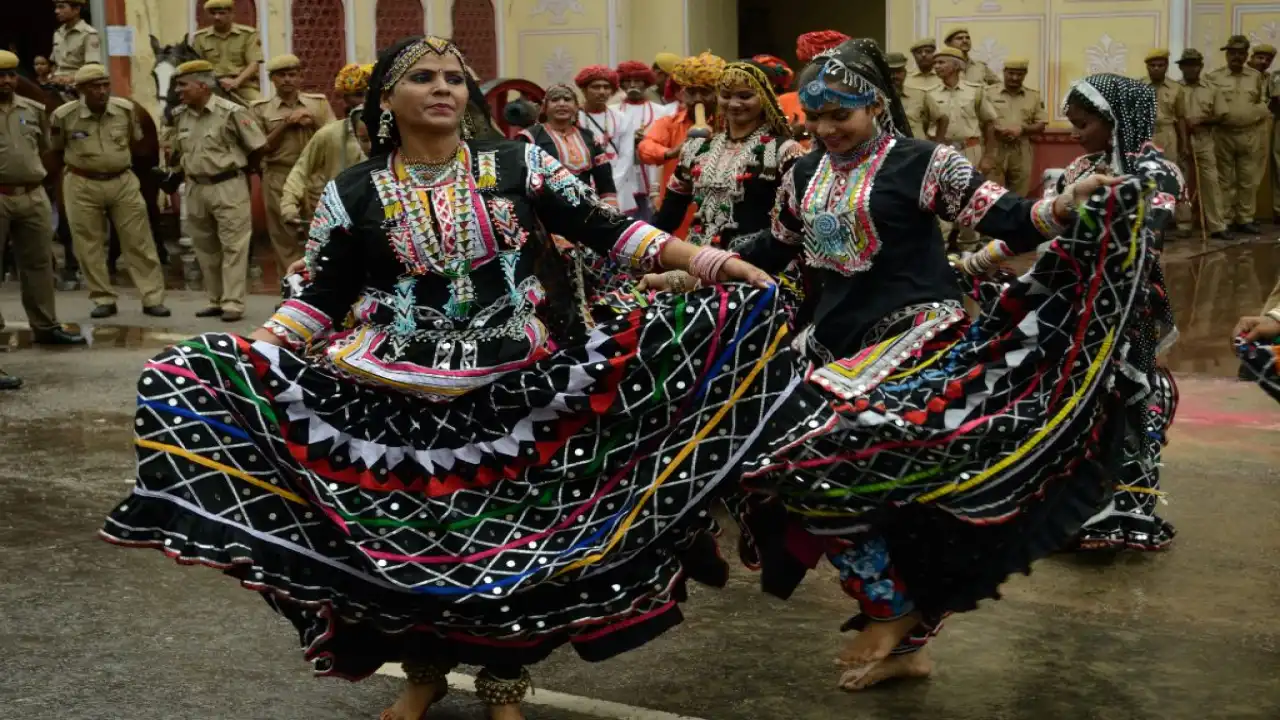
Teej feels like it belongs to a different rhythm altogether. No camels. No cattle. It’s about the monsoon, relationships, and long-held traditions. Celebrated in August, Teej brings a rare softness to Rajasthan’s dry landscape. Women wear bright green saris. Swings appear in courtyards. Folk songs travel from house to house.
You’ll see:
- Dance performances in village squares
- Local markets are filled with bangles, jewelry, and embroidered clothes
- Seasonal sweets like ghewar are showing up everywhere
This festival feels personal. You don’t watch it from the outside. You’re pulled into it.
Pro tip: If someone invites you to join a swing or song session, say yes. It’s considered lucky, and it’s a rare glimpse into everyday life.
6. Mewar Festival, Udaipur
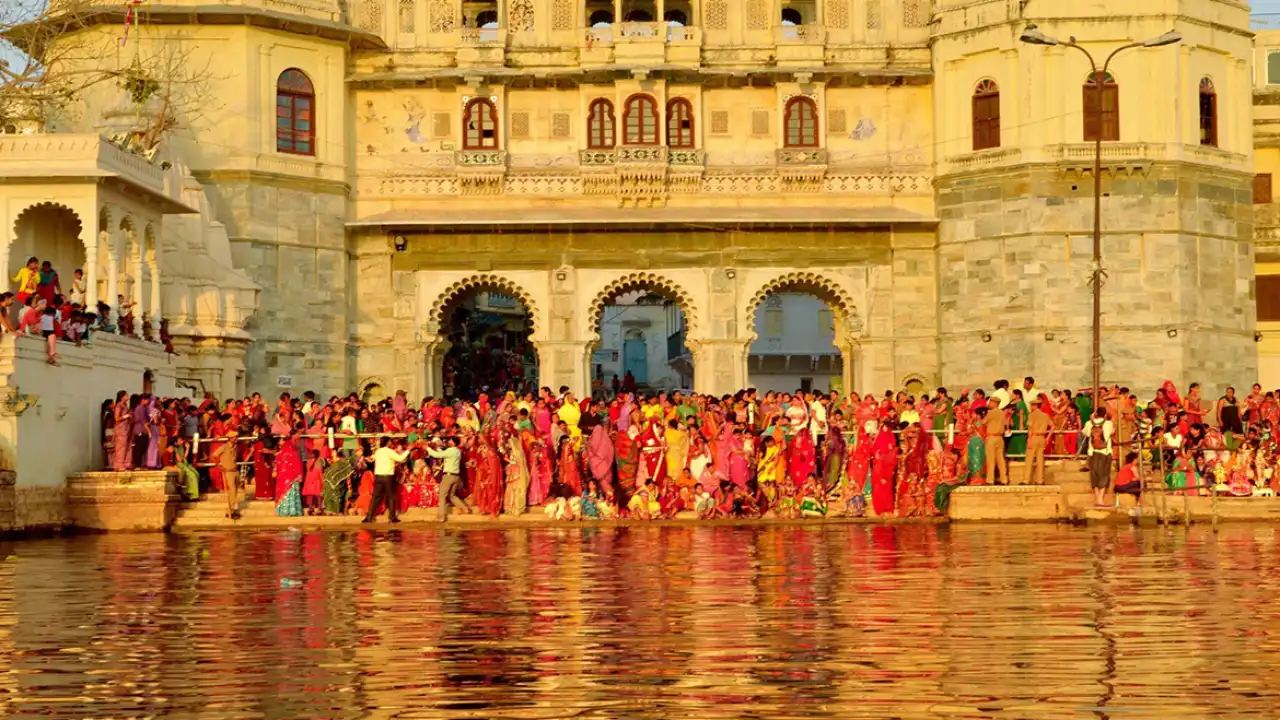
The Mewar Festival, held in March or April, marks the arrival of spring and overlaps with Gangaur celebrations. In Udaipur, that means processions, music, and a city that already feels romantic, leaning fully into it.
The festival usually includes:
- Processions carrying decorated idols of Goddess Gauri
- Cultural programs with local dance and music
- Evening boat rides on Lake Pichola, where palace lights shimmer on the water
It’s lively, but not overwhelming. Things move at an easier pace.
Pro tip: Go in the evening. The heat drops, lights come on, and the city feels calmer.
Why These Festivals Stay With You
These festivals aren’t about ticking off attractions or getting the perfect shot. They’re about watching culture survive in tough conditions. About people celebrating with whatever they have. About traditions bending slightly, but never breaking. What stays with you are small things: the sound of camel bells, dust sticking to your shoes, music you don’t understand but somehow recognize. Those details last longer than any itinerary.
Conclusion
From the raw buzz of the Jaisalmer Desert Festival to the loud, slightly chaotic feel of Pushkar, then, easing into the slower pace of Bikaner and Nagaur, these are Rajasthan cultural festivals with the edges showing. Nothing feels staged. Nothing looks freshly arranged for photos. People celebrate because that’s what they’ve always done, not because anyone asked them to.
You could be traveling solo, dragging family along, or booked into a Rajasthan family package. Honestly, it doesn’t change much. The festivals just happen around you. They slide into your trip quietly, and before you know it, they’ve taken over. Dust on your shoes. Music you hear before you see it. Long days without a plan. And somehow, Rajasthan stops feeling like a place you visited and turns into something you keep thinking about later.
Tips to Make the Most of Rajasthan’s Desert Festivals
A bit of planning helps more than you think:
- Book your stay early. Festival seasons fill towns quickly.
- Wear light, breathable clothes. Desert heat creeps up on you.
- Carry water. Always.
- If possible, look for domestic trip packages that line up with festival dates.
- Local guides can explain small details you’d otherwise walk right past.