Hemis Festival Ladakh: The Himalayan Celebration You Can't Miss
We all know India is very rich in diversity, and travelling to different places in India, learning about its culture and people, is always a very fulfilling experience. And what is better than a festive time to witness any place’s culture at its best?
And if Ladakh has been lying in your travel bucket list for a while, then this blog is for you. The best time to explore Ladakh is during the Hemis Festival. You might have heard of the Hemis Festival in Ladakh or have seen its photos online. But to understand the festival in depth, from its history to key dates and locations, and to learn how to plan your Ladakh tour around it, keep reading this blog.
What We Have Covered
- 600 Years in the Making: The Story Behind Hemis Festival
- What Hemis Festival Actually Means
- Dates, Timings & Key Events
- The Rare 12-Year Event
- The Mask Dance You Must Witness
- Where Is Hemis Monastery?
- How Do You Actually Get There?
- What First-Timers Get Wrong About Hemis
- The Lesser-Known Side of Hemis
- Build Your Ladakh Trip Around the Festival
600 Years in the Making: The Story Behind Hemis Festival
The festival is dedicated to Guru Padmasambhava, better known across the Himalayan Buddhist world as Guru Rinpoche. He’s considered one of the key figures responsible for spreading Vajrayana Buddhism through Tibet and the Himalayan belt during the 8th century. Hemis Monastery belongs to the Drukpa lineage of Tibetan Buddhism and became politically important during Ladakh’s Namgyal dynasty period. The present monastery structure dates largely to the 17th century under King Sengge Namgyal, though religious activity around the region is much older than that.
The annual festival celebrates the birth anniversary of Guru Padmasambhava according to the Tibetan lunar calendar. What’s interesting is how little the core rituals seem to have changed despite tourism exploding in Ladakh over the last twenty years. Roads improved. Cafes opened everywhere in Leh. Bikes and SUVs flooded the region every summer. But Hemis still follows monastery rhythms, not tourist expectations. Monks rehearse Cham dances for years. Masks are preserved carefully. Ritual objects appear only during specific ceremonies. None of it feels improvised for outsiders. That continuity gives the festival weight.
What Hemis Festival Actually Means
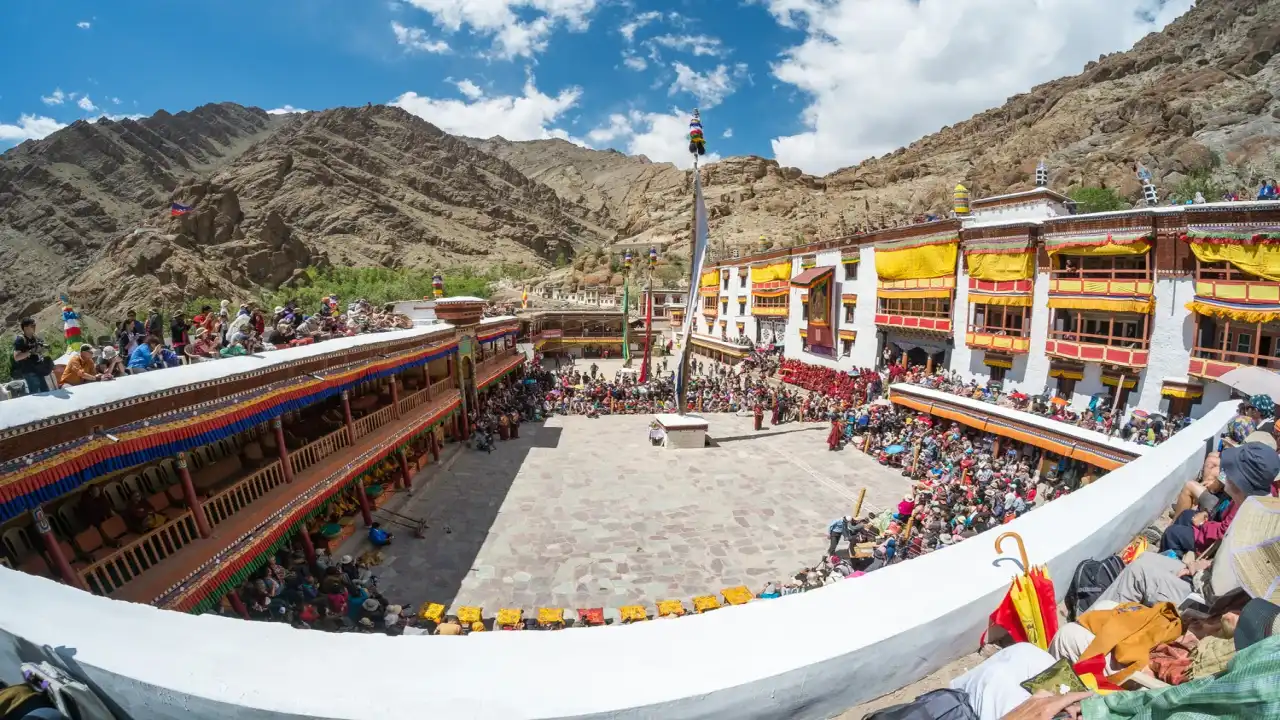
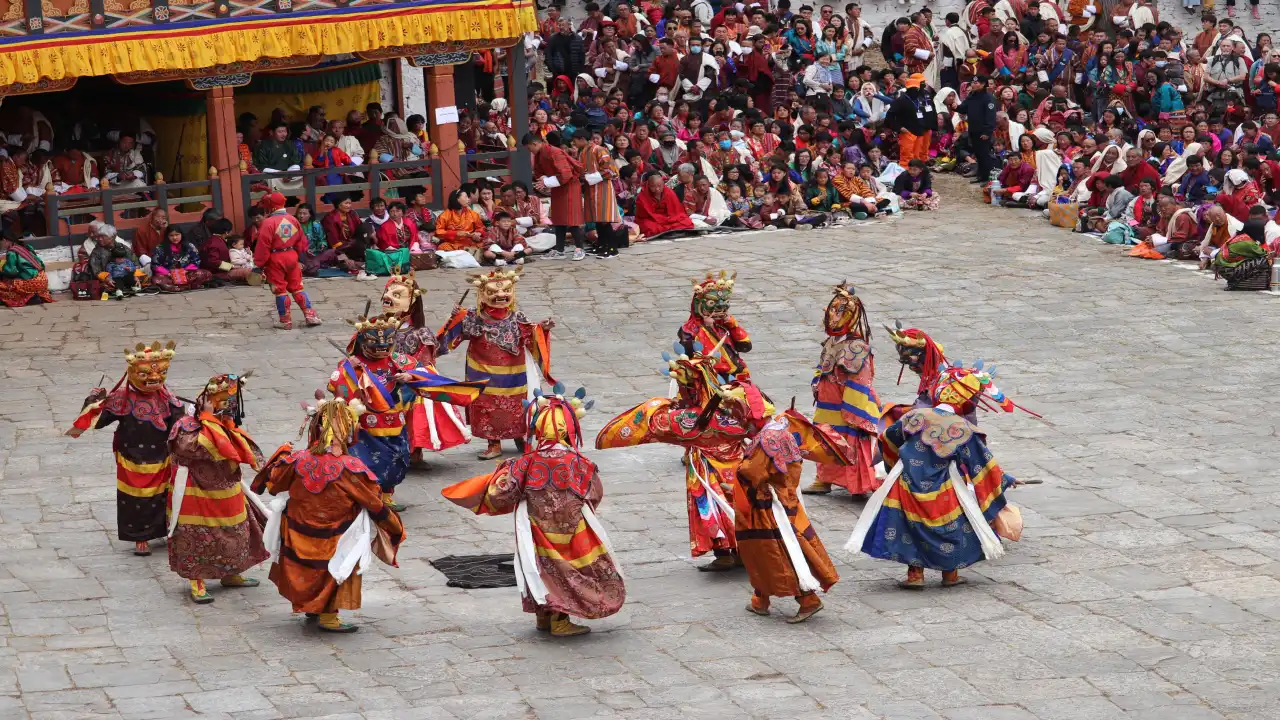
A lot of visitors treat the festival like a cultural performance. Technically, it is one, but that description misses half the point. The Cham dances carry religious symbolism tied to Buddhist ideas about death, protection, ego, compassion, and impermanence. Wrathful masks aren’t meant to represent evil. They symbolize protective forces destroying ignorance and negativity.
Skeleton dancers appear in some performances, too. Tourists photograph them constantly because they look dramatic, but the symbolism behind them is about mortality and the temporary nature of life. The monastery never aggressively explains these meanings to visitors. There aren’t giant info boards breaking down every dance sequence. Local Ladakhi attendees already understand the symbolism because they grew up around it.
That changes the atmosphere quite a bit. The courtyard doesn’t behave like an entertainment venue. Some people are praying while others are photographing. Monks move in and out of ritual spaces. Elderly locals quietly follow ceremonies with complete attention while tourists wander around trying to figure out which angle works best for Instagram. The two worlds overlap all day. And honestly, that tension is part of what makes the Hemis Festival in Ladakh interesting.
Dates, Timings & Key Events
When to Go?
- The festival usually happens in June or July, depending on the Tibetan lunar calendar.
- Summer is the easiest time for Ladakh travel because roads from Srinagar and Manali are mostly operational by then.
- Daytime weather looks pleasant on paper, around 15°C to 25°C, but mornings at Hemis still feel cold.
- If you’re planning around the Hemis Festival 2026, book Leh hotels early. Good guesthouses disappear fast once dates are announced.
- Spend at least two days acclimatizing in Leh before attending the festival. People who ignore this usually regret it halfway through the day.
- Try not to schedule your arrival in Leh just one night before Hemis. Flight delays happen often in Ladakh because mountain weather changes quickly.
What Time to Show Up?
- Reach the monastery around 7:00 AM if you want decent seating or photography space.
- Ritual performances usually begin between 8:00 and 9:00 AM.
- By late morning, the courtyard gets packed, especially near the central dance area.
- Sun exposure becomes intense after 11:00 AM because of the altitude. Carry sunglasses, sunscreen, water, and maybe a cap you won’t lose in the wind.
- Early morning light works better for photos anyway.
- Don’t leave after the first dance sequence. The festival unfolds slowly, and some of the more interesting performances happen later.
The Rare 12-Year Event
- Every 12 years, Hemis displays a giant sacred thangka linked to Guru Padmasambhava.
- The silk thangka is considered one of the monastery’s most important religious treasures.
- Pilgrims travel from across Ladakh, Himachal, Nepal, Bhutan, and the Tibetan Buddhist regions to attend.
- Crowd sizes become much bigger during this cycle compared to regular festival years.
- Leh hotels fill extremely early during the 12-year event.
- Traffic around the monastery gets heavy enough that some visitors end up walking long sections uphill.
- Even locals talk about the 12-year gathering differently. It’s treated more like a pilgrimage than a festival.
The Mask Dance You Must Witness
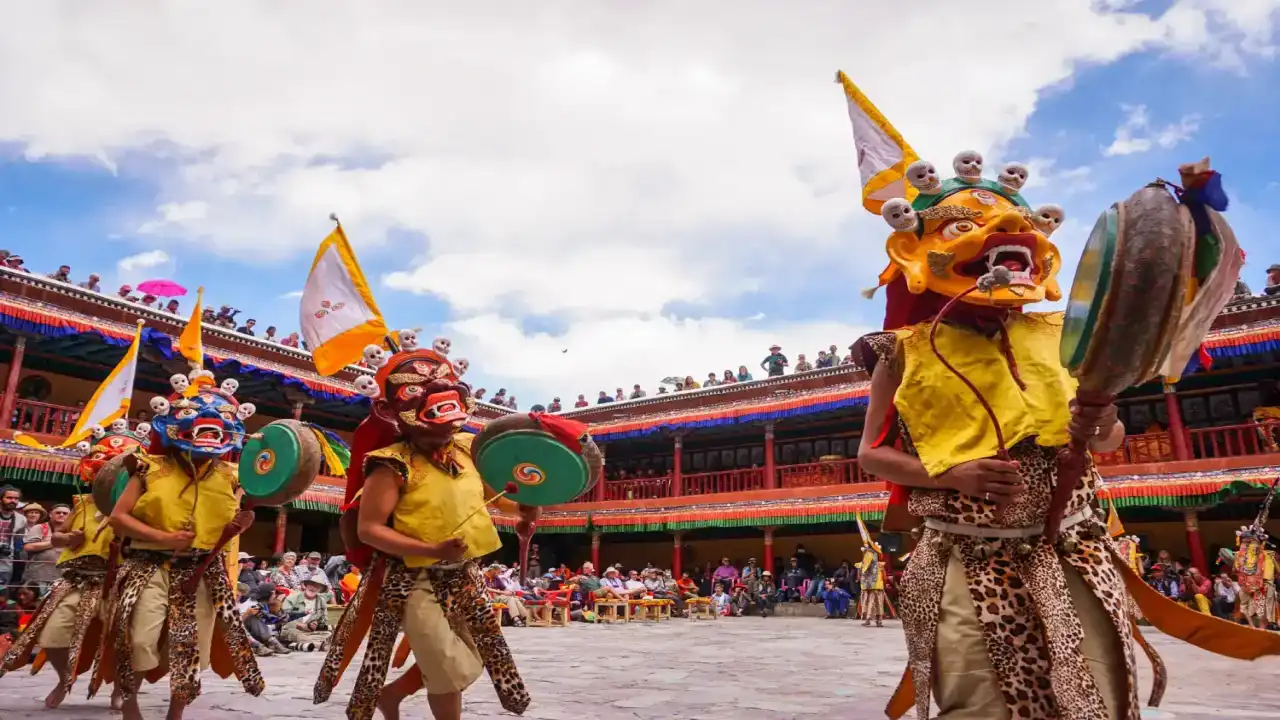
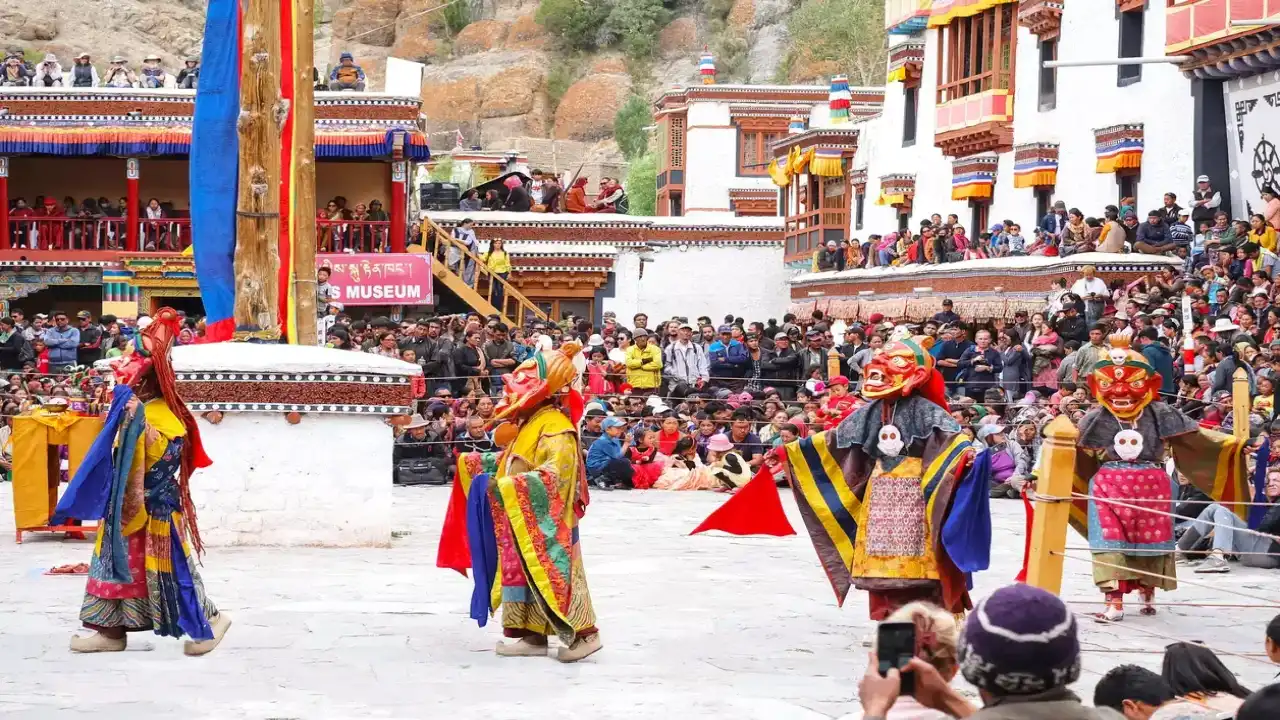
The dances at Hemis are called Cham dances, and they follow a ritual structure rather than random choreography. Black-hat dancers usually appear in purification sequences. Their circular movements symbolize protection and cleansing of sacred space. Skeleton dancers represent impermanence. Wrathful deity masks symbolize protective spiritual energy. Up close, some masks look genuinely intimidating. Huge eyes, skull crowns, sharp teeth, exaggerated expressions. But within Buddhist symbolism, these figures are protectors, not villains.
Musicians sit along monastery walls playing drums, cymbals, and long dungchen horns that produce deep vibrating sounds across the valley. One thing people underestimate is how physically exhausting these performances probably are. The costumes are heavy, the altitude is rough, and some dancers perform for long stretches under direct sunlight. Watching becomes much more interesting once you stop treating the dances like stage entertainment.
Where Is Hemis Monastery?
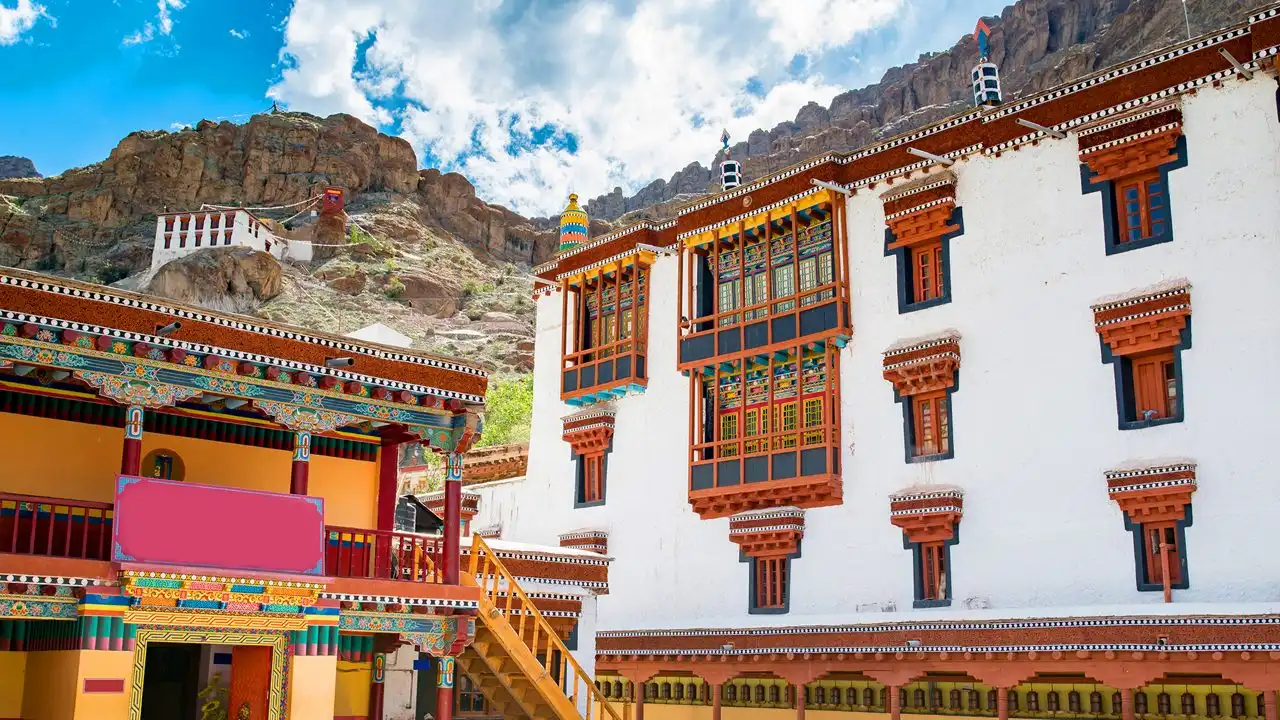
Hemis Monastery sits roughly 45 kilometers southeast of Leh in the Indus Valley region of Ladakh. The route passes through Karu before turning toward the monastery entrance road. The final stretch climbs gently into a narrow mountain valley where the white monastery buildings suddenly appear against dark brown rock slopes.
Geographically, the monastery lies within a relatively dry, cold desert environment. Rain is rare during the summer months, though weather shifts quickly in Ladakh. Morning skies can appear clear before afternoon winds push dust through the valley. Altitude catches some travelers off guard here. Hemis stands at around 3,600 meters or nearly 11,800 feet above sea level.
People arriving directly from Delhi sometimes underestimate how quickly breathlessness and dehydration can set in. Most visitors base themselves in Leh and make a day trip to the monastery. That remains the easiest option.
How Do You Actually Get There?
Step 1: Reach Leh First
Pretty much everyone attending the Hemis Festival in Ladakh starts from Leh.
By Flight
- Direct flights run from Delhi during the tourist season.
- Flight time is roughly 90 minutes.
- The moment you land in Leh, slow down a bit. Don’t start sightseeing immediately.
By Road
Two highways connect Ladakh during the summer:
- Srinagar to Leh Highway: Better for gradual acclimatization.
- Manali to Leh Highway: Higher passes, rougher stretches, longer drive time.
Road access usually stays open between late May and September, depending on snowfall.
Step 2: Acclimatize Properly
This part matters more than fancy hotels.
- Stay in Leh at least 48 hours before visiting Hemis.
- Drink water constantly because Ladakh’s dry climate dehydrates people fast.
- Avoid alcohol initially, even if everyone around you is celebrating vacation mode.
- Don’t cram Pangong, Nubra, and Hemis into back-to-back days right after landing.
Altitude fatigue feels strange if you haven’t experienced it before. Mild headaches turn into exhaustion pretty quickly.
Step 3: Travel from Leh to Hemis Monastery
Hemis is around 45 km from Leh.
Best Transport Options
Private Taxi
- Most reliable during festival days.
- Travel time is around 60 to 75 minutes.
- Leave before 6:30 AM if you want to avoid terrible parking situations.
Shared Cab
- Cheaper but less predictable.
- Usually available near the Leh market taxi stands.
- Vehicles often wait until seats fill completely.
Bike Rental
- Popular among solo travelers and backpackers.
- Roads are mostly decent during the summer.
- Morning rides feel easier before tourist traffic builds up.
Important Self-Travel Tips
- Carry cash because digital payments fail surprisingly often around Hemis.
- Mobile networks become patchy near the monastery.
- Public washrooms get crowded later in the day.
- Food options outside are basic. Mostly tea, noodles, snacks, and local food stalls.
- Wear proper shoes. Dusty stone steps around the monastery can get slippery.
- Keep ID copies with you while traveling around Ladakh.
- Fuel up in Leh if driving yourself. Petrol pumps outside town are limited.
What First-Timers Get Wrong About Hemis
People assume Ladakh's summer means regular pleasant weather. Not exactly. Days can feel warm under direct sun, but mornings inside the monastery courtyard stay cold for quite a while. Layering clothes works better than carrying one heavy jacket.
A few practical things matter more than people expect:
- Sunglasses help because UV exposure is strong at this altitude.
- Keep water with you constantly.
- Sunscreen is necessary unless you enjoy looking sunburnt by lunchtime.
- Carry basic medicines for headaches and altitude fatigue.
- Arrive early if photography matters to you.
Another common mistake: overpacking camera gear while ignoring physical stamina. Walking around monasteries at nearly 12,000 feet is enough to tire people out surprisingly fast. Also, basic etiquette matters. Some tourists interrupt prayer areas for photos or stand directly in ritual paths trying to capture close-up shots. Local irritation around this has definitely increased over the years. Quiet observation works better anyway.
The Lesser-Known Side of Hemis
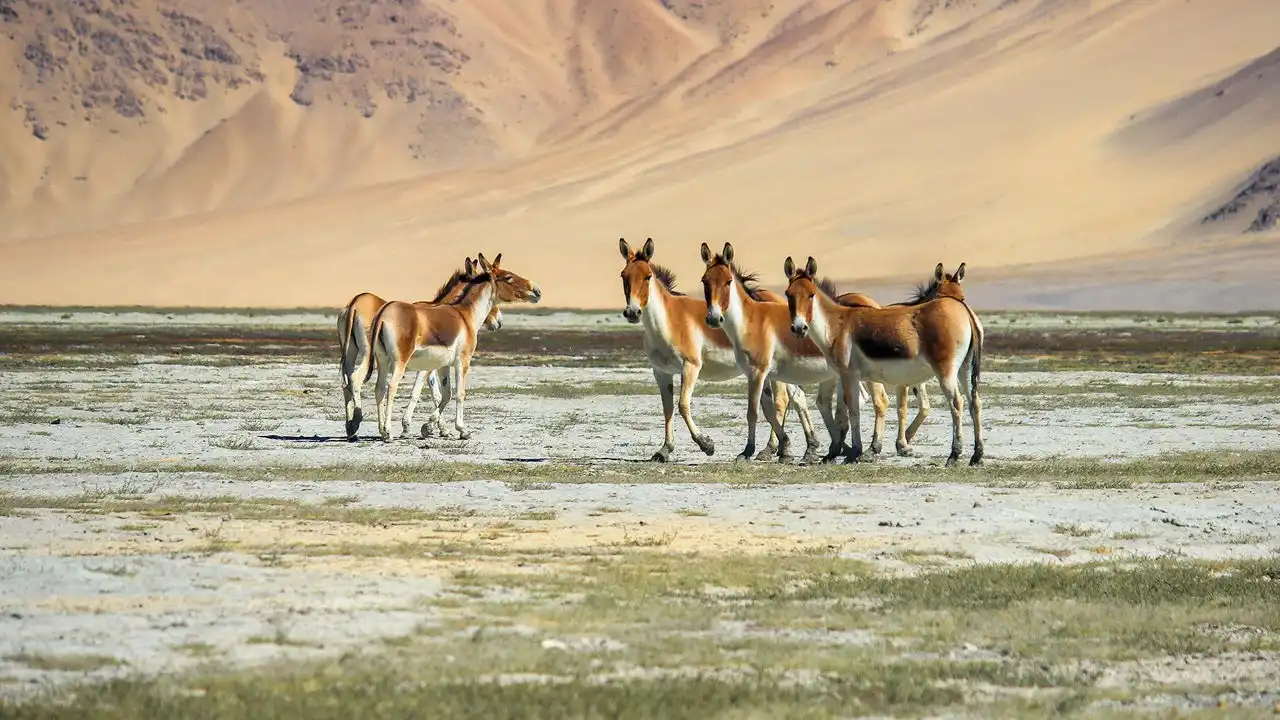
A lot of visitors leave right after the dances finish without exploring the wider area properly. That’s a mistake. Hemis National Park surrounds much of the region and remains one of India’s most important snow leopard habitats. During winter, trackers search these valleys for snow leopards, Himalayan wolves, ibex, and blue sheep.
The landscape changes completely with the season, too. Summer looks dusty and sharp-edged. Winter turns the valleys grey-white and almost silent. Inside the monastery, older murals deserve more attention than they usually get. Some paintings have faded over time, but the detailing is still remarkable. Prayer halls contain statues, manuscripts, ceremonial weapons, old thangkas, and ritual objects collected across centuries.
There’s also a small museum section displaying antique relics and monastery artifacts tied to Ladakhi Buddhist history. Most tourists rush through all this in ten minutes because they’re focused on the courtyard performances. Honestly, the quieter corners of Hemis are sometimes more memorable. That wider cultural depth is partly why many travelers consider it the biggest Ladakh cultural festival in the region.
Build Your Ladakh Trip Around the Festival
Hemis works best when it’s part of a longer Ladakh route instead of a rushed one-day plan. A sensible itinerary usually starts with a couple of slow acclimatization days in Leh. During that time, you can visit Leh Palace, Shanti Stupa, local cafes, markets, and smaller monasteries nearby without exhausting yourself. After Hemis, most travelers continue toward places like:
- Thiksey Monastery
- Shey Palace
- Stakna Monastery
- Nubra Valley
- Pangong Lake
- Sindhu Ghat
Road conditions, weather, and altitude affect everything in Ladakh, so leaving buffer time in your itinerary helps a lot. Hotels in Leh fill quickly during festival week, especially decent mid-range guesthouses and homestays. Booking earlier makes life easier.
Conclusion
If you’re traveling through Travel Junky, it’s smarter to choose itineraries that leave breathing space between long drives and high-altitude days instead of stuffing everything together. Because Ladakh punishes rushed travel pretty quickly. One last thing. People arrive expecting nonstop spectacle from morning till evening. But Hemis moves at monastery pace. Ritual preparation time. Monks casually drink butter tea behind the scenes while tourists sit waiting in the sun. That slower rhythm becomes part of the experience after a while. And honestly, that’s probably why Hemis Festival Ladakh stays in people’s heads longer than expected.