North Goa vs South Goa: Which is Better for Your Next Trip?
Introduction
Say "beach trip" to any Indian traveler and Goa comes up first. Almost every time. There's just something about this tiny strip of coast that keeps dragging people back: college gangs on their first no-parents trip, couples wanting a quiet honeymoon, families that just want a week where nobody checks email. It's oddly good at being whatever you need it to be. What actually makes it different though? Not the beaches alone. It's the clash of things sitting right next to each other. Old Portuguese churches a few kilometers from shacks blasting music at full volume. Sleepy fishing villages a short drive from clubs that don't shut till sunrise. Fish curry rice on one lane, wood-fired pizza on the next, no logic to it, and somehow it works.
That's basically why the North Goa vs South Goa question keeps coming up in every group chat before a trip, because these two halves genuinely feel like separate holidays stitched into one state. North Goa's the part you've already half-seen on someone's Instagram story without realizing it: packed beaches, flea markets, loud nights that don't really end. South Goa's the quieter sibling nobody bothers photographing enough, wider sand, calmer water, an almost slow pace. Let's go through both, one at a time.
North Goa: The Lively Side of Goa
Overview
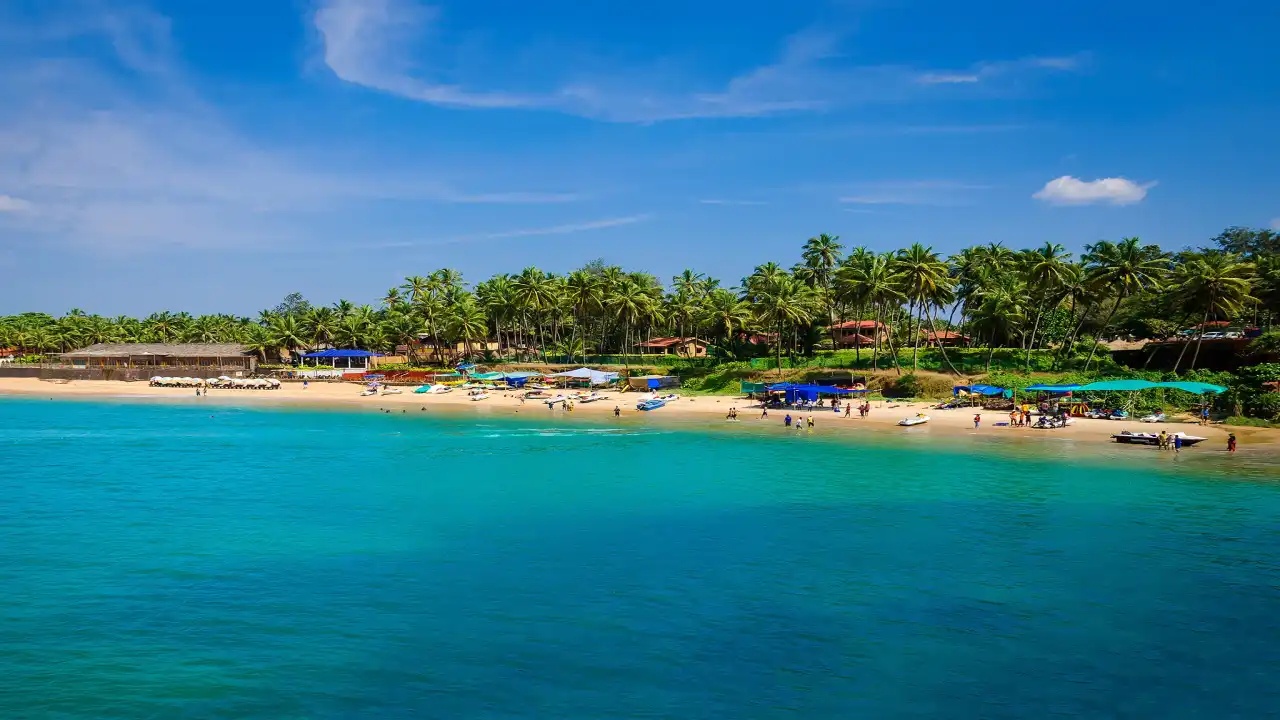
This is where the noise lives, and that's not a complaint. Crowded beaches by day, music by night, something happening two shacks down whether you asked for it or not. If sitting still on holiday sounds boring to you, North Goa's got you covered.
Best Beaches in North Goa
Baga, Calangute, Anjuna, the usual names, each with its own weird little personality. Calangute's the busiest, gets called "queen of beaches" mostly because it refuses to calm down, ever. Baga's shack-and-water-sports central. Anjuna leans bohemian, laid-back crowd, that famous flea market everyone talks about. Sick of the noise already? Vagator and Ashwem sit a bit further up, same energy, dialed down a notch.
Top Places to Visit in North Goa
Old Goa's worth half a day on its own, the Basilica of Bom Jesus and Se Cathedral, both UNESCO sites, both genuinely worth the slow wander instead of a quick photo-and-go. Chapora Fort, the one from that Bollywood film, gives you a sunset over the river that's actually as good as people say. Fort Aguada's lighthouse climb is worth the sweat too.
Nightlife in North Goa
North really wins here, no contest. Tito's in Baga, Sinq, random shacks that just turn into dance floors past 10 PM without any warning at all. Even if clubbing isn't your thing, just walking Baga's main strip at night, music spilling out from three directions at once, is an experience by itself.
Adventure & Water Sports
Parasailing, jet skis, banana boats, scuba trips, all of it's easy to find around Calangute and Baga. Prices are mostly the same everywhere, but check two or three stalls before you say yes to the first one.
Pro tip: Lock the price and time down before you're already in the water. Verbal deals somehow get "forgotten" the second you're strapped into the gear, every single time.
Shopping in North Goa
Anjuna's Wednesday flea market is basically legendary at this point: jewelry, leather bags, loud printed clothes, everything. Bargain; it's expected, nobody's offended. Mapusa's local market's the less touristy version if that's more your speed.
Food & Cafés
North Goa eats like a tiny international city packed into one coastline. Israeli cafés in Anjuna, Italian spots near Vagator, menus from half a dozen countries just scattered around like it's normal. Handy if you're sick of seafood by day three.
Where to Stay in North Goa
Everything from ten-bed hostels to fancy resorts near Candolim, take your pick. Baga and Calangute put you right in the middle of it, Vagator and Ashwem give you a little breathing room without technically leaving the north.
South Goa: The Peaceful Escape

Overview
If North Goa's the cousin who never sleeps, South Goa's the one quietly sipping filter coffee by the window, not saying much. Slower, fewer people around, cleaner sand, a kind of calm you don't clock until you're already flat on the beach not thinking about anything.
Best Beaches in South Goa
Palolem gets called one of India's prettiest beaches, and honestly, fair, that crescent shape and water that barely moves does something to you. Agonda's quieter still, borderline empty some mornings, just you and maybe a dog. Colva and Benaulim sit in between, wide open, still peaceful, just a touch more built up.
Top Places to Visit in South Goa
Cabo de Rama Fort's cliff views make Fort Aguada look crowded by comparison. Cotigao Wildlife Sanctuary's there if you need a break from sand for a day. Spice plantations near Ponda make for a decent half-day out; someone walks you through how pepper and cardamom actually grow, sounds dull on paper until you're standing there smelling it all.
Relaxation & Wellness
South Goa's gone all in on the wellness thing lately. Ayurvedic spas, yoga retreats, quiet resort stays, mostly clustered near Agonda and Patnem. Massage and lights-out by ten sounds like your idea of a holiday? You're in the right zone.
Water Activities
Not as loud as the north, obviously. Dolphin-spotting boats out of Palolem are pretty popular, and kayaking through the mangroves near Cavelossim is a nice quiet swap for jet skis roaring past your ear every two minutes.
Food & Dining
Seafood here just feels older, more rooted somehow. Small family shacks doing fish curry rice, prawn balchão, crab xacuti, nobody's rushing your table, and that unhurried bit actually makes the food taste better, weirdly.
Pro tip: Ask your homestay owner where they eat, not where tourists eat. Best meals in South Goa usually don't even have a signboard, let alone Google reviews.
Where to Stay in South Goa
Luxury-resort land, basically: private pools, beachfront cottages, boutique stays around Cavelossim and Varca. Tighter budget? Palolem and Agonda still have decent guesthouses without losing that calm.
North Goa vs South Goa: Key Differences
Can You Visit Both North and South Goa in One Trip?
Yeah, and honestly most people who've done Goa more than once will tell you, just split it. You get the buzz without missing the quiet, or the other way round, doesn't matter which order.
Rough 5–7 day plan, nothing fancy:
- Day 1–2: North Goa, Baga or Calangute, beaches, nightlife
- Day 3: Old Goa churches, Anjuna market if it's a Wednesday
- Day 4: Head south, settle into Palolem or Agonda
- Day 5–6: Beach days, maybe a spa, a spice plantation
- Day 7: Slow morning, then head home
North to South's roughly 40–60 km, give or take where you start, about ninety minutes by road. Scooters are fine for short hops, but for the full stretch a cab's just kinder on your back. If all that booking sounds like too much admin, plenty of people just grab a Goa tour package covering both halves in one shot; it saves the constant back-and-forth planning. Still stuck on the best place to stay in Goa? Split your nights: a North Goa hotel for the buzz, a South Goa resort for the wind-down, and you'll get the fullest picture of the state.
Conclusion
So, North Goa or South Goa? Depends what you're actually craving that week. North gives you noise, energy, that constant feeling something's about to happen. South gives you room to just breathe for once. If your schedule allows it, don't pick a side; do both, let each half tell its own story. Either way, Goa's got this habit of making you plan the next trip before you've even packed up the last one and with a Travel Junky domestic package, getting back is even easier.
Pro Tips
- Best time to visit: November to February
- Getting around: Scooters for short hops, cabs or app rides for the longer north-south runs
- Scooter vs taxi: Scooter's cheaper, freer, but you'll need a license and patience for the narrow roads. Taxi costs more, zero stress, especially after dark
- Packing: Cotton clothes, sunscreen, a water bottle, something to cover shoulders for church visits
- Budget: North's cheaper across the board; South's resorts will eat into your budget fast if you're not careful
- Safety: Skip swimming where there's no lifeguard, dress modestly near religious sites, and always nail down scooter rental terms before handing over your ID