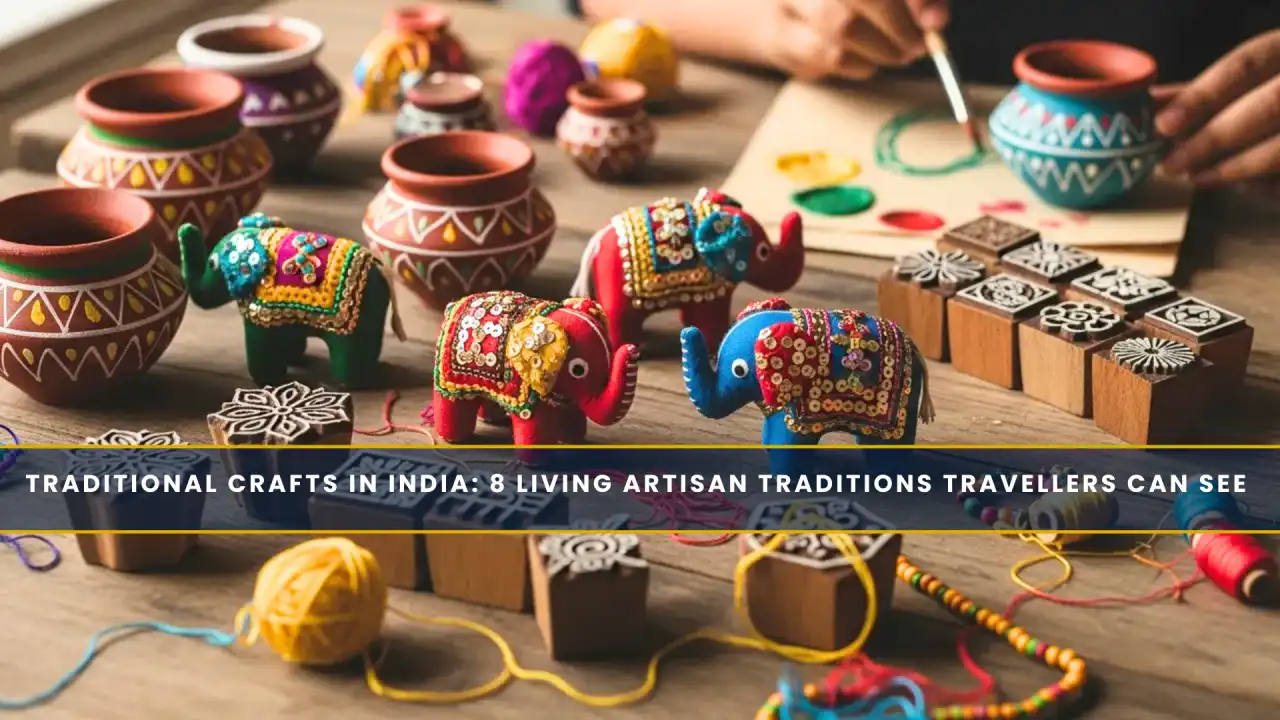
Traditional Crafts in India: 8 Living Artisan Traditions Travellers Can See
Introduction
India's craft geography is not random. Every cluster is where it is for a reason, whether that's a specific clay, a river for dyeing, an old trade route, or a royal court that disappeared in 1947 but left behind several hundred skilled families with nowhere else to go. When you visit one of these places, you're not just watching someone work. You're standing inside a piece of economic and material history that is still, somehow, functioning. And unlike most heritage tourism, you don't need a booking. Walk in between 8 and 11 in the morning, and you'll find most workshops mid-production. Come back at 3 PM, and it's a different story. Travelling to a place means much more than just visiting the famous landmarks, it's about knowing a place, its history, its culture and its people. And the crafts of a place are a tiny window to both the roots and the traditions of a place. So, we have put together a list of 8 living artisan traditions that travellers can see, so that you'll learn about the place you travelled to and also have souvenirs to remember it by. Isn't it a win-win situation?
Banarasi Silk Weaving: Uttar Pradesh
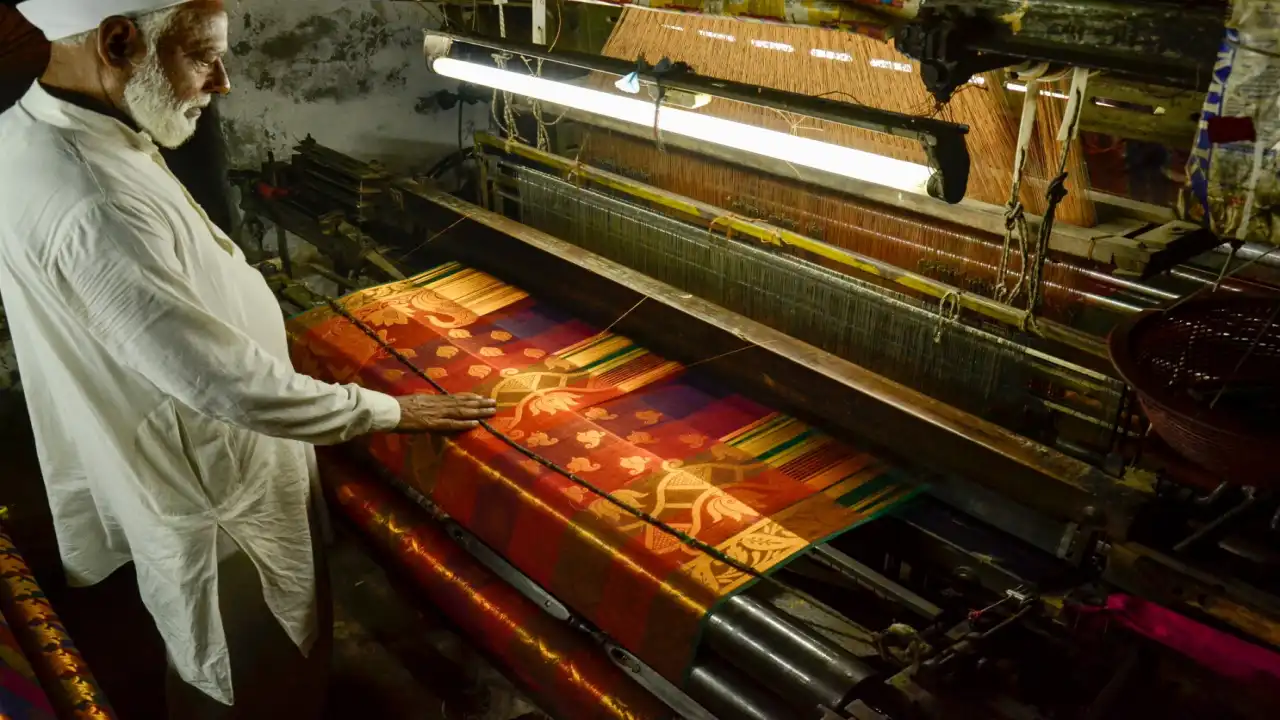
Banarasi silk weaving has been going on in Varanasi for something like five centuries, give or take. The brocaded silk with zari, metallic thread, is the kind of work that takes years to learn and longer to master. The neighbourhoods where it actually happens, Madanpura, Lohta, Peeli Kothi, and Alaipura, are not set up for tourism. They're residential streets where the looms happen to live on the ground floor. A single heavy-zari saree can take six months. Some take longer. The weaving itself hasn't changed much; Jacquard looms handle some of the pattern work now, but the hands are still doing the hard part.
Where to go:
- Madanpura neighbourhood; Varanasi Silk Weaving Cooperative on Lahartara Road
- Govt. Weaver's Service Centre near Chowk has working looms on display, open on weekdays
- October to March is your window. May and June in Varanasi are brutal, and output slows down noticeably
- Varanasi Junction covers most rail routes; Lal Bahadur Shastri International Airport for flights
Blue Pottery: Rajasthan
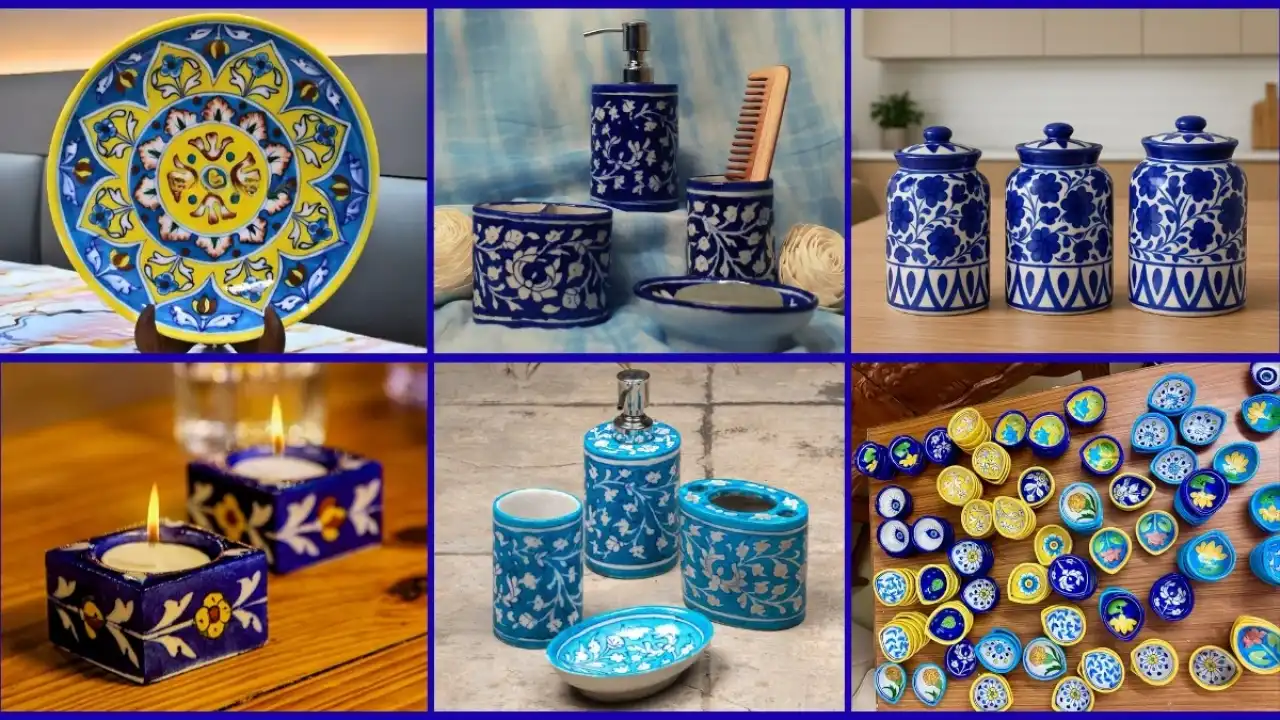
Rajasthan blue pottery doesn't actually use clay from the ground. The base is quartz powder, Fuller's earth, sodium sulphate, gum, and a couple of other things, all worked into a dough-like consistency. The colour comes from cobalt oxide, sometimes copper oxide, depending on the shade you're after. Studios doing this properly are mostly on the western edge of Jaipur, Amer Road and Sanganer Road. Kripal Kumbh in Bani Park is the name that comes up most often, and they do take walk-ins. One thing worth knowing before you buy anywhere: genuine handmade pieces wobble slightly when you look closely. Machine-made knockoffs are suspiciously even.
Main area:
- Bani Park and Sanganer Road, Jaipur
- Kripal Kumbh in Bani Park: walk-ins are fine. Amer Road workshops are smaller and more informal
- October to February. Jaipur summer heat regularly crosses 43 degrees, not the time to wander
- If it looks too perfect in the market stall, it was probably made by a machine
Madhubani Painting: Bihar
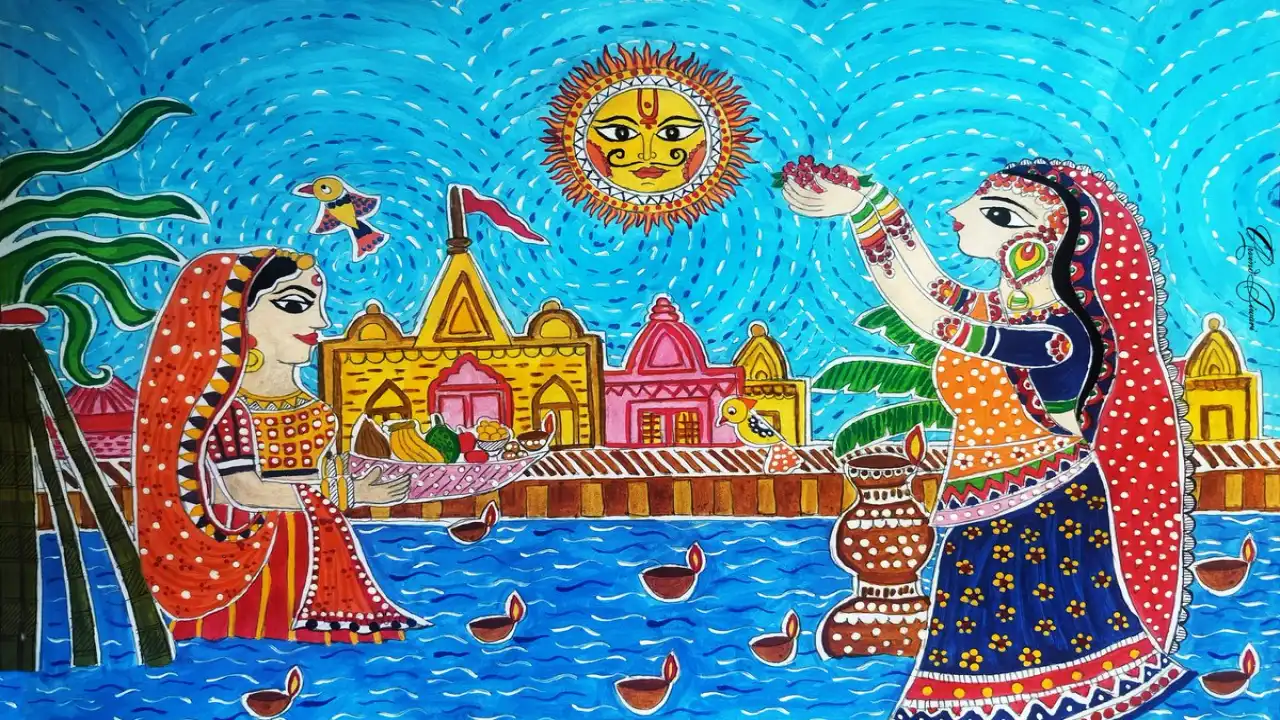
Madhubani painting art has its roots in the Mithila region of north Bihar, just below the Nepal border. For generations, it was wall art, painted by women on mud plaster for festivals and weddings, never meant to last or to sell. Then 1966 brought a drought bad enough to get international attention, and aid workers began introducing paper so families could sell the work and eat. That shift stuck. These days the towns of Jitwarpur and Ranti, both within 30-odd km of Madhubani town, are where most of the production lives. Jitwarpur, especially, nearly every household paints. Ranti's a bit different, specialising in the Katchni style.
- Madhubani station on the Samastipur-Darbhanga-Nirmali line is your rail entry; Darbhanga airport has limited Delhi and Kolkata services
- Jitwarpur: 5 km north of town. Ranti: around 20 km. Local autos cover both
- October to February. Bihar monsoon roads are genuinely unreliable
- Buy from the artist directly, not a shop. The price difference is significant, and so is the quality
Pashmina Shawl Weaving: Jammu and Kashmir
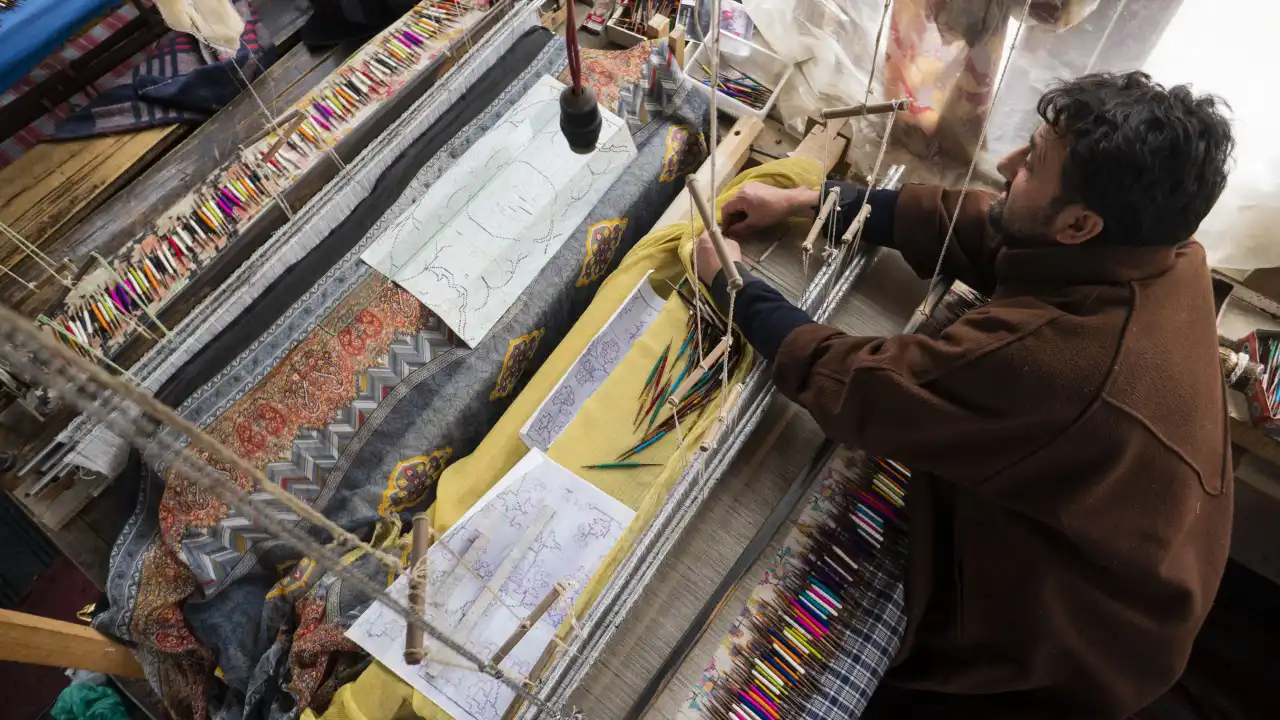
Pashmina shawl weaving might be the single most counterfeited craft product you'll encounter anywhere in India. The real fibre is from the Changthangi goat, raised on Ladakh's Changthang plateau above 4,000 metres. It's rare, genuinely expensive, and in short supply. The stuff piled up on tourist market tables in Jaipur and Delhi is almost certainly not it. Real pashmina weaving is in Srinagar's old city: Rainawari, Fateh Kadal, and Zadibal. Fibre gets hand-spun first by women in villages outside town, then woven on wooden pit looms. Sozni embroidery, if there is any, is done by a separate set of craftsmen and adds weeks to the timeline.
- Weaving is centred in Rainawari, Zadibal, and Fateh Kadal in Srinagar's old quarter
- J&K Tourism does a crafts trail map, pick it up at the SKICC complex by Dal Lake
- The Government Emporium on Boulevard Road is useful for getting a sense of real pricing
- Authenticity test: genuine pashmina passes through a finger ring. A synthetic blend jams
- April to October. The valley in winter is cold, snowed in at higher elevations, and harder to move around
Block Printing: Rajasthan / Gujarat
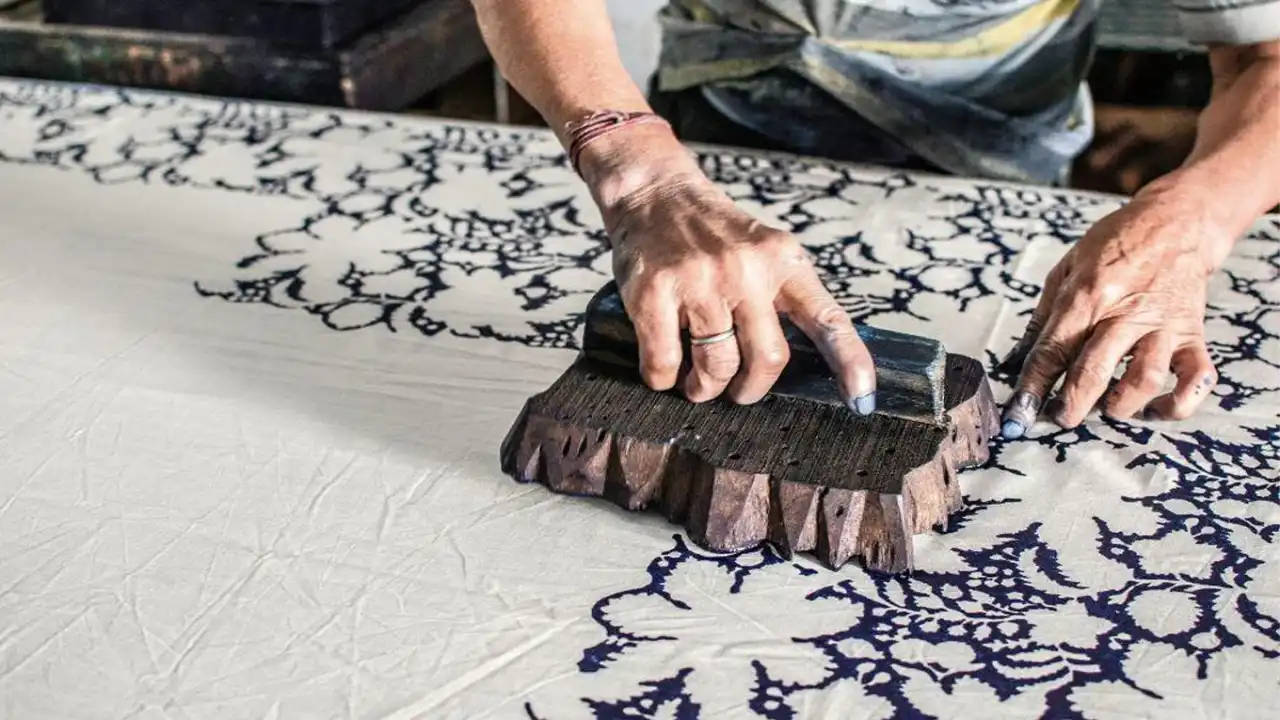
Block printing in India runs on two fairly different tracks. In Rajasthan, Bagru and Sanganer, both a short drive from Jaipur, handle opposite ends of the tradition: Bagru does dabu resist printing with a mud paste, Sanganer does finer floral work on white ground. In Gujarat, Ajrakhpur outside Bhuj is a different operation altogether, a 16-step natural dye process using indigo and madder that takes the better part of a week per batch. The wooden printing blocks in Bagru are still carved there by hand, from teak and sheesham. Watching a printer repeat a pattern across metres of fabric using nothing but eye and experience is hard to forget.
- Bagru: 32 km from Jaipur, off Ajmer Road. Half a day, easy to combine with Sanganer
- Sanganer: 16 km south of Jaipur. Handmade paper is also made here, two for one
- Ajrakhpur: 12 km from Bhuj. Bhuj airport connects to Mumbai and Ahmedabad
- October to March works for both states
Bamboo, Cane, and Sitalpati Craft: Assam (North East India)
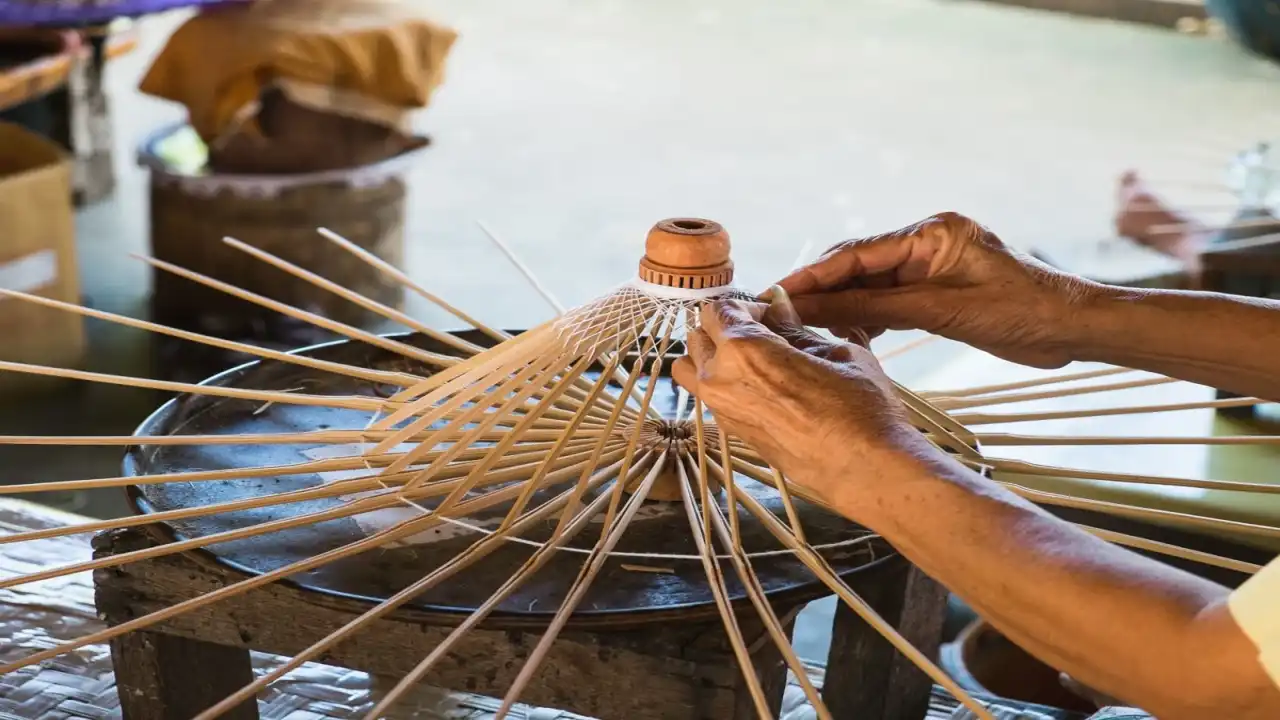
People know very little about the Northeast, and those who do visit tend to stick to Meghalaya or Kaziranga. That means Assam's craft culture is largely unspoiled by tourism, for better and worse. The bamboo and cane weaving here isn't a niche art form; it's how things get made in much of the state: baskets, mats, furniture, storage. The one worth making a specific trip for is Sitalpati, a finely woven mat made from the Murta plant stem, mostly in Barpeta and Kamrup districts. The weave is almost impossibly tight in the good pieces. Barpeta takes a while to get to from Guwahati, and that is genuinely fine.
- Guwahati is the base: direct flights from Delhi, Kolkata, Mumbai, Chennai
- Barpeta: roughly 140 km west on NH27, about 3 to 4 hours depending on the road that day
- Craft cooperative near Barpeta town: call before you go. There's no tourist schedule
- Sualkuchi, 35 km from Guwahati, is worth adding for muga and pat silk weaving
- November to March. Monsoon Assam floods. Roads go first
Coir Craft: Kerala
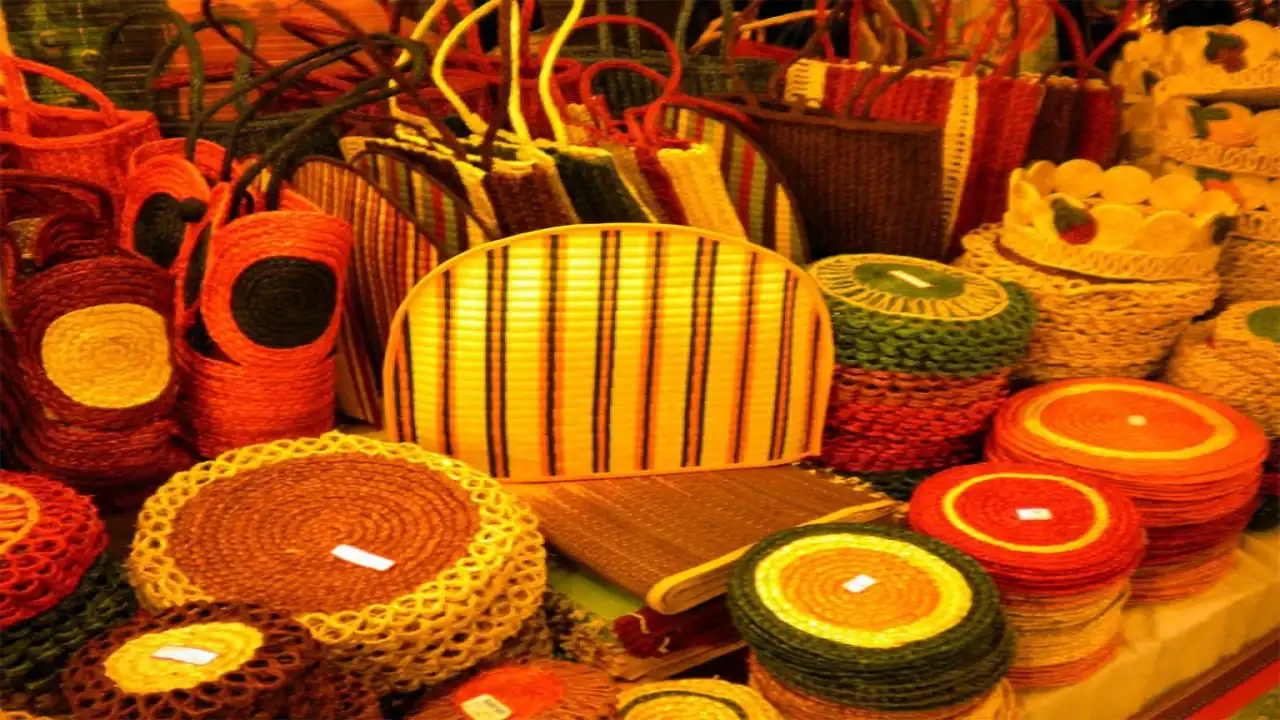
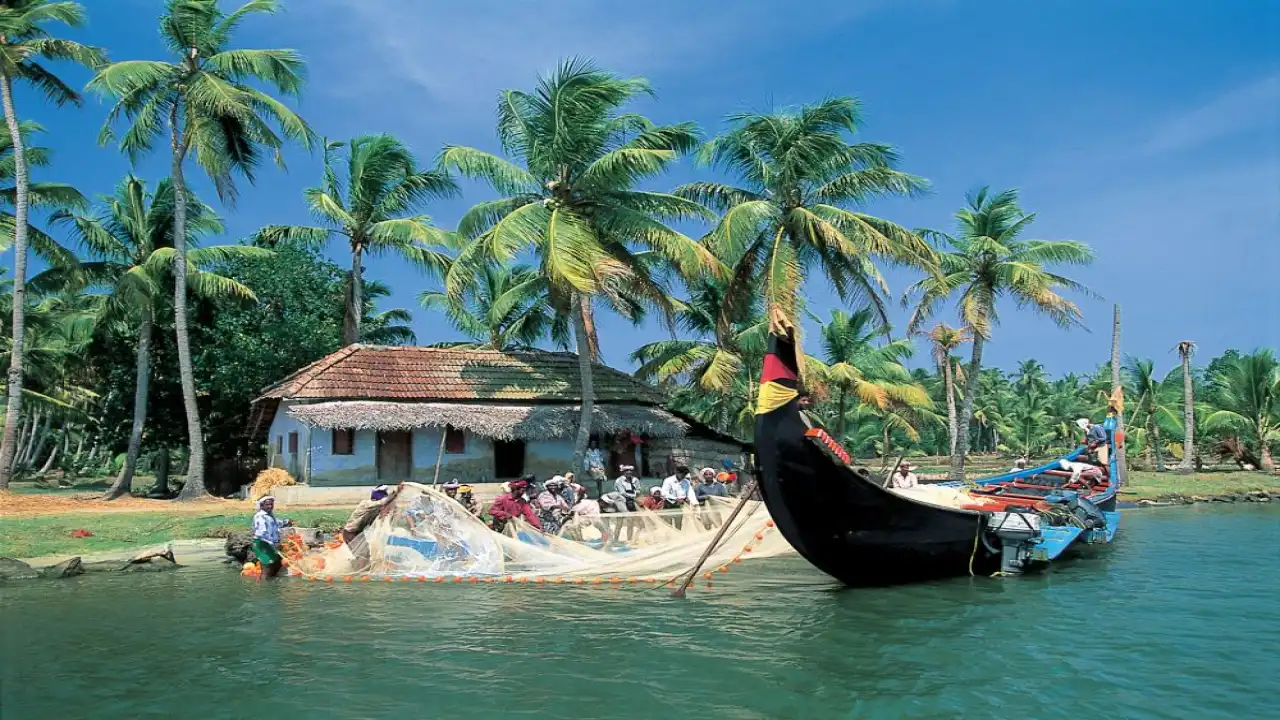
Coir is the fibre that comes out of a coconut husk, and Kerala is responsible for a remarkable portion of the world's total output. The production is concentrated around Alappuzha, specifically Kalavoor and Cherthala, where brackish backwater lagoons are used for retting, which just means soaking the husks long enough for the fibre to separate. Most visitors on houseboats drift straight through this area without realising they're passing working retting grounds and hand-spinning operations on the canal banks. The Coir Board museum in Alappuzha is a reasonable hour's stop, not thrilling but clear enough to make sense of what you've been floating past.
- Coir Board Museum: central Alappuzha, weekdays, low entry fee
- Retting and spinning visible along canals between Alappuzha and Cherthala, by boat or road
- Alappuzha to Kottayam by boat cuts through the main production stretch
- October to February. Monsoon runs from June to September, and water routes get disrupted
Conclusion
None of these traditions survived because they got lucky. They survived because they are still economically necessary to the people who practice them, still embedded in specific streets and specific families in places with actual names and actual train connections. Going to see traditional crafts in India isn't about ticking cultural boxes. It's about getting to Madanpura before 8 AM, or taking a slow auto 20 km out of Madhubani town on a dusty road, or standing in a Srinagar back lane while a weaver works a pit loom in a room that smells of wood and old wool. That's the version worth going for. For current itineraries, craft festival dates, and region-specific planning resources, Travel Junky's domestic packages are a solid place to start.
Pro Tips
- Morning is non-negotiable for most craft visits. The work is happening between 8 and 11 AM. Afternoon, workshops slow down. After 2 PM in summer, they often stop.
- Don't start with a guided tour. Walking into a weaving lane unannounced usually gets you further than being shepherded through a fixed route that ends at a government shop.
- Cash, smaller notes. Workshop and direct-from-maker purchases rarely take cards or UPI apps. The pricing is also meaningfully better than buying through retail.
- GI tags matter. Banarasi silk, Madhubani, and Kashmiri pashmina all carry Geographical Indication certification. Not a perfect system, but a useful first filter when you're not sure what you're looking at.
- October to February is the main window for most of the country. Northeast India: push that to November through March.