Untouched Villages in Ladakh for an Authentic Travel Experience
Most first trips to Ladakh are built around the same handful of stops: a quick Leh acclimatization day, a fast run to Nubra, a lake sunrise, a monastery circuit, then the dash back. It works, but it also skims the surface. The places that often stay with you are smaller and slower: villages where the road narrows, the schedule loosens, and daily life still sets the pace. Some are reached by long drives across the Changthang plateau, others sit just off trekking routes or in side valleys that package tours usually treat as a blur outside the window. That is where Ladakh Villages become more than scenery and start feeling like the trip itself.
Highlights
- Hanle is the far-east outlier: high, remote, and now firmly on the map for astronomy, dark skies, and Changthang landscapes.
- Hemis Shukpachan is best approached as a walking village on the Sham Valley route, not as a box to tick from the road.
- Sumur offers a quieter Nubra base than the usual Hunder rush, with Samstanling Gompa and the road onward to Panamik.
- Stok works well for travelers who want village life with a close-to-Leh feel, with palace history and monastery life still intact.
- Garkone and Hunderman show the Kargil side of Ladakh: apricot country, layered border histories, and villages that do not resemble the postcard version of Leh district.
Why these Ladakh Villages feel different
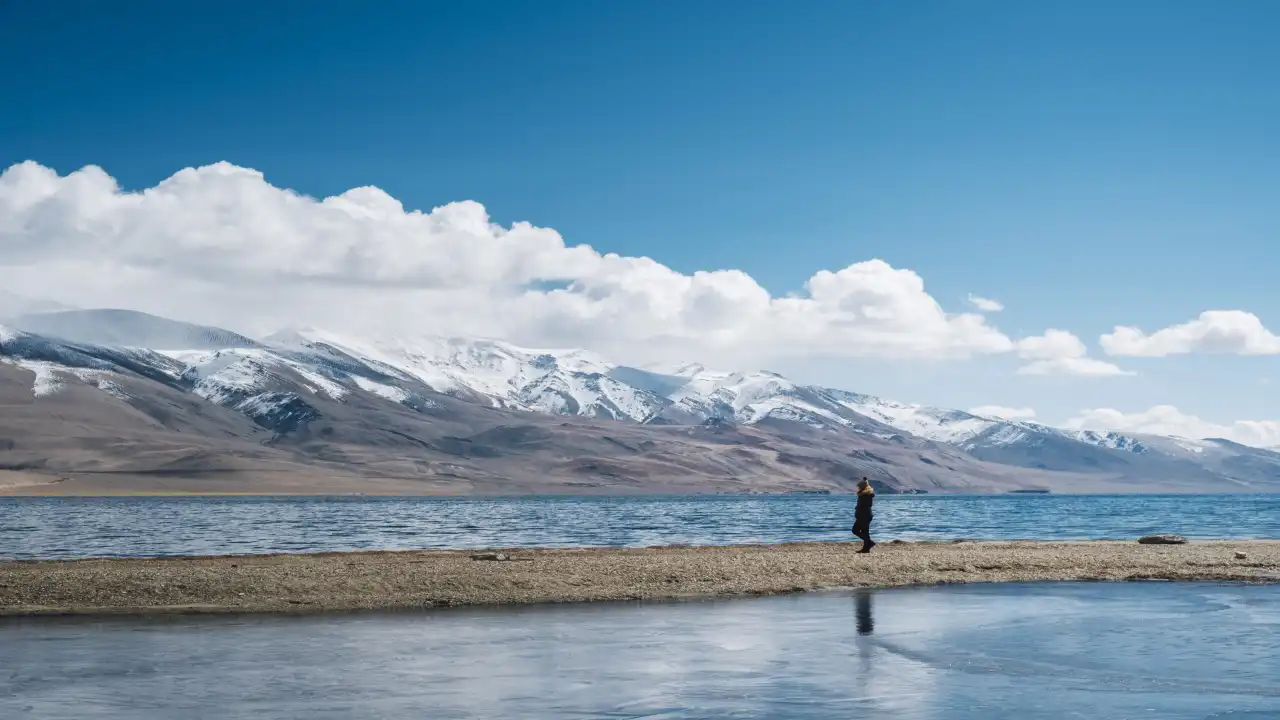
Nothing in Ladakh is fully untouched now, and that is worth saying plainly. Roads improve, homestays spread, and more people know where to point the car. Still, some villages remain meaningfully quieter than the Pangong-Nubra-Leh loop because they ask for a slower kind of travel: more nights in one place, fewer “must-sees” before lunch, and more attention to local rhythm than to mileage. Taken together, they also show what Rural Ladakh tourism looks like when it stays village-scale, homestay-led, and tied to actual geography rather than a generic mountain itinerary.
What links these Ladakh Villages is not a single culture or landscape. Quite the opposite. Hanle belongs to the open Changthang country. Sumur sits in Nubra’s orchard belt. Garkone and Hunderman pull you west toward Kargil’s borderland histories. Hemis Shukpachan is best understood on foot. Stok sits almost within Leh’s orbit and still manages to feel separate. That range is the point: Ladakh is not one thing, and village travel makes that obvious fast.
Six Ladakh Villages worth your time
Hanle
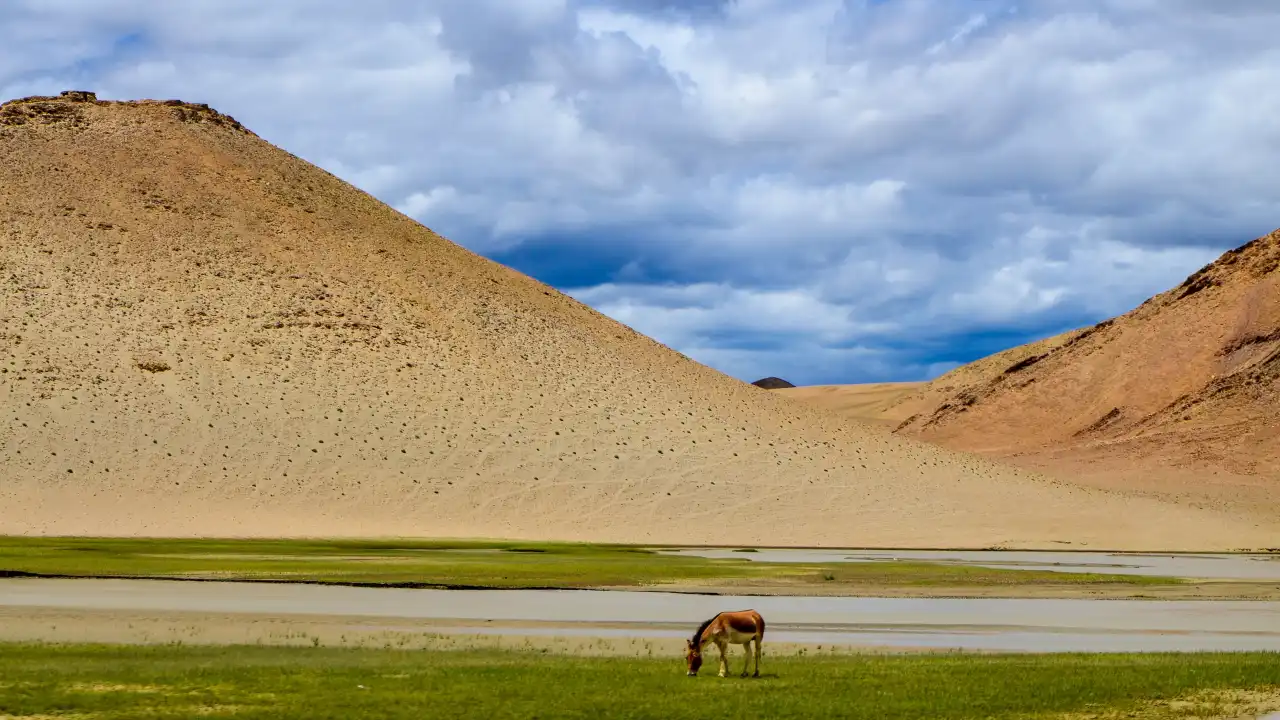
Hanle is the big detour on this list, and probably the most memorable one if you have the time. Officially, it sits about 260 km from Leh at roughly 4,500 m, and it is known for the Indian Astronomical Observatory, clear skies, and the wider Changthang setting. This is not village travel in the orchard-and-homestay sense alone. It is plateau travel: huge light, very long horizons, and a silence that feels almost engineered for stargazing. The newer Ladakh Tourism material has doubled down on that identity through Astro Week and dark-sky promotion, which tells you something about where Hanle now sits in the region’s travel imagination.
- Best for: two slow nights, one for acclimatized arrival and one for the sky. Rushing in and out wastes the place.
- Look for: the observatory zone, monastery views over the valley, and the Changthang wildlife landscape, where kiang, marmots, and birdlife are part of the setting rather than a separate excursion.
- Timing window: summer into early autumn is the safest mainstream season; Ladakh Tourism lists May to September as the core summer travel period and September to October for clear autumn skies.
Hemis Shukpachan
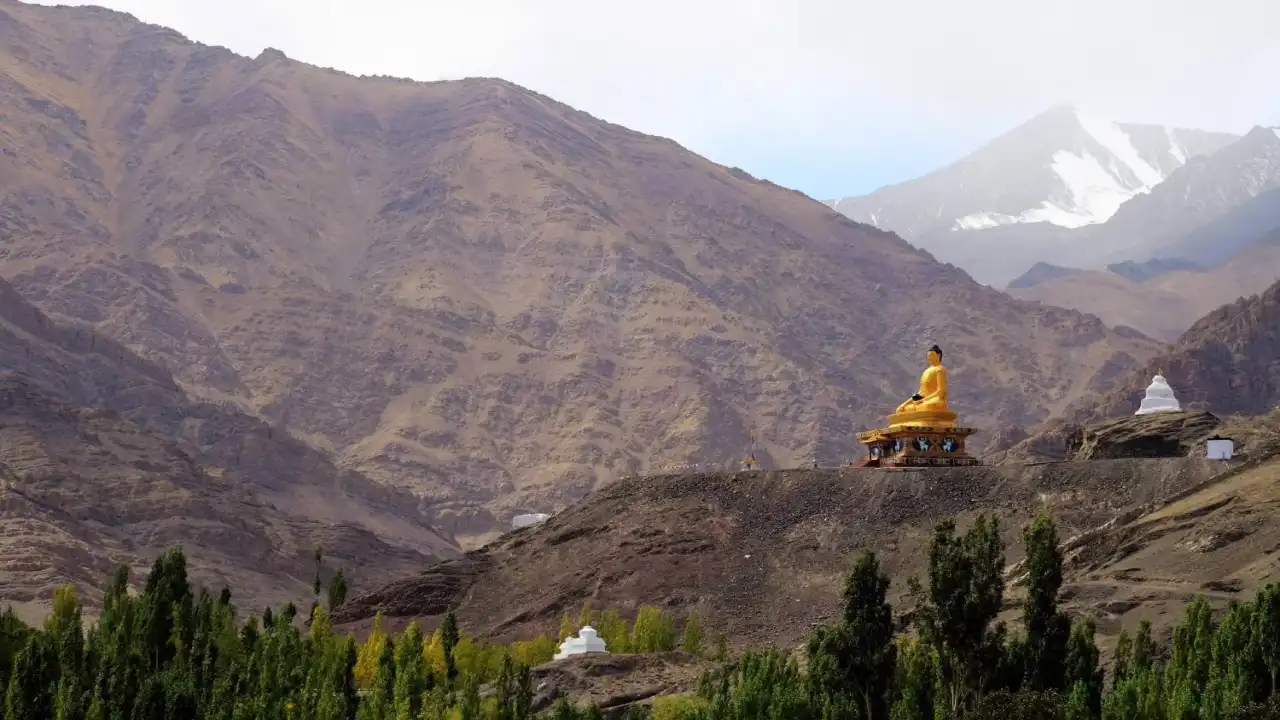
Hemis Shukpachan is one of those villages that makes more sense on foot than on a route map. It sits on the Sham Valley Trek, usually reached from Likir through Phobe La and Chagatse La to Yangthang, then over Tsermangchan La into the village; the usual continuation is over Mebtak La toward Ang or Temisgam. The appeal is simple and not very flashy: a green pocket in a dry landscape, village houses instead of camp clutter, and a walking pace that lets the terrain explain itself. For a first trek in Ladakh, this is still one of the smarter choices.
- Works best as: a homestay halt on a two- or three-day Sham Valley walk, not a brief drive-by.
- Watch for: juniper groves, barley fields, small monastery stops, and the odd pleasure of entering a village after a pass rather than from a parking spot.
- Season note: June to September is the easiest bet for walking conditions, though official Ladakh season guidance also makes September and October attractive for clear skies.
Sumur
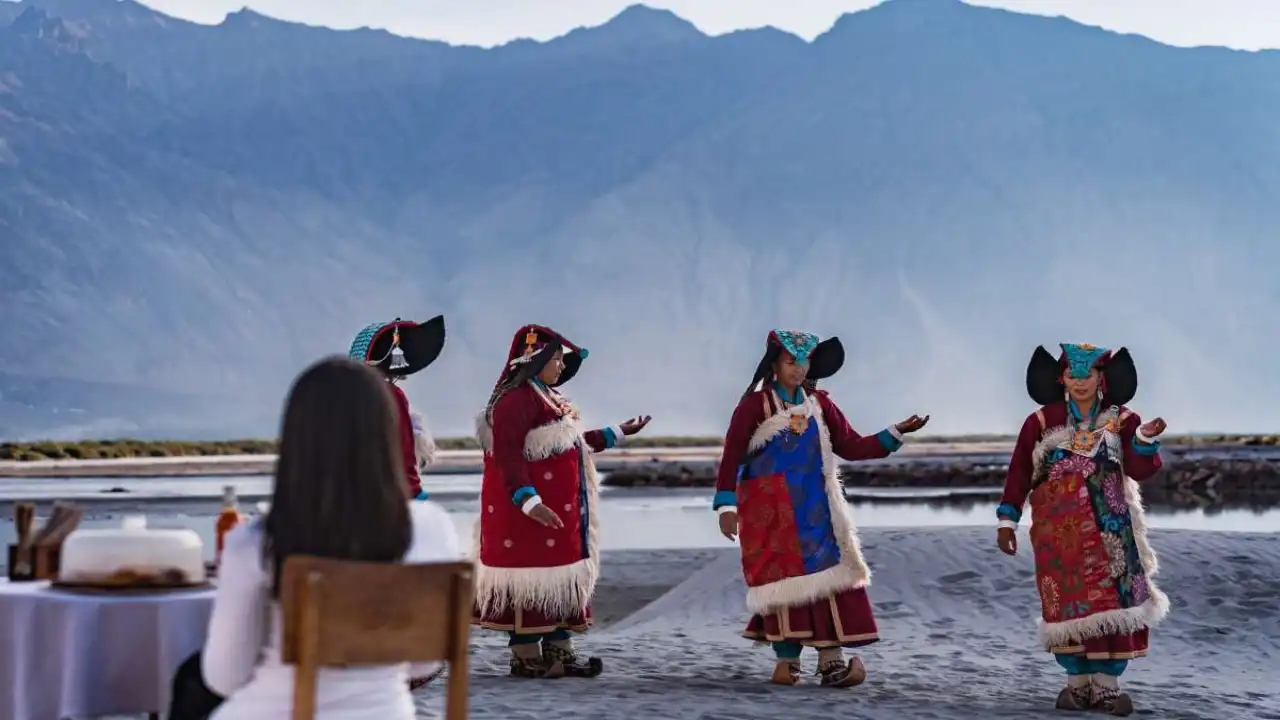
In Nubra, Sumur is often overshadowed by Hunder and Diskit, which is exactly why it is worth considering. Official tourism material places it on the branch road from Khalsar toward Panamik and identifies Samstanling Gompa as the key village landmark. In practice, Sumur works well for travelers who want Nubra without quite so much traffic churn: monastery time in the morning, orchard edges in the afternoon, and the option to continue farther north without turning the whole valley into a checklist. It is still part of the standard Nubra geography, just handled more sensibly.
- Best used as: a base for the Sumur-Panamik side of Nubra rather than a lunch stop between Leh and Turtuk.
- What to do: spend time at Samstanling Gompa, walk the village edges, and keep Panamik in reserve instead of cramming both into a hurried same-hour visit.
- When to go: summer through autumn is the broad, reliable window for Nubra, with roads and village stays generally fitting the main May-October travel season.
Stok
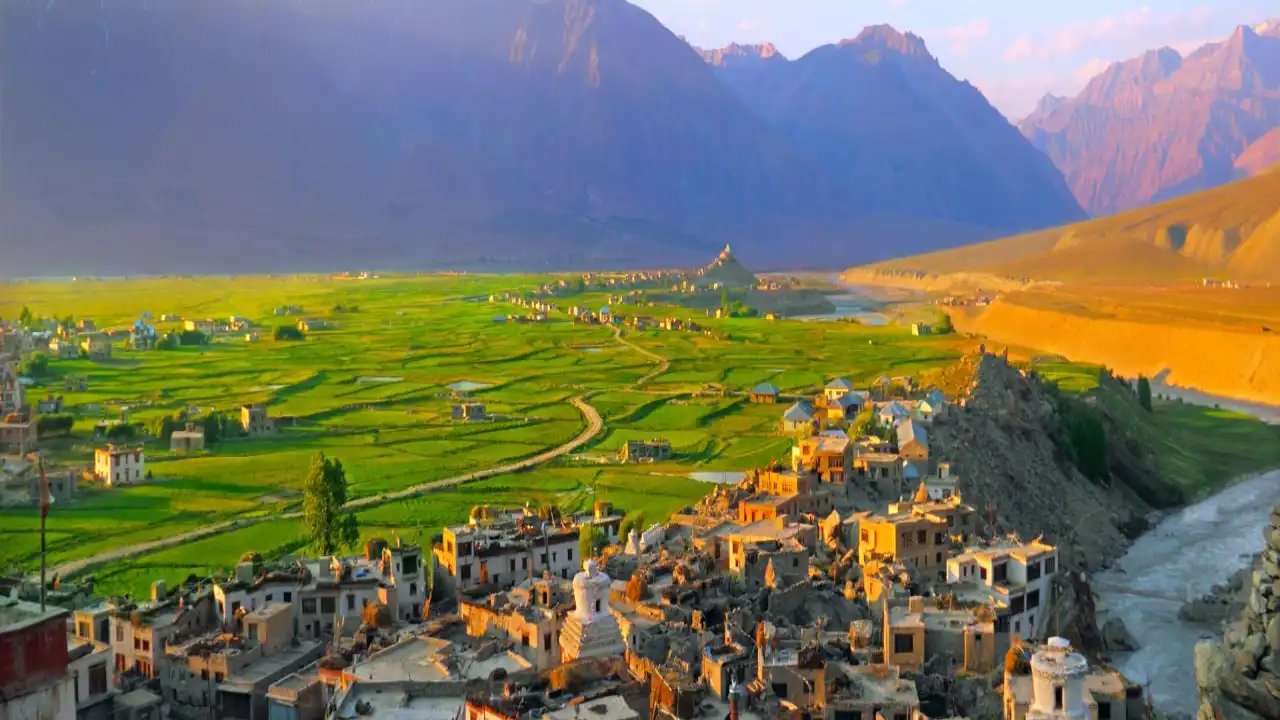
Stok is the least remote village in this list, but distance is not always the right measure. It lies about 15 km from Leh and carries a different texture from the capital: palace history, monastery life, and the practical advantage of being reachable without a hard road day. Official sources frame Stok through the royal family’s history and the Stok Guru Tsechu festival, while also pointing to homestays as the obvious way to stay. For travelers who want a village stay without gambling on very long drives at the start of a trip, Stok is a sensible choice. It is not a secret. It is just often skipped by people obsessed with going further.
- Good for: the first village stay after Leh, especially if your body is still adjusting to altitude and you do not want to push east or north immediately.
- Focus on: Stok Palace, the monastery, and short local walks rather than trying to turn it into an “adventure day.”
- If timing lines up, the two-day Stok Guru Tsechu in February is the village’s standout cultural marker, though winter travel is obviously a more committed proposition.
Garkone
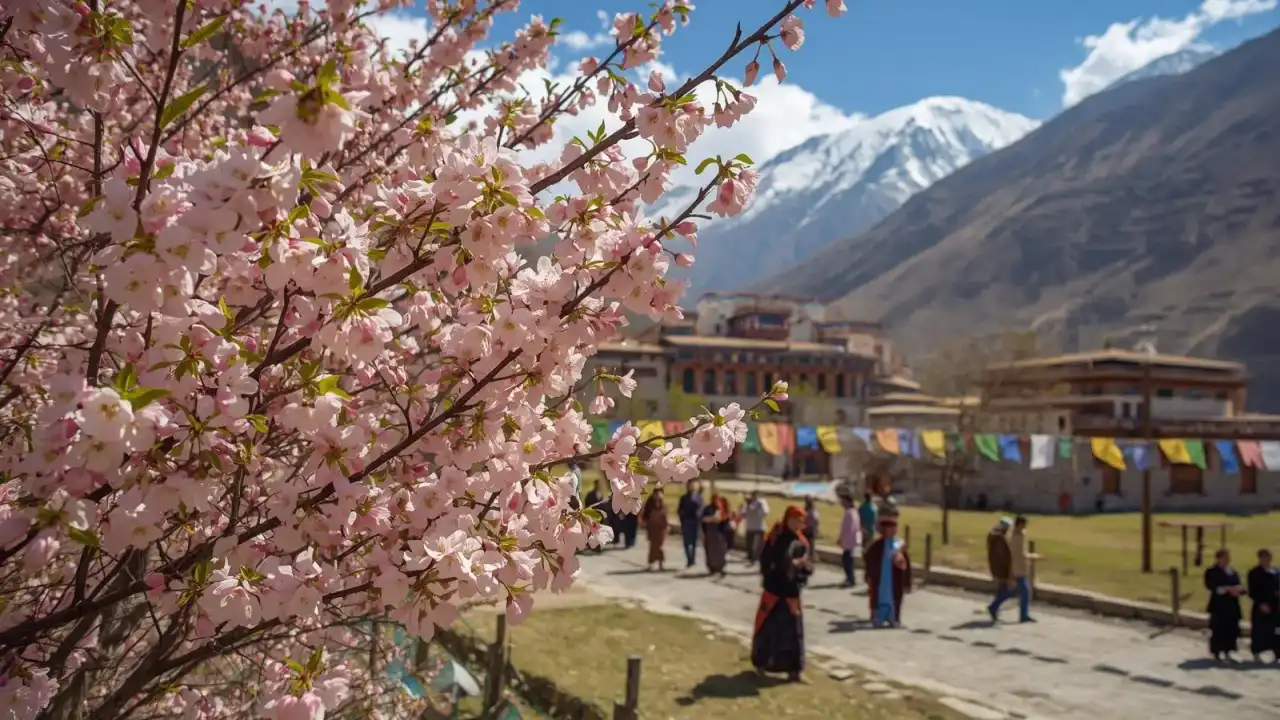
Garkone, in the Kargil district, pulls the journey west and changes the tone of the trip. The Himalayan Museum of Labdak Culture and Heritage is based here, and district records also place Garkone within the line-up of villages used for Apricot Blossom celebrations. That combination matters. You are not just visiting another scenic settlement; you are entering a cultural pocket that tells a different Ladakh story from the monastery-heavy Leh circuit. The place asks for patience. You go for the orchards, the museum, the slower conversations, and the feeling that the western edge of Ladakh has its own logic.
- Smartest season: April, if you are aiming for the apricot blossom and are prepared to work around the annually shifting dates.
- Better approach: use Kargil as the gateway rather than trying to force Garkone into an overlong Leh day trip. Kargil town itself sits roughly 200 km from Leh and Srinagar.
- Spend time on: the museum, orchard walks, and village meals instead of treating the stop as a quick “ethnic village” photo break.
Hunderman
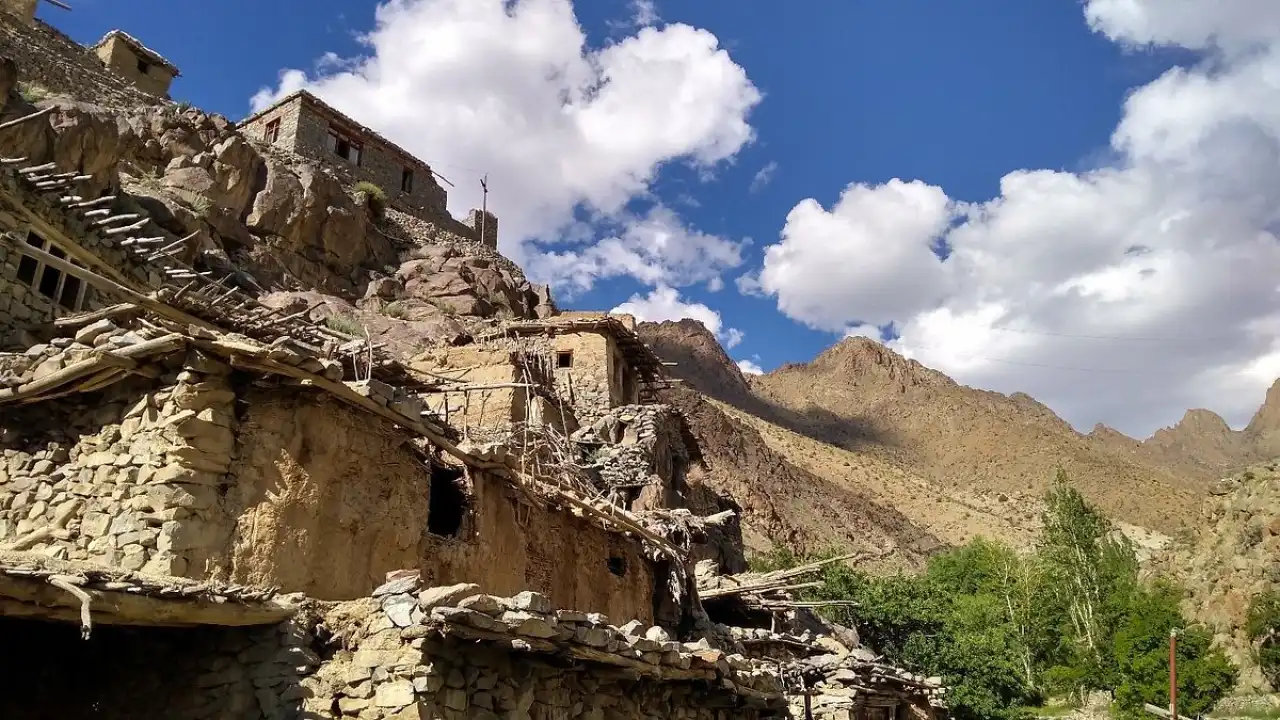
Hunderman is one of the clearest reminders that Ladakh is also a borderland. The official Ladakh Tourism site now presents it as India’s last village before the LoC and emphasizes its partition history. That makes it a very different experience from the lake-and-pass grammar of most Leh-based itineraries. The draw here is not a spectacle. It is an atmosphere: stone houses, a weathered settlement form, and the sense that the landscape has been shaped as much by political history as by geology. If you come in from Srinagar or spend proper time in Kargil, Hunderman makes excellent sense. From Leh alone, it is usually a sign that you are trying to do too much.
- Come for: border history, old architecture, and the uneasy but compelling stillness that frontier villages carry.
- Use as a base: Kargil town, which is the practical anchor for western Ladakh travel.
- Best months: late spring to early autumn, when roads and day conditions are more forgiving for longer west-side drives.
How to plan Ladakh Villages without turning them into a checklist
Most Ladakh Villages reward restraint. One eastern detour and one Nubra base is often enough for a first longer trip; one Kargil-side village and one Leh-side village work well for a second. The mistake is trying to stitch Hanle, Nubra, Sham Valley, Aryan Valley, and Kargil into one breathless loop. You end up remembering road fatigue more than place. The better method is simple: split the trip by geography, respect acclimatization, and let one village be the point of a day instead of an add-on after a monastery and before a pass.
Practical tools worth using: The official Ladakh Tourism portal now functions as a planning hub for permits, verified services, and travel essentials, while the Leh district site maintains accommodation and homestay lists. That matters because village travel goes wrong quickly when you rely on vague route assumptions, especially for remote areas like Hanle or for restricted circuits where permit rules can change. In broad terms, official season guidance breaks the year into spring blossom travel in March-April, core summer travel from May-September, and clear-sky autumn travel in September-October.
That is also the cleanest way to get an Authentic Ladakh experience. Not by chasing the hardest road or the emptiest map pin, but by allowing enough time for a monastery morning, a homestay kitchen, an orchard path, a village square, or a walk back after dusk when the place has settled into itself.
Closing Note
The most rewarding Ladakh Villages are the ones that give you room to breathe. If you want to see them properly, Travel Junky should build the trip around fewer bases, realistic drive times, and village stays that fit the geography instead of fighting it. That usually means one slower east or west segment, not both; a real acclimatization buffer; and a route where Hanle, Sumur, Hemis Shukpachan, Stok, Garkone, or Hunderman are treated as destinations in their own right. That is a much better Ladakh trip, and, frankly, a more honest one.