Visa on Arrival for Indians 2026: Where Indian Passport Holders Can Travel Easily
You land in a new country, walk up to a counter you've never seen before, and hope the visa stamp actually happens the way the internet said it would. That's the reality for a lot of Indian travelers right now. India's passport rose to 75th place in the February 2026 Henley Passport Index update, its biggest single jump in years, with visa-free or visa-on-arrival access to 56 destinations, up from 85th and 57 destinations in 2025. Sounds simple, but it isn't always. Visa on Arrival for Indians 2026 looks easy on paper until you're standing at that counter and realize it doesn't work quite the way a blog post promised.
Travel Junky deals with this confusion often enough that it's worth untangling properly, country by country, rather than repeating the same recycled list every other site runs.
What Is Visa on Arrival, Really?
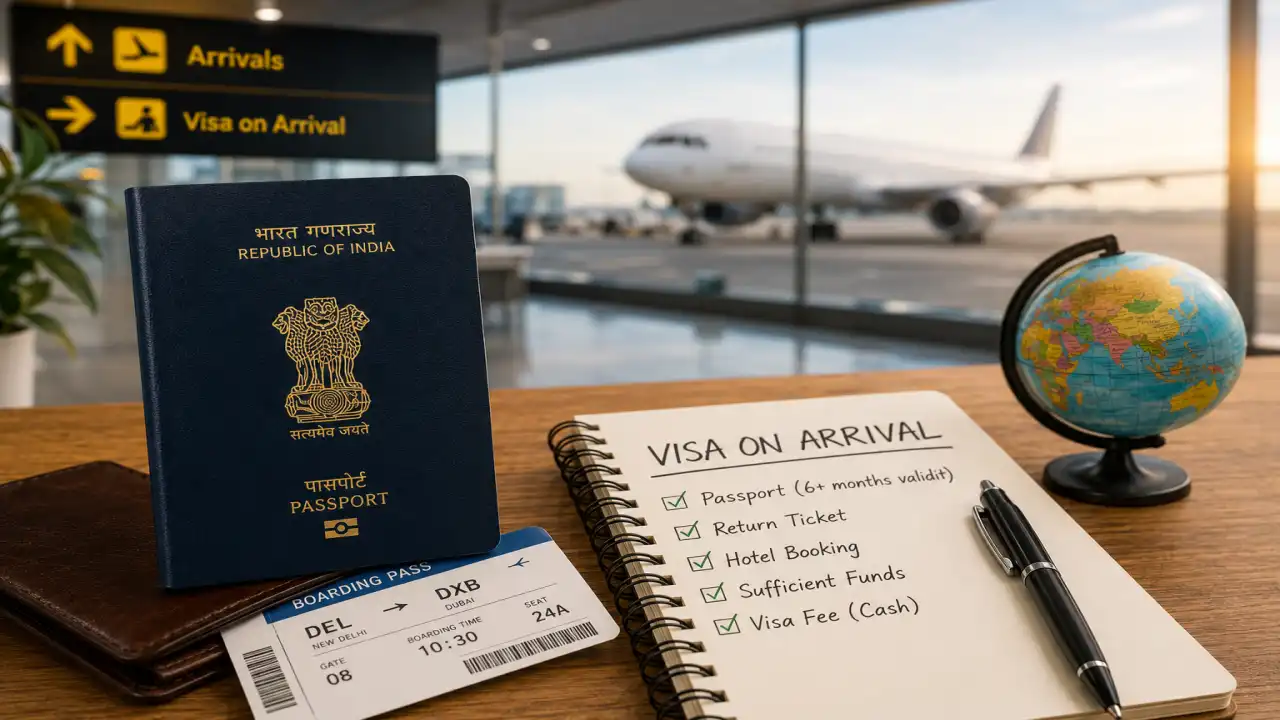
Visa on Arrival means you get your entry visa stamped at the destination's airport or border checkpoint, after you land, rather than applying for it before you fly. No embassy visit, no weeks of waiting, in most cases just a form, a fee, and a stamp. That's the short version. The longer version, which most guides skip, is that VoA isn't one uniform system. Some countries hand it out to any Indian passport holder who shows up with the right paperwork. Others only grant it if you're already carrying a valid visa from a completely different country. Knowing which version you're dealing with matters more than knowing the fee.
Visa-Free vs e-Visa vs VoA: What's the Actual Difference?
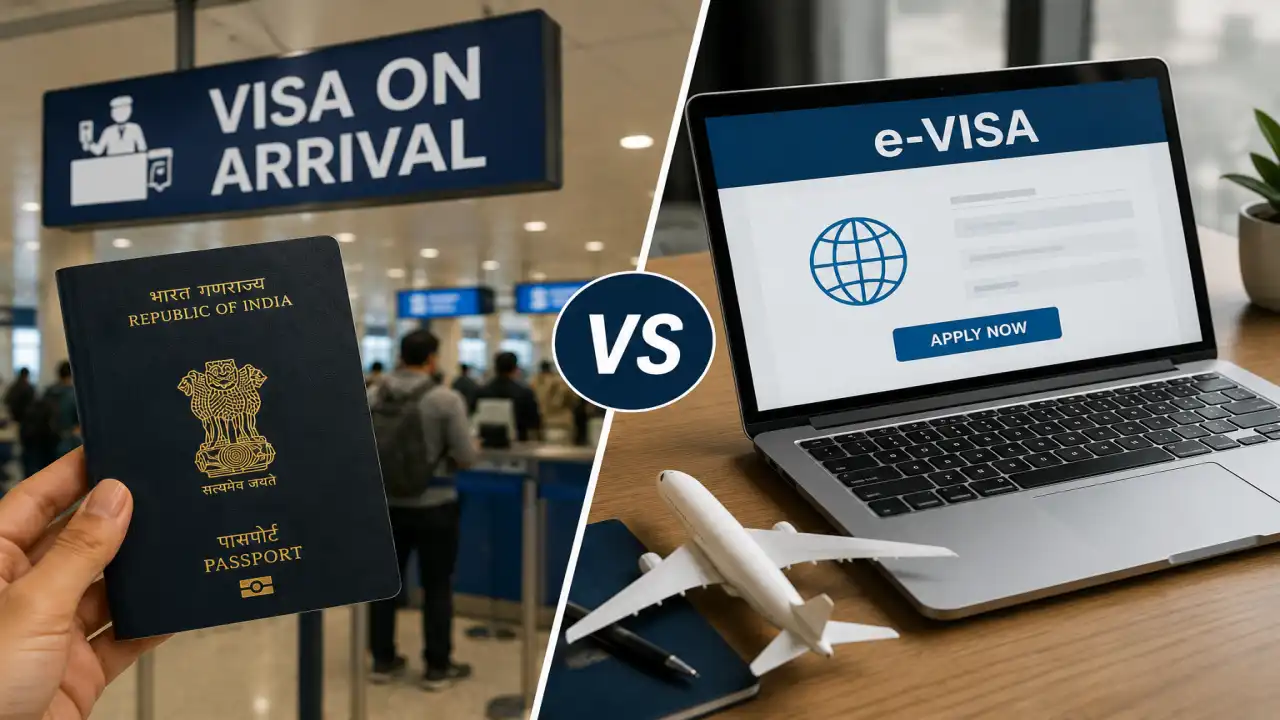
These three terms get used interchangeably online, and that's part of the problem. Visa-free means exactly that, no visa needed at all, just a passport check and an entry stamp. An e-Visa is approved online before you travel, usually within a day or three, and you show the approval at the airport rather than applying there. Visa on Arrival sits in between, no advance paperwork, but you're not walking through freely either; you're stopping at a counter to get processed.
For travelers comparing options, it helps to think of these as a spectrum rather than three separate boxes. Visa-free countries for Indians sit at the easiest end. E-Visas require a bit of homework before departure. VoA sits in the middle, immediate but not instant.
Is Visa on Arrival the Same as an e-Visa?
No, and the difference actually matters for trip planning. An e-Visa is approved before you leave India, so if something's wrong with your application, you find out at home, not at a foreign airport. VoA is decided entirely at the border, which means the outcome depends on whoever's working that counter that day, what documents you're carrying, and occasionally how busy the queue is. Some countries that used to run classic VoA have shifted toward e-Visa or ETA systems instead, Kenya being a recent example, which is exactly why checking the current system before booking flights actually matters.
What Makes "Conditional VoA" Different From Regular VoA?
This is the part almost nobody explains clearly. Regular VoA means your Indian passport alone gets you through, assuming you meet the basic documentation requirements. Conditional VoA means the country only grants entry-on-arrival to Indian travelers who already hold a valid visa or residence permit from a specific list of other countries, usually the US, UK, Schengen zone, Canada, Australia, or similar. Without one of those, conditional VoA simply doesn't apply to you, no matter how many blog posts list the country as VoA-friendly. The UAE, Saudi Arabia, Oman, Bahrain, and Egypt all fall into this category, and it's a distinction worth sitting with before you assume a Gulf trip is automatically simple.
What Documents Do You Need for Visa on Arrival?
- Passport valid for at least 6 months beyond your entry date
- Confirmed return or onward flight ticket
- Proof of accommodation, hotel booking, or invitation letter
- Passport-sized photographs, where required
- Exact VoA fee in local currency, cash
- Proof of sufficient funds, where the destination requires it
Which Countries Offer Visa on Arrival for Indians in 2026?
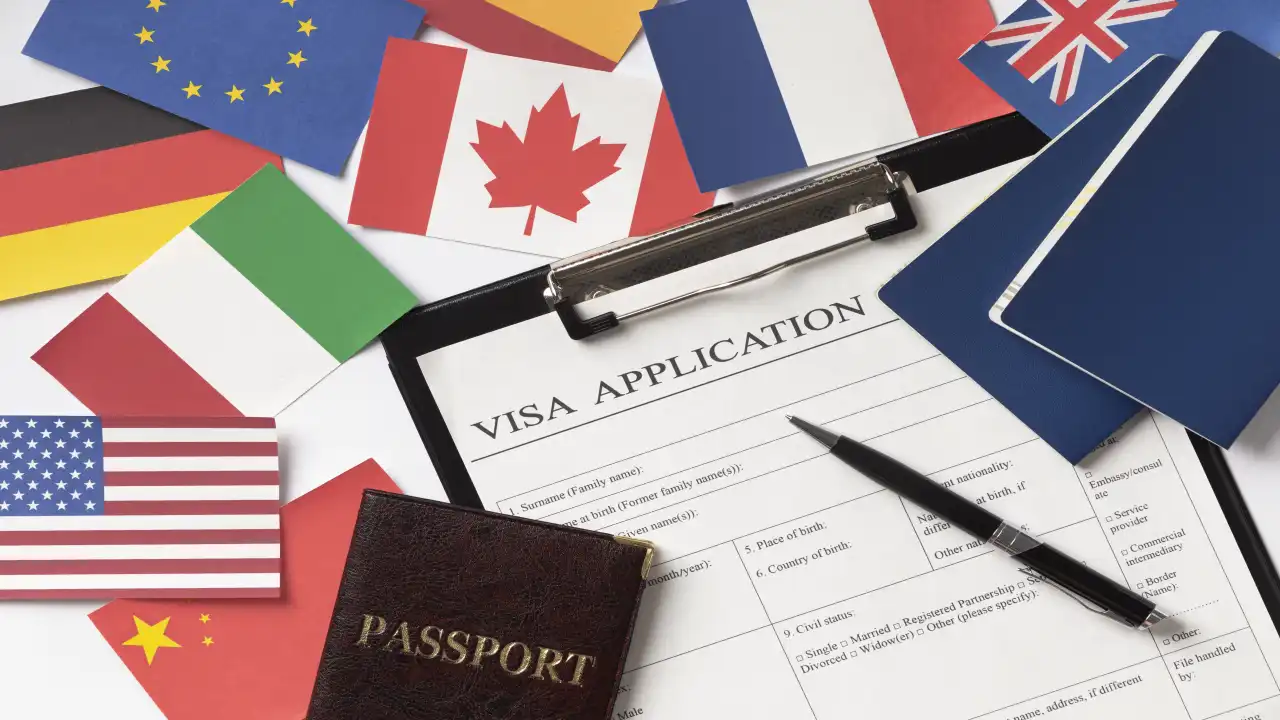
The Ministry of External Affairs lists 47 countries currently offering some form of VoA to Indian passport holders. Here's the full visa-on-arrival list for 2026, grouped by region.
VoA Countries in Southeast and East Asia
The Sri Lanka entry is worth pausing on. It changed twice in 2026 alone, and most travel content still describes the older fee-based structure.
VoA Countries in the Middle East and Gulf
Jordan and Qatar offer relatively uncomplicated VoA access. Qatar's tourist visa-on-arrival period actually depends on your hotel booking being made through the Discover Qatar platform, and the visa fee itself is waived. Then there's the conditional group.
VoA Countries Across Africa
This is the largest regional group on the MEA list: Angola, Burundi, Central African Republic, Comoros, Djibouti, Ethiopia, Gabon, Ghana, Guinea-Bissau, Madagascar, Mauritius, Sierra Leone, South Sudan, Tanzania, Zimbabwe, and the Democratic Republic of Congo. Madagascar grants 60 days for a USD 37 fee, with proof of accommodation and a return ticket required. Guinea-Bissau technically offers 90 days for USD 100, though it's genuinely worth arranging an entry authorization through a host or employer in advance, since the on-arrival process alone isn't always smooth. Ethiopia processes VoA specifically at Bole International Airport in Addis Ababa, for one month, for tourism purposes only. Comoros offers 45 days for a EUR 30 fee.
VoA Countries in the Pacific Islands and the Caribbean
Fiji, Kiribati, the Marshall Islands, the Cook Islands, Tuvalu, Jamaica, Haiti, Saint Lucia, and St. Kitts & Nevis round out this group. The Cook Islands stand out here, with an international visa permit issued onshore after arrival, valid for up to 31 days, with no fee attached at all. Saint Lucia grants six weeks from the date of entry for tourist and business purposes, with a return ticket required, and interestingly, cruise passengers docking for less than 24 hours are exempt from the visa requirement entirely.
VoA Countries in Central Asia
Armenia and Tajikistan cover this region. Armenia's a conditional case too; VoA at the border applies if you're carrying a valid residence permit or visa from the EU, Schengen area, the US, Australia, New Zealand, South Korea, the UK, Canada, Russia, Japan, or specific Gulf states.
VoA at a Glance
- Zero-fee, straightforward VoA: Cook Islands, no cost, processed onshore after landing
- Longest stay available: Guinea-Bissau, up to 90 days
- Countries checking cash on hand: Cambodia asks for a minimum of USD 500 per traveler
- Countries requiring a third-country visa first: UAE, Saudi Arabia, Oman, Bahrain, Egypt, Armenia
- Easiest tropical option: Indonesia, 30 days, extendable once
Why Doesn't My UAE or Saudi VoA Actually Work?
This question comes up constantly, usually from someone who booked a Dubai trip assuming VoA was automatic, then found out otherwise while filling out arrival paperwork. The short answer is that UAE and Saudi VoA were never actually automatic for Indian passport holders in the first place; most content just doesn't say so clearly.
Which Countries Need a Third-Country Visa First?
The UAE extends VoA to Indian nationals who already hold a valid, unexpired visa or residence permit from the United States, United Kingdom, European Union or Schengen area, Canada, Australia, New Zealand, Japan, Singapore, or South Korea. Without one of those, standard VoA doesn't apply, and you'd need to apply through the regular UAE visa process instead. Saudi Arabia runs on similar logic, accepting US, UK, and Schengen visa holders who've previously used that visa at least once. Oman accepts UK, US, Australian, Japanese, or Canadian visa holders, along with GCC nationals. Bahrain and Egypt each maintain their own version of the same structure.
Does a Digital Visa Count as Proof for Saudi Arabia?
No, and this trips up more travelers than the eligibility rule itself. Saudi Arabia specifically requires the visa stamp to be physically visible in your passport. A digital visa approval, the kind you'd get for an ESTA-style e-visa, isn't accepted as valid proof, even if the visa itself is genuinely active. If your qualifying visa exists only digitally, VoA for Saudi Arabia isn't going to work, and it's worth checking this specific detail before assuming a stopover or connecting trip will go smoothly.
How Does Visa on Arrival Actually Work at the Airport?
Understanding how visa on arrival works for Indians at the airport removes most of the anxiety around the process, since it's really just a sequence of predictable steps.
- Research before you fly. Confirm whether your destination needs a return ticket, proof of accommodation, a minimum cash amount, or photos, since requirements vary by country and this step avoids surprises later.
- Locate the VoA counter after landing. It's usually separated from the main immigration queue, clearly signed in most international airports.
- Submit your documents. Passport, arrival form if required, photographs if required, and any proof of accommodation or onward travel.
- Pay the fee. Most VoA counters expect payment in local currency, and change isn't always available, so carrying the exact amount helps.
- Wait for processing and the stamp. Assuming your documents are in order, the officer stamps your passport on the spot.
- Proceed through immigration. Your permitted stay begins from this point, and it's capped strictly at whatever duration the country grants.
What's the One Thing Most Travelers Forget?
Carry the exact VoA fee in local currency, kept separate from your other cash. Immigration counters rarely make change, card machines at VoA desks are inconsistent even in countries where cards work fine everywhere else, and showing up short on the exact amount is a genuinely common reason for delays at the counter.
Is Kenya still a visa-on-arrival destination for Indians?
Not in the classic sense anymore. Kenya has shifted toward an Electronic Travel Authorization system, an online pre-approval process rather than a counter-based stamp on landing. If Kenya is on your list, it's worth checking the country's official immigration portal directly before booking, since a fair number of older travel guides still describe it as a straightforward VoA, and that's no longer accurate.
Planning a Trip Around Visa-on-Arrival Countries
Once you know which category a destination actually falls into, unconditional VoA, conditional VoA, or something that's quietly moved to e-Visa or ETA, planning gets a lot less stressful. Southeast Asia and most of Africa remain genuinely straightforward for visa-on-arrival countries for Indian passport 2026, requiring little beyond a passport, a return ticket, and the correct fee. Gulf destinations need a closer look before you assume anything.
If you're mapping out a trip that touches any of these countries and want help sequencing visas, flights, and entry requirements together properly, that's worth working through before anything gets booked.
Frequently Asked Questions
What Happens If My Passport Has Less Than 6 Months' Validity?
You'll likely be denied boarding by the airline itself before you even reach the destination's immigration counter. This is one of the most common, and entirely avoidable reasons Indian travelers get turned back at check-in.
Can a visa on Arrival Still Be Refused Even If I qualify?
Yes. Meeting the documentation requirements makes you eligible; it doesn't guarantee entry. Immigration officers retain discretion at the border, and refusals do happen occasionally, even when paperwork looks complete.
Do Children Need Their Own Visa on Arrival?
Usually, yes, a valid passport of their own, and in some countries, a separate fee as well. It's worth checking the specific destination's rules rather than assuming a child travels free simply because they're accompanying a parent.