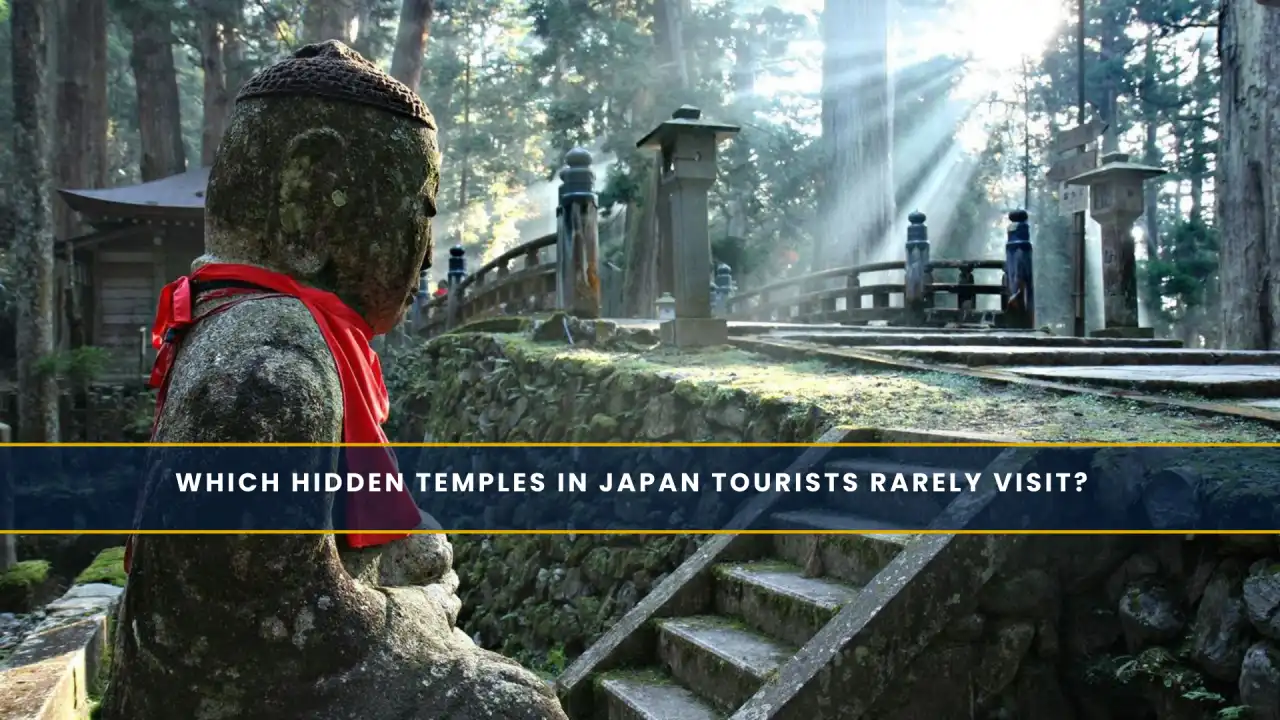
Which Hidden Temples in Japan Tourists Rarely Visit?
Introduction
When people picture Japan for the first time, the same few images usually come up. Kyoto’s big historic temples. The packed crossings in Tokyo. Or those bright red torii gates at Fushimi Inari Taisha that you’ve probably seen in about a hundred travel reels already. And yeah, those places are beautiful. No one’s arguing with that.
But Japan has another side too. A quieter one. It just doesn’t get talked about as much in travel guides or Instagram posts. You’ll find small temples tucked between ordinary houses. Others sit halfway up a hill, where you mostly hear birds instead of people. Sometimes you wander around for twenty minutes and only cross paths with one other visitor, maybe two if it’s a busy day.
Oddly enough, those places tend to stick with you longer. A lot of travelers start realizing this when they begin looking for hidden temples in Japan. The moment you step away from the busiest spots, everything changes a bit. The pace slows down. The air feels calmer somehow. And occasionally you get that strange feeling that you’ve stumbled onto something not many people know about. If you’re the type who enjoys wandering rather than rushing through a checklist, these temples are definitely worth your time.
Why Even Visit Temples That Aren’t Famous?
Let’s be honest. There is a reason why famous temples are famous. They’re impressive. But they’re also crowded. That’s just part of the deal. Often, you can see groups rushing phones aloft, cameras clicking, guides holding sticks or little flags so their people don’t get lost. It can seem more like a busy attraction, less a quiet place.
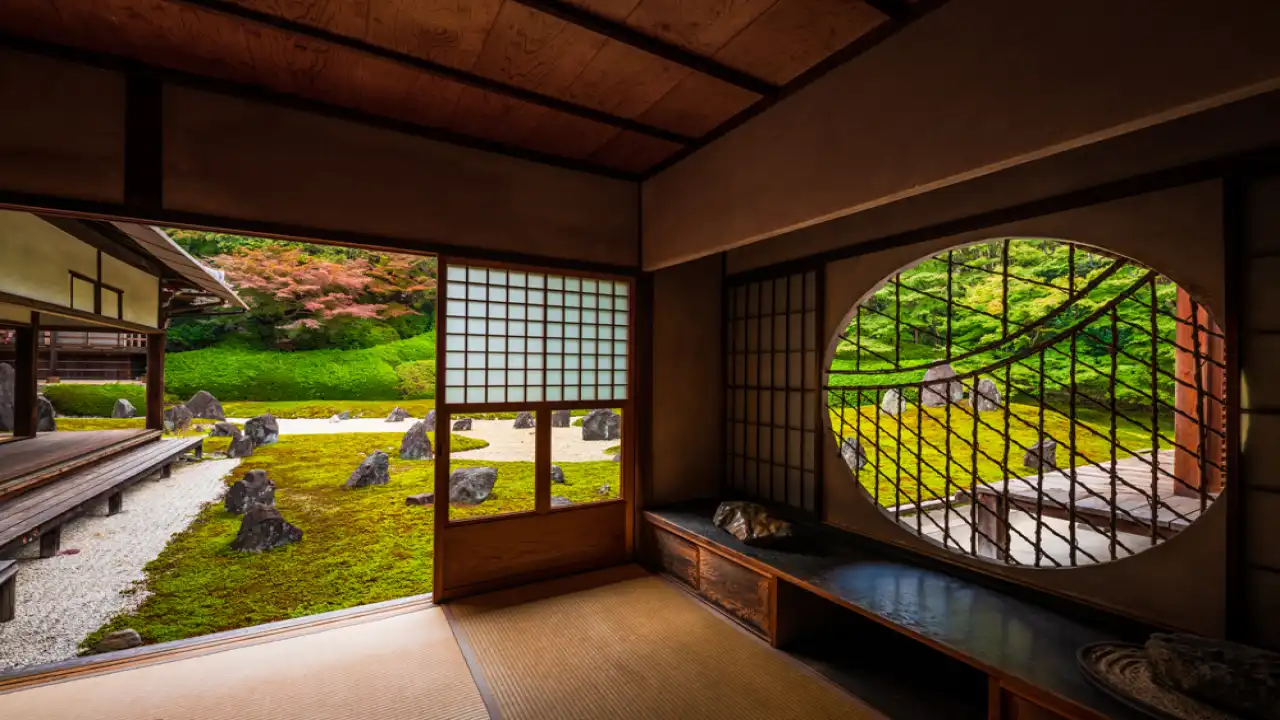
Smaller temples feel different. Imagine a stoned trek, scattered with fallen leaves. Maybe incense smoke drifts from a small prayer hall. Somewhere nearby, a bell rings once, softly, and then the sound slowly disappears. No one is rushing you. Not a single person is pushing past to take photos. These smaller temples have a kind of ambiance that the larger ones sometimes lose.
A few things you’ll notice right away:
- There’s actually space to slow down and look around
- The surroundings feel calmer, almost reflective
- You see everyday temple life happening naturally
- Nature feels like part of the place, not just decoration
Some temples are hidden inside residential neighborhoods. Others are deep in forests or small mountain towns where tourism hasn’t fully reached. And honestly, that’s what makes them interesting.
1. Otagi Nenbutsu-ji – Kyoto’s Temple of Stone Faces
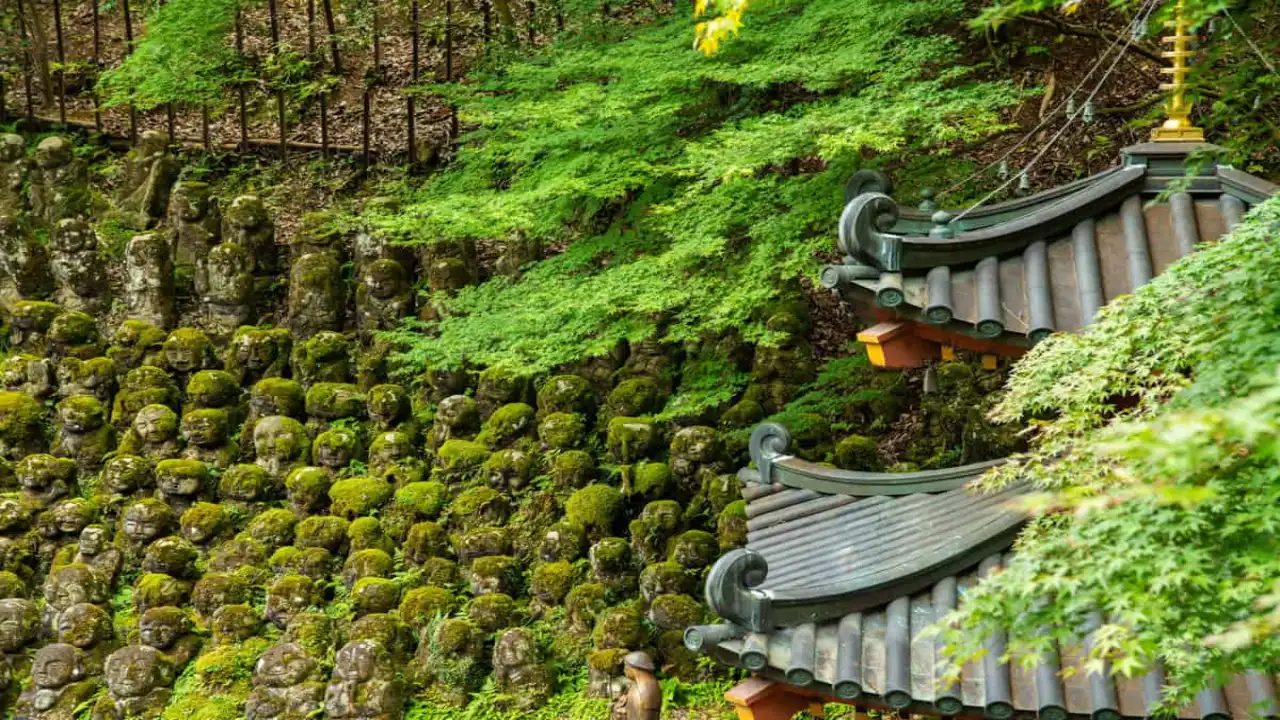
Kyoto alone has hundreds of temples. Seriously, more than most travelers could visit in a lifetime. But most people stick to the same few spots. Which means places like Otagi Nenbutsu-ji remain surprisingly quiet. The temple sits on a hillside, a bit away from Kyoto’s busier districts. Getting there already feels like you’ve wandered off the main tourist path. The first thing you’ll notice? Statues. Lots of them.
More than 1,200 stone figures are scattered across the temple grounds. Each one represents a disciple of Buddha. But here’s the fun part: none of them look alike. Some statues are smiling. Some look thoughtful or serious. A few honestly look like they’re about to laugh. The reason is pretty simple. Many of them weren’t carved by professional sculptors. Different people helped create them, which gave each statue its own personality. Walking through the temple almost feels like wandering through a quiet crowd frozen in time. Travelers interested in offbeat temples in Japan often talk about this place because it feels unusually warm and relaxed compared to Kyoto’s more formal temples.
Things you’ll probably notice while walking around:
- Moss is slowly creeping over some statues
- Narrow paths winding through small trees
- The occasional bird call echoes through the hills
- Very few tour buses or large groups
It’s the kind of place where you naturally lower your voice without realizing it.
Pro Tip:
Try visiting early in the morning. The soft light coming through the trees makes the statues look even more interesting.
2. Nanzoin Temple – A Giant Buddha That Somehow Feels Peaceful
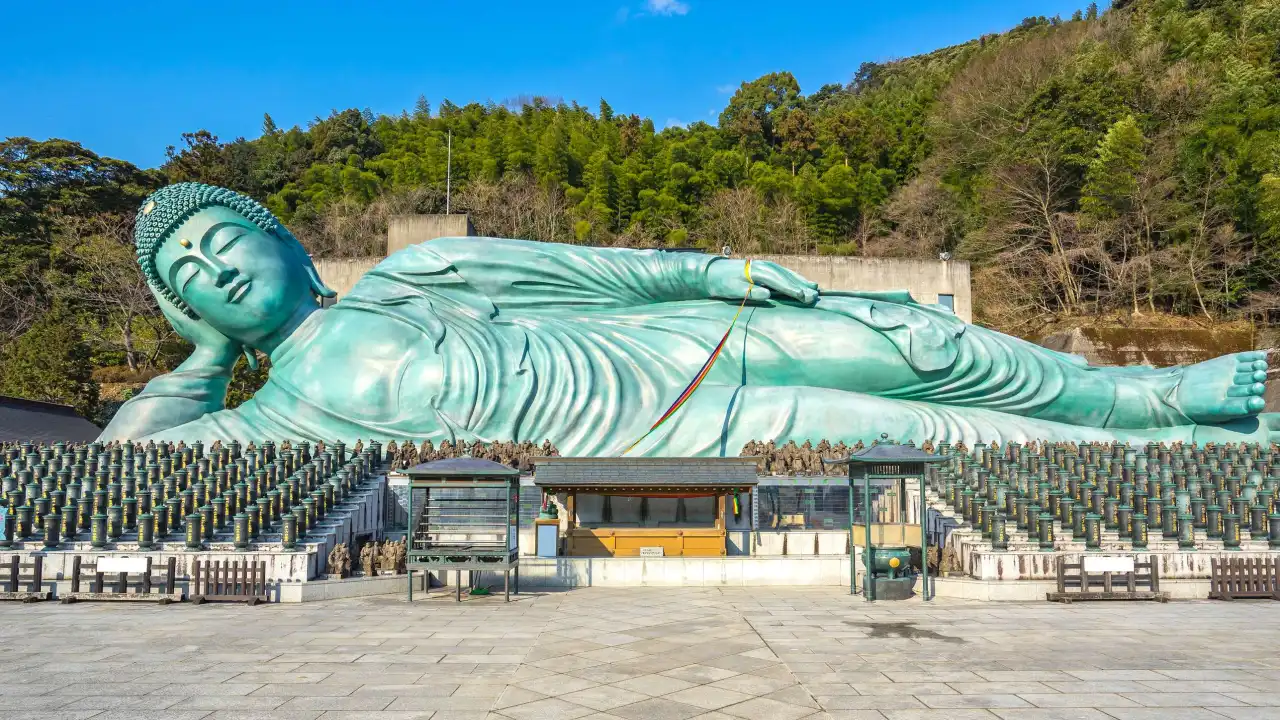
In Fukuoka Prefecture, you can find Nanzoin Temple, where something pretty massive lives. A reclining Buddha statue. Something this massive should draw huge crowds, right? Strangely, it often doesn’t. The statue is about 41 meters long, making it one of the largest bronze reclining Buddha statues in the world.
But the environment still appears calm on most days. That’s partly because of how you arrive at it. The temple complex is accessed along a forest path, so reaching it requires a stroll past smaller shrines, stone lanterns and tranquil little prayer spots. When you finally encounter the giant statue, it feels as if the journey brought you there for a reason.
Along the way, you’ll likely pass:
- Old stone lanterns lined the path
- Smaller temple buildings tucked into trees
- Shaded walking trails
- Local visitors stopping briefly to pray
Despite its size, the Buddha statue somehow doesn’t feel overwhelming. It feels peaceful. Hard to explain, but you notice it when you’re there.
Pro Tip:
Look underneath the Buddha’s feet. Visitors sometimes place coins there for luck.
3. Yamadera – The Temple That Makes You Work for the View
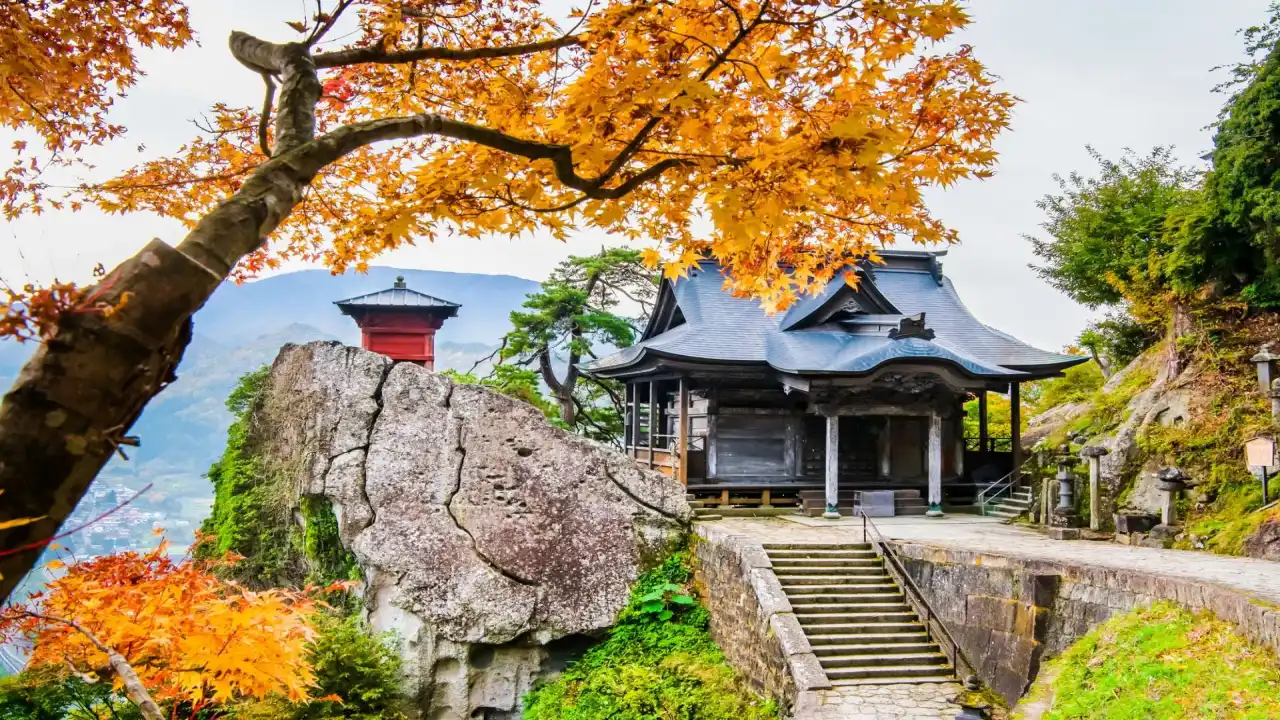
Some temples are easy to reach. Others make you climb a thousand steps first. Down in Fukuoka Prefecture, you’ll find Nanzoin Temple, home to something quite massive, a reclining Buddha statue. The statue stretches for approximately 41 meters in length, making it one of the largest bronze reclining statues of Buddha on earth. But things still mostly seem placid in the vicinity, as the temple complex trails through woods past smaller shrines, stone lanterns, and serene prayer spots.
Yamadera belongs squarely in the second category, a mountaintop temple in Yamagata Prefecture reached by climbing over 1,000 stone steps. The path passes through towering cedar trees and tiny shrines built into cliffs, where most people stop halfway as the valley view begins to unfold. The top of the valley opens beneath you, and travelers seeking lesser-known temples in Japan often love Yamadera for its mix of history and adventure.
Things you’ll see along the climb:
- Wooden temple buildings perched on cliffs
- Small prayer halls hidden among trees
- Quiet viewpoints overlooking the valley
- Stone steps worn smooth from centuries of footsteps
It’s one of those places that naturally forces you to slow down.
Pro Tip:
Wear good shoes. Those steps go on longer than you expect.
4. Motonosumi Shrine – A Red Gate Path Facing the Ocean
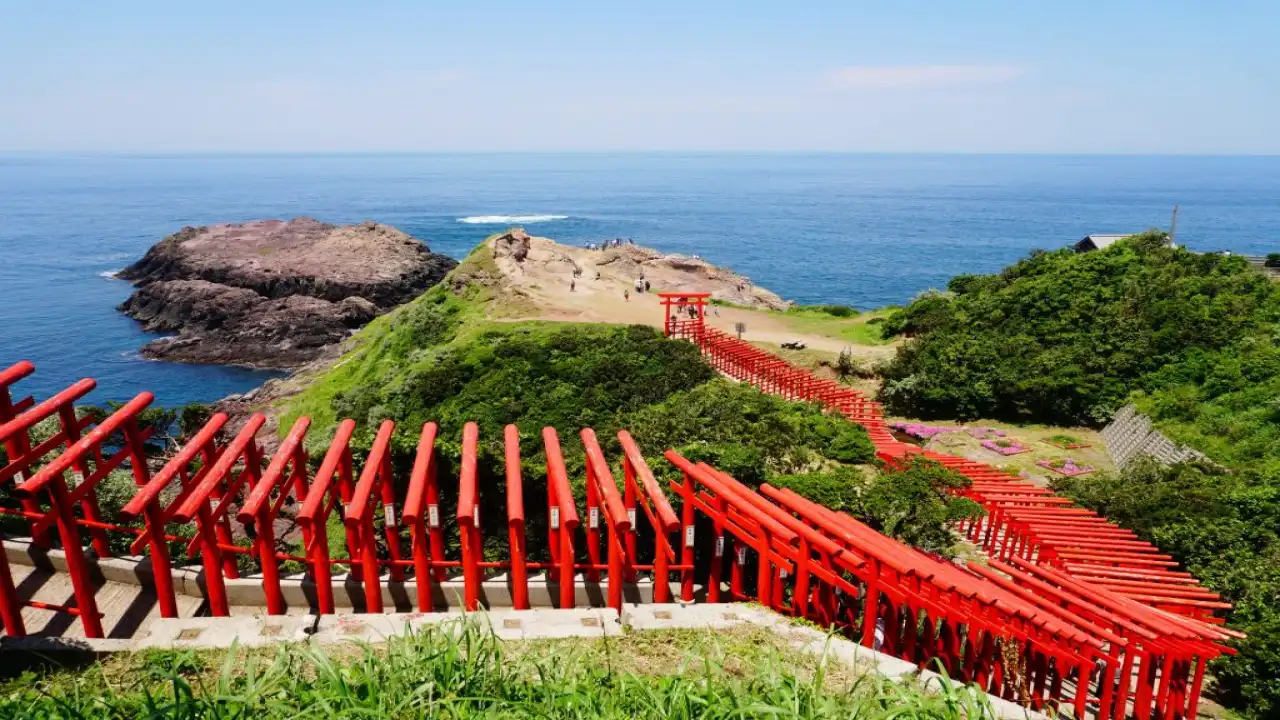
Technically speaking, Motonosumi Shrine isn’t a temple. It’s a shrine. Still, it deserves a spot here because the setting is honestly incredible. The shrine sits along the coast in Yamaguchi Prefecture, where 123 bright red torii gates form a winding path toward the sea. Some travelers compare it to Fushimi Inari Taisha. The gates look similar, sure but the feeling couldn’t be more different. Instead of crowds climbing the hill, you mostly hear waves crashing below and wind moving through the gates.
Standing there, you see:
- Red gates stretching down a grassy hillside
- Blue ocean meeting the horizon
- Green cliffs surround everything
It’s the kind of view that makes you stop mid-walk just to stare for a minute. And oddly enough, it’s still not on many standard travel itineraries.
Pro Tip:
Visit near sunset if you can. The colors over the ocean are unreal.
5. Hōgon-ji Temple – A Temple on a Quiet Island
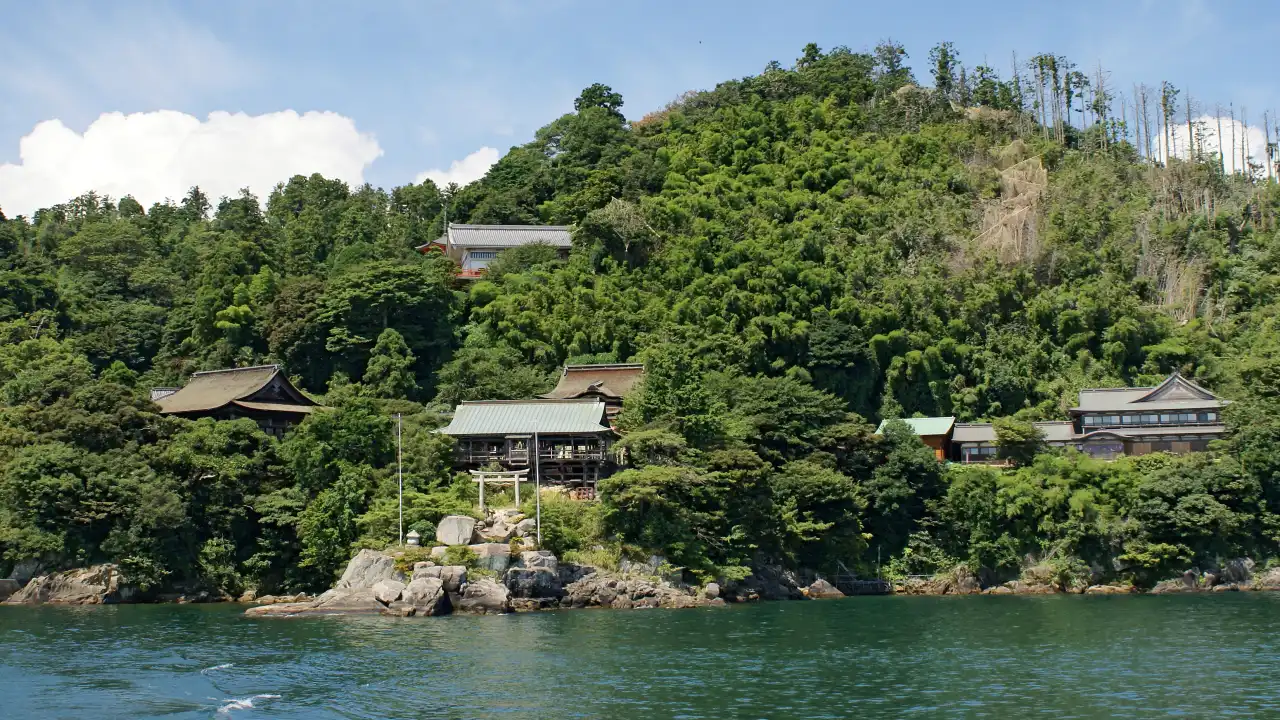
Japan’s largest lake, Lake Biwa, hides a small island called Chikubu Island. And on that island sits Hōgon‑ji Temple. Just getting there feels like part of the adventure. You take a ferry across the lake, and slowly the island appears in the distance, mostly trees, a few temple roofs peeking through.
The temple itself is more than 1,300 years old and dedicated to Benzaiten, a goddess linked to music and knowledge. Once you step onto the island, things feel strangely peaceful. You might hear water tapping gently against rocks. Or the faint sound of bells from somewhere higher up the hill.
Walking around, you’ll notice:
- Wooden temple halls surrounded by thick trees
- Steep stone stairways climbing uphill
- Views across the lake in almost every direction
- A quiet, almost timeless atmosphere
People who visit often say the island feels calmer than they expected.
Pro Tip:
Check the ferry schedule ahead of time. Boats don’t run constantly.
How to Find Quiet Temples Yourself
Japan has thousands of temples. Most of them aren’t famous. And honestly, finding them yourself can be part of the fun.
A few simple tricks help:
Walk away from major attractions
Sometimes a quiet temple is only a few streets away from a crowded landmark.
Ask locals
Shop owners and small hotel staff usually know peaceful spots nearby.
Visit mountain towns
These areas often have beautiful temples that tourists rarely reach.
Start early in the morning
Even busy temples feel completely different before the crowds arrive.
The Moments You Actually Remember
Funny thing is, the most memorable parts of these temples usually aren’t the buildings. They’re the little things. You might see a monk slowly sweeping leaves off a stone path. Or watch incense smoke drifting out of a prayer hall window. Sometimes a cat is sitting near the entrance like it owns the entire place. And now and then, you notice a local visitor quietly bowing before leaving. Those small moments don’t feel like tourist attractions. They feel more like tiny glimpses into everyday life. One traveler once described it perfectly: visiting a quiet temple in Japan feels less like sightseeing and more like borrowing a peaceful moment from someone else’s routine.
Conclusion
Japan’s gorgeous temples certainly deserve the attention they get, but they’re only part of the bigger picture. Across the country, smaller temples continue their traditions quietly, far from tour groups and flashing cameras. Travelers exploring Japan through International Packages often find these peaceful spots to be the most memorable part of their journey.
That changes your trip a bit, visiting places like these. You notice details more. You walk more slowly. You begin to enjoy the ambience instead of simply ticking off locations. And funnily enough, the places you came very close to missing like that ill-placed, quiet temple down a path through a forest or halfway up a mountain invariably become the memories that stay the longest.
Planning Your Temple Visits
If temples are an important part of your travel plans, it might help to group these along your route in Japan. Travel junky provides Japan trip packages that include both famous landmarks and cultural destinations that are less well-known. It’s a good way to mix the classic tourist destinations with the more personal ones.
A few small things to remember when visiting temples:
- Many temples close earlier than you might expect
- Modest clothing is appreciated
- Photography isn’t always allowed inside buildings
- Small donations are common at prayer areas
Mostly, it just comes down to being respectful.