The Rise of the Fallcation: Why September to November Is the New Peak Travel Season
People say, “Fall season is a second spring where every leaf is a flower”
And I tend to agree. Whether it's a song by Taylor Swift or a Bollywood couple dancing against the backdrop of maple leaves, we have romanticised the fall season a lot. Then why just stick to songs & screens when we can experience fall like a main character? Which is why the question of the best places to visit in autumn now gets asked in early September rather than in a panic in late October, when flights to Osaka have already doubled.
What does fallcation mean?
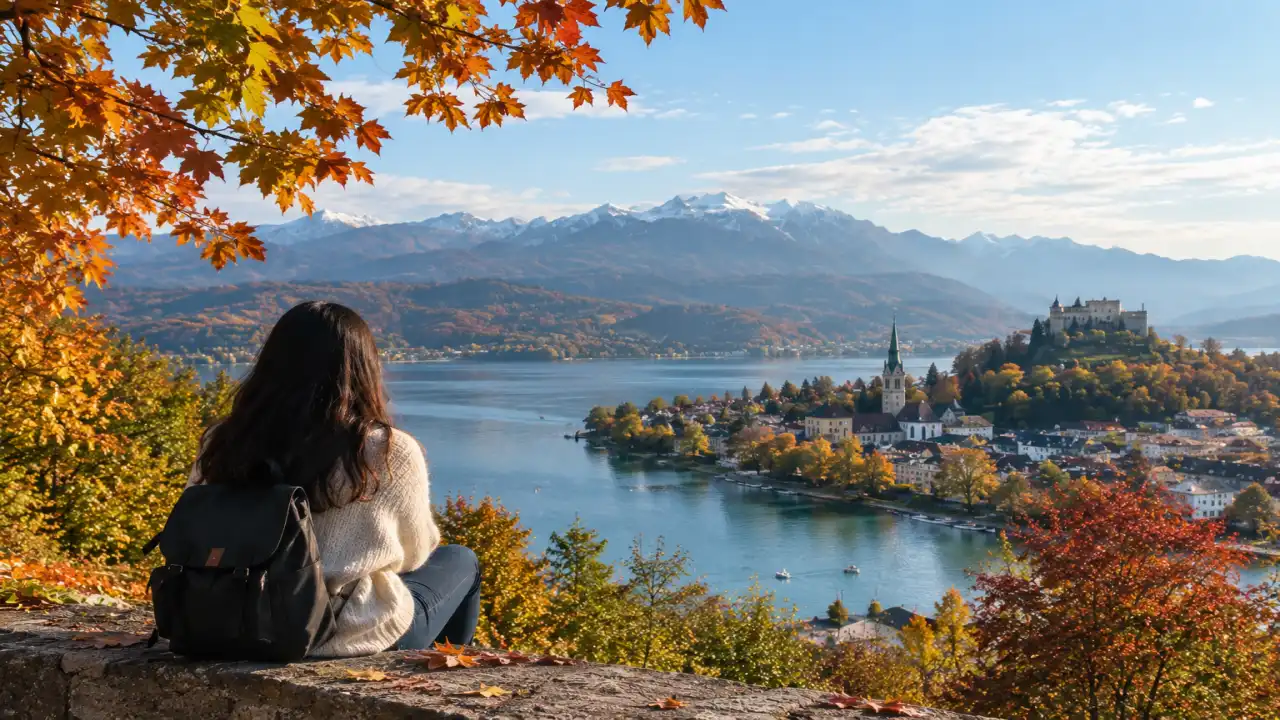
A fallcation is a holiday planned during the autumn months, roughly September through November, timed so you experience the destination during its fall season rather than despite it. In practice, it means choosing where to go based on what is actually happening on the ground those weeks: leaves turning, grapes coming in, saffron being picked, festival calendars filling, café menus switching over to chestnut and persimmon.
What follows covers where to go, what is worth doing beyond photographing maple trees, which month suits which destination, what to pack, and where autumn travel falls short.
Quick highlights
- Peak foliage runs from late September (alpine Europe, northern New England) to late November (Kyoto, Kashmir's chinar groves).
- Shoulder-season pricing is real in Europe, unreliable in Japan and Korea, irrelevant during festival weeks.
- Daylight shortens fast above 50 degrees latitude. Edinburgh loses roughly four hours of usable light between September and late November.
- Post-monsoon India, October onward, is the most underrated autumn window.
10 Best Places to Visit in Autumn for a Fallcation
1. Kyoto, Japan: Autumn Colours and Traditional Japan
Best time to visit: Mid-November to the first week of December
Best for: Foliage, temples, tea culture, seasonal food
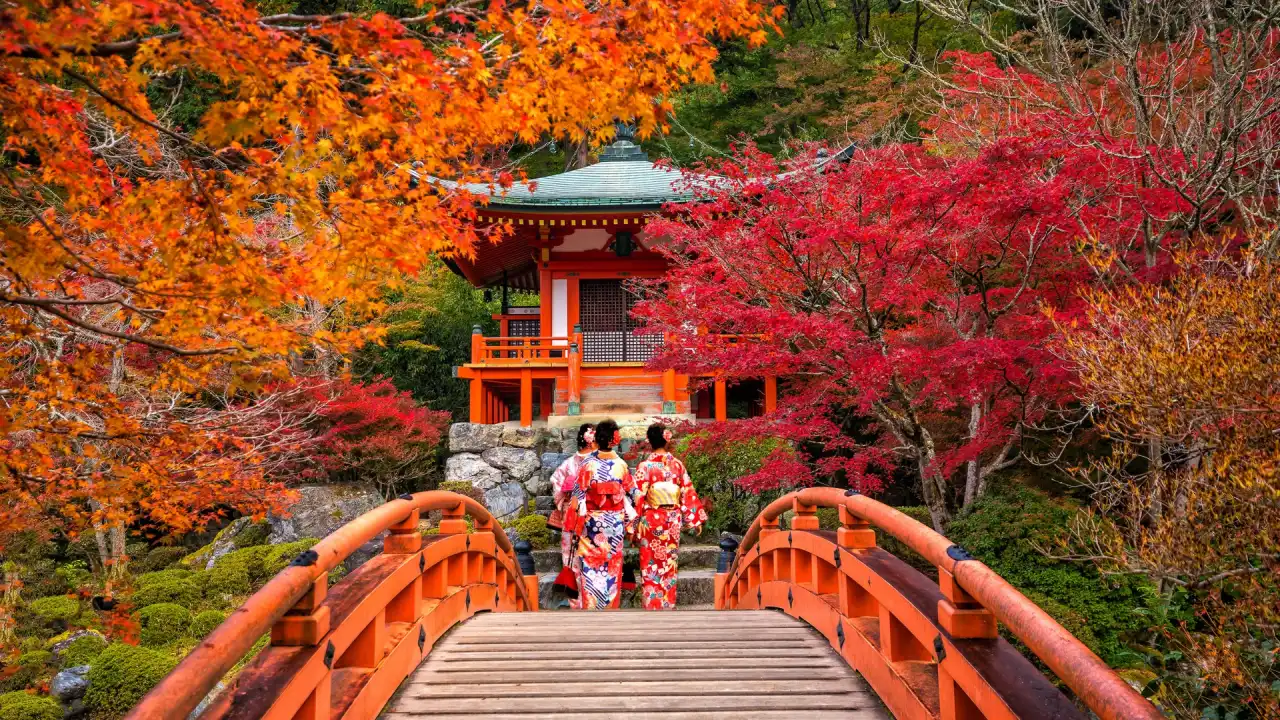
Kyoto's momiji season runs later than most people plan for. The first week of November is usually still green in the city centre; the reliable window is 15 November to 5 December, with the northern hills turning a week earlier than the basin.
Tofuku-ji is the famous one, with several hundred maples crowding the ravine below Tsutenkyo Bridge. Photography is prohibited on the bridge itself during peak season, which surprises people. For fewer crowds, take the Eizan Line north towards Kurama; the stretch between Ichihara and Ninose stations is a maple tunnel, and the train slows through it with the interior lights off after dark.
What to do during your fallcation:
- Reach Tofuku-ji before 8:30 am
- Walk the Philosopher's Path from Ginkaku-ji towards Nanzen-ji
- Order matsutake dobin mushi or kuri gohan
- Sit down at Kaikado Café in a converted machiya
- Do one evening illumination, not four
Don't miss: The Kurama to Kibune hill walk, about two hours, ending at a riverside inn. Fallcation tip: Book accommodation by June. Kyoto's November rates are set early, and they do not come down.
Suggested Read: What Japanese Street Foods Should You Try First?
2. New York City, USA: Central Park Foliage and Café Weather
Best time to visit: Late October to the second week of November
Best for: City walking, cafés, museums, neighbourhood wandering
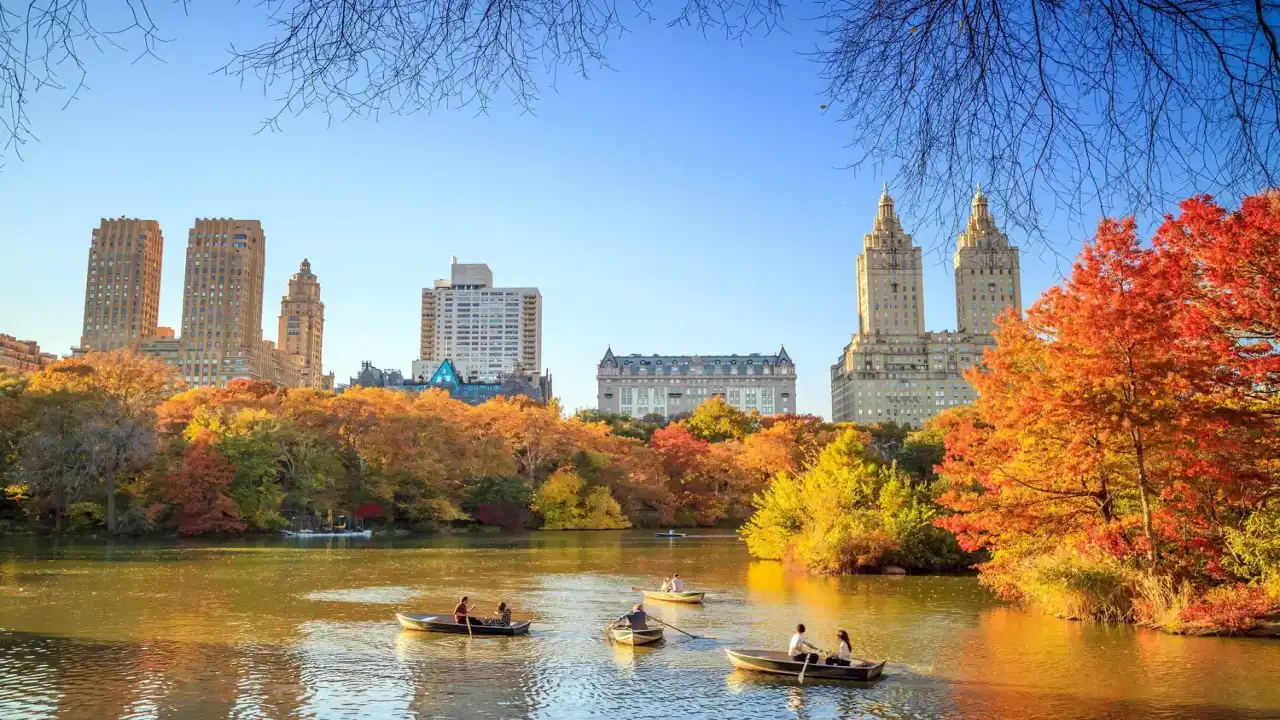
New York peaks later than the rest of the Northeast because the city holds heat. Central Park's north end, around the Ravine and Harlem Meer, colours before the south, and the Ramble has the highest density of old oaks and maples. Fort Tryon Park near the Cloisters is quieter, with the Hudson below it. Otherwise, this is café and market season: Union Square Greenmarket runs Monday, Wednesday, Friday and Saturday through autumn with apples from upstate orchards.
What to do during your fallcation:
- Walk Central Park north to south, not the reverse
- Cross Brooklyn Bridge at 7 am
- Spend a wet afternoon at the Met or the Frick
- Try apple cider doughnuts at a greenmarket stall
Don't miss: Wave Hill in the Bronx, a public garden with a view most visitors never see. Fallcation tip: The New York City Marathon (first Sunday of November) closes streets across all five boroughs. Plan around it or plan into it.
3. Seoul, South Korea: Palaces, Ginkgos and Café Streets
Best time to visit: Late October to mid-November
Best for: Foliage, palaces, café culture, seasonal food
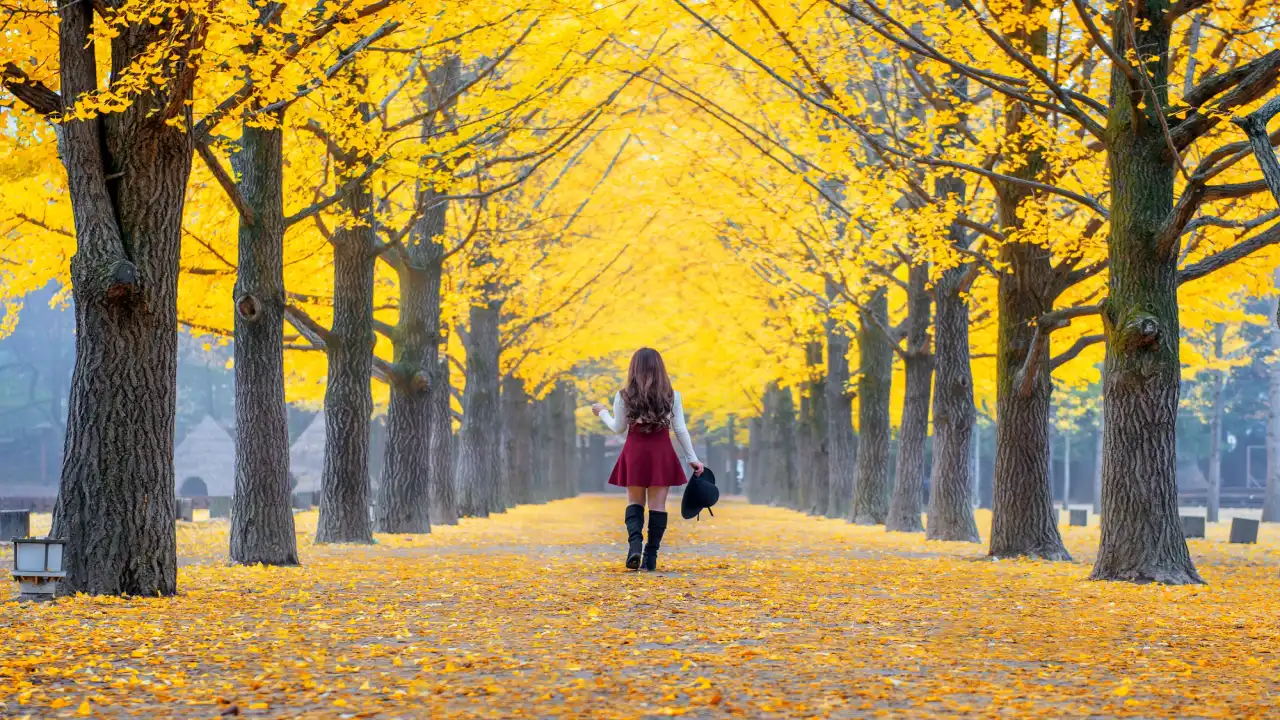
Korea's colours arrive from the northeast and move south. Seoraksan peaks around mid-October, Seoul about three weeks later. In the city, the Deoksugung stone wall road turns solid yellow with ginkgo, Seoul Forest holds colour late, and Changdeokgung's Huwon, the rear garden, is the best of the palace grounds. Huwon needs a separate timed ticket and they sell out. For a proper hike, Bukhansan National Park sits inside the city limits, subway to Gupabal.
What to do during your fallcation:
- Book a Huwon garden slot in advance
- Walk Deoksugung-gil in the late afternoon
- Eat jeon and makgeolli on a cold evening
- Visit Fritz Coffee Company in Wonseo-dong
Don't miss: Gimjang season in late November, when apartment blocks collectively make kimchi.
Fallcation tip: Indian passport holders need a visa for South Korea. Apply four to six weeks out.
4. Bavaria, Germany: Alpine Roads and Harvest Season
Best time to visit: Mid-September to late October
Best for: Road trips, mountain villages, beer and food culture
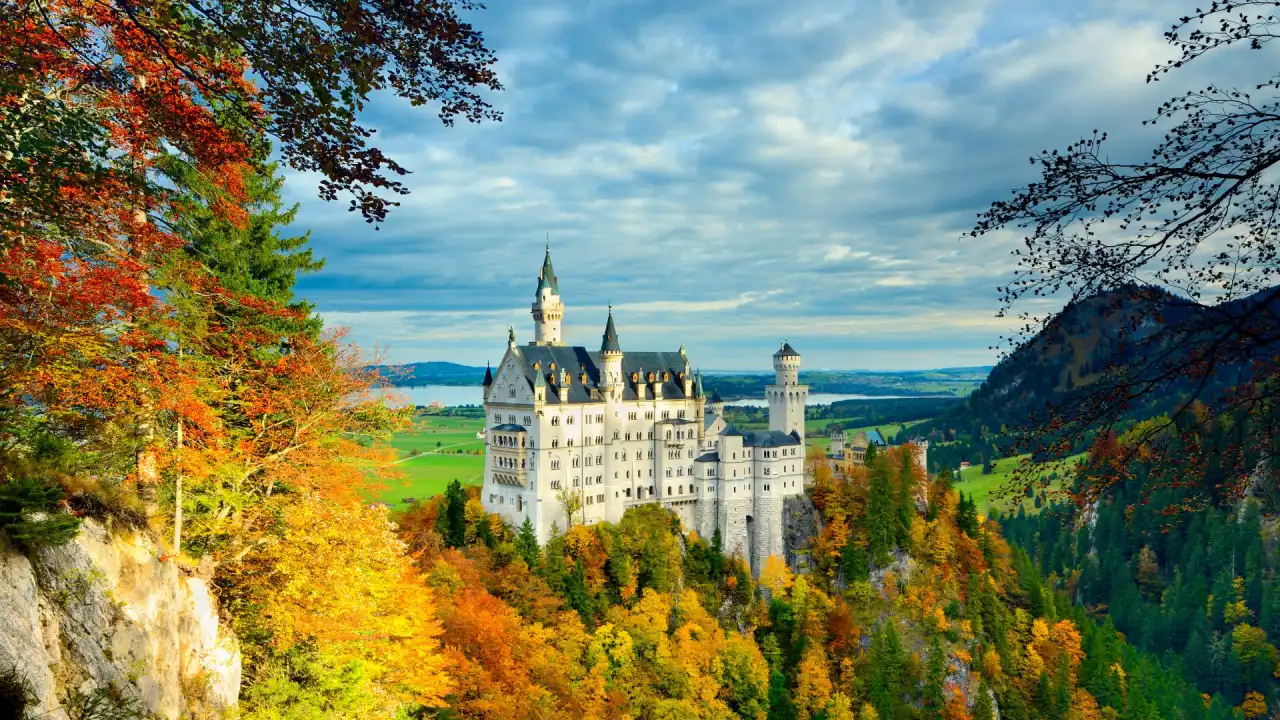
The Alpine Roads of Germany run roughly 450 km from Lindau on Lake Constance to Berchtesgaden, and early October is its best stretch: larch turning gold above the passes, cattle coming down from summer pasture in decorated processions called Almabtrieb, mostly mid to late September.
Berchtesgaden National Park is the highlight. Take the electric boat across Königssee to St. Bartholomä. Near Garmisch-Partenkirchen, the Partnachklamm gorge walk takes about forty minutes each way.
What to do during your fallcation:
- Drive the Alpenstraße over three or four days
- Ride the Zugspitze cable car on a clear morning
- Eat Zwetschgendatschi, the plum sheet cake, while it is still in season
- Time a visit around an Almabtrieb procession
Don't miss: Oktoberfest, which confusingly runs mid-September to the first Sunday of October in Munich.
Fallcation tip: Königssee boat frequency drops steeply from November. Check the timetable before committing to a late-autumn trip.
5. New England, USA: The Classic Foliage Run
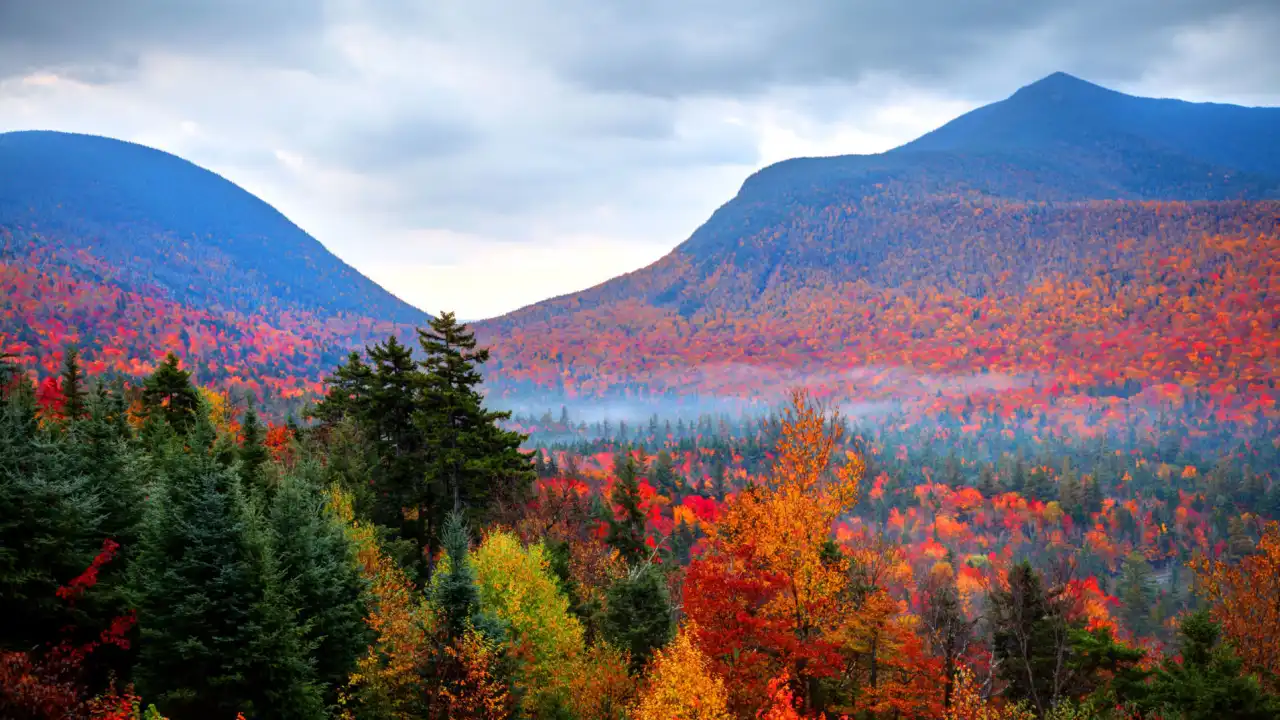
Best time to visit: Last week of September (north) to mid-October (south)
Best for: Scenic drives, small towns, harvest food
Peak colour moves south at roughly 50 km a day. Northern Vermont and the White Mountains turn from about 25 September; the Berkshires and coastal Connecticut hold out until the third week of October.
The Kancamagus Highway, Route 112 between Lincoln and Conway in New Hampshire, is the signature drive: 55 km, no services on it, stops at Sabbaday Falls and Rocky Gorge. Vermont's Route 100 through Stowe does the same job with more farm stands. Acadia adds coastline, though the Cadillac Mountain summit road now needs a vehicle reservation.
What to do during your fallcation:
- Drive the Kancamagus on a weekday
- Walk a covered bridge loop near Woodstock, Vermont
- Buy cider and doughnuts at a working orchard
- Ride the Mount Washington Auto Road while it is still open
Don't miss: Smugglers' Notch, Route 108, which closes for winter usually in late October. Fallcation tip: Foliage weekends sell out inns a year ahead. Midweek is cheaper, emptier, and easier to drive.
6. Prague, Czech Republic: Riverside Walks and Wine Season
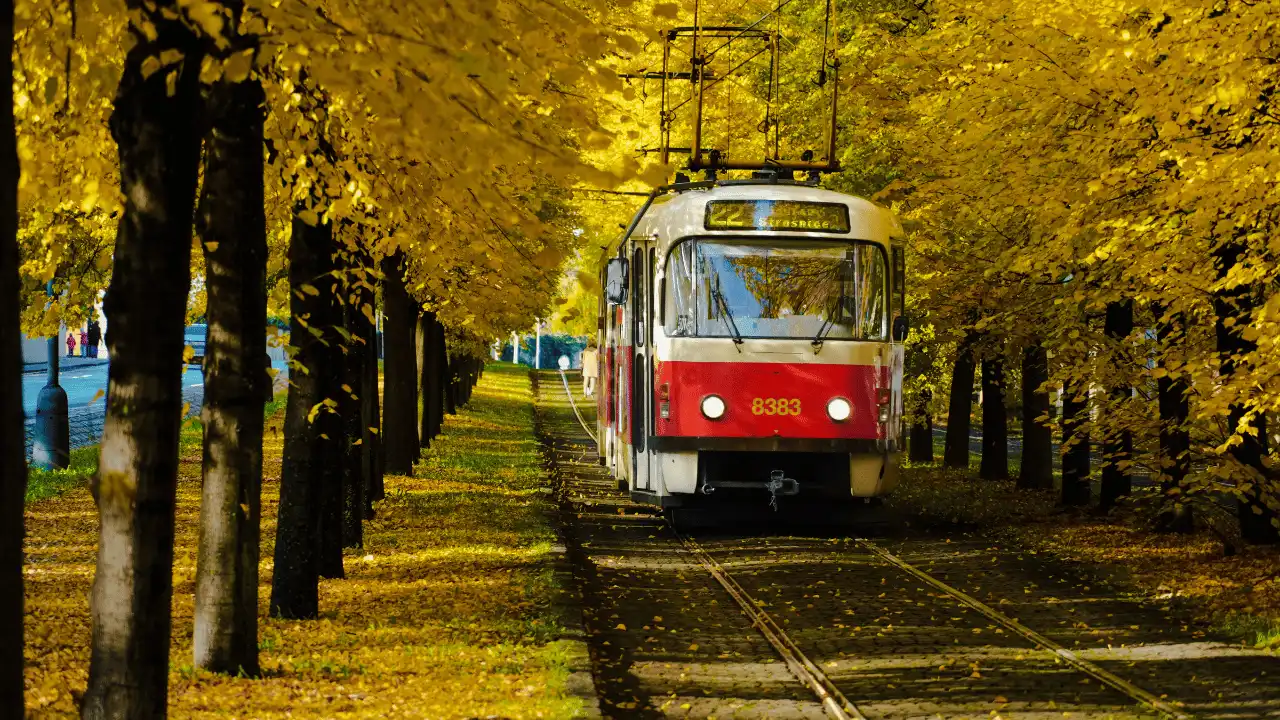
Best time to visit: Late September to early November
Best for: Architecture, walking, cafés, cultural events
Prague in autumn is grey more often than gold, and that suits it. Petřín Hill and Letná Park give you the skyline with colour in front of it, Stromovka is where locals actually go, Vyšehrad is the quiet counterweight to Charles Bridge.
Food turns heavy and good: roast duck with red cabbage, svíčková, and from 11 November, St. Martin's Day goose with that year's young wine. Signal Festival in mid-October lights up buildings across the centre for four nights.
What to do during your fallcation:
- Cross Charles Bridge before 7:30 am
- Sit for an hour at Café Louvre or Kavárna Slavia
- Walk the Vltava embankment from Rašínovo nábřeží
- Take the funicular up Petřín
Don't miss: The Sunday farmers market at Náplavka on the river embankment.
Fallcation tip: Prague is Schengen. If Paris is also on the list, one visa covers both.
7. Paris, France: Parks, Museums and Chestnut Season
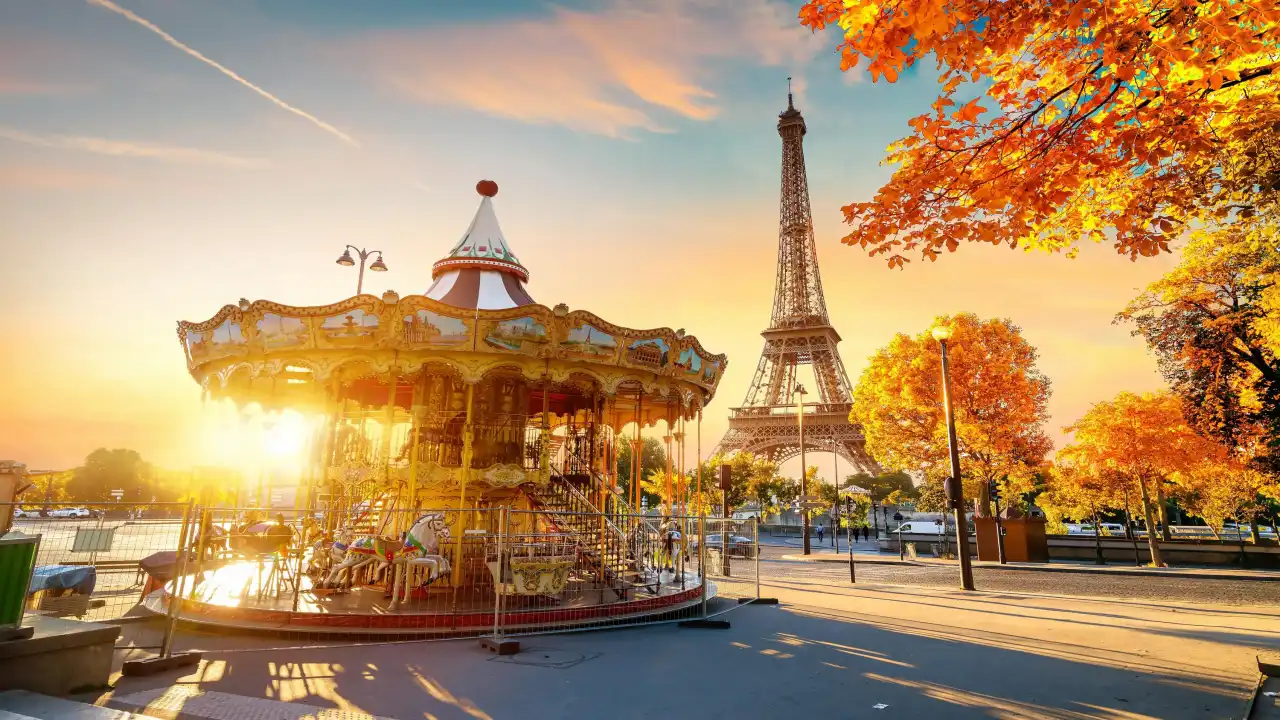
Best time to visit: October to mid-November
Best for: Cafés, museums, parks, seasonal eating
Parisian autumn is short and specific. Plane trees in Jardin du Luxembourg and the slopes of Parc des Buttes-Chaumont turn through late October; Bois de Vincennes and Parc Montsouris are the low-crowd options.
The eating calendar is the real reason to come now. Oysters return properly, game appears on bistro menus, roasted chestnuts show up on street corners. Montmartre's Fête des Vendanges, its grape harvest festival, takes over the hill in mid-October.
What to do during your fallcation:
- Walk the Coulée Verte from Bastille
- Do the Musée d'Orsay on a Thursday evening
- Sit outdoors under a heater on Canal Saint-Martin
- Get coffee at Ten Belles or Fragments instead of a tourist terrace
Don't miss: Nuit Blanche, the all-night arts event in early October.
Fallcation tip: Museums close on either Monday or Tuesday, and rarely the same day as each other. Check before you build a day around one.
Suggested Read: Obsessed With Emily in Paris? 10 Places in Paris You Need to See IRL
8. Edinburgh, Scotland: Short Days, Long Walks
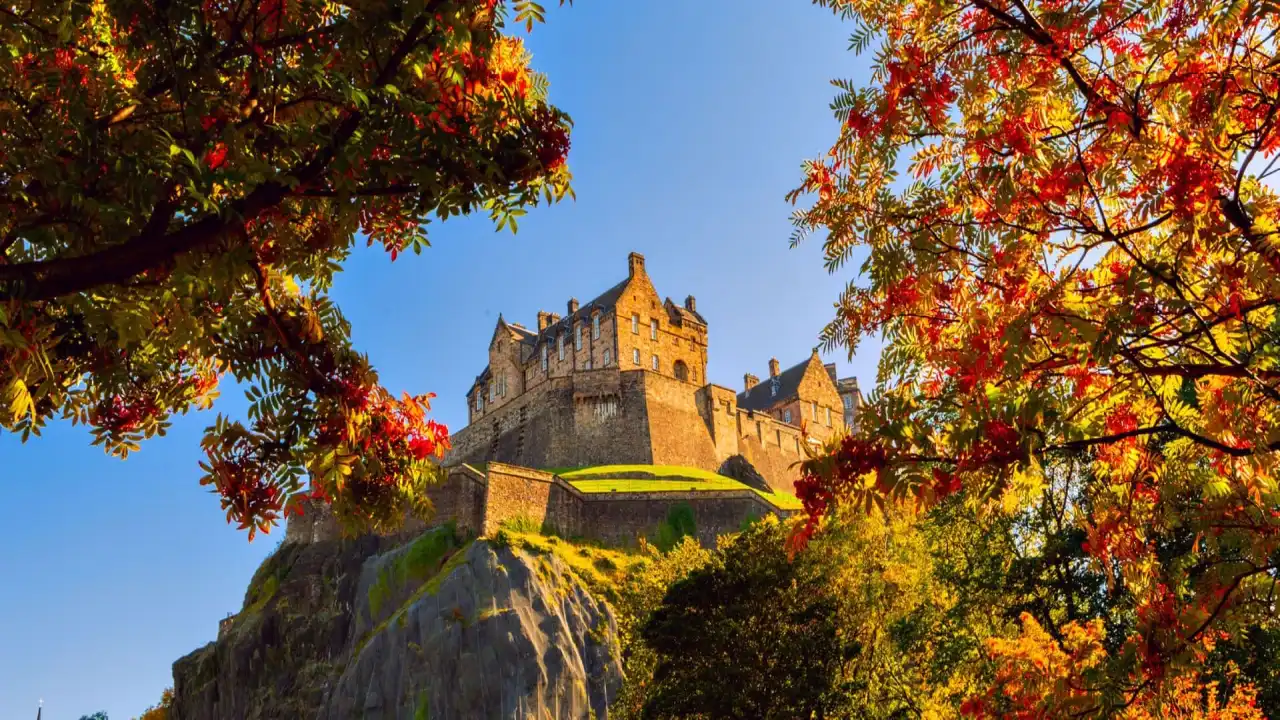
Best time to visit: Late September to early November.
Best for: City walking, Highlands day trips, whisky, cold-weather cafés
The festival crowds leave at the end of August, and the city becomes itself again. Climb Arthur's Seat, walk the Water of Leith through Dean Village, give the Royal Botanic Garden an afternoon; its collection holds colour into November.
For foliage, get out of town. The Hermitage at Dunkeld, 90 minutes north, has Douglas firs, a gorge walk and Black Linn Falls, where salmon run upriver in October.
What to do during your fallcation:
- Walk Calton Hill at sunset, which by November is around 4 pm
- Take the train to Dunkeld and Birnam for the day
- Sit out the rain in a Stockbridge café
- Do one distillery, not five
Don't miss: Samhuinn Fire Festival on Calton Hill, 31 October.
Fallcation tip: Daylight collapses quickly here. By late November you get roughly seven usable hours, so front-load outdoor plans.
9. Kashmir, India: Chinar Season
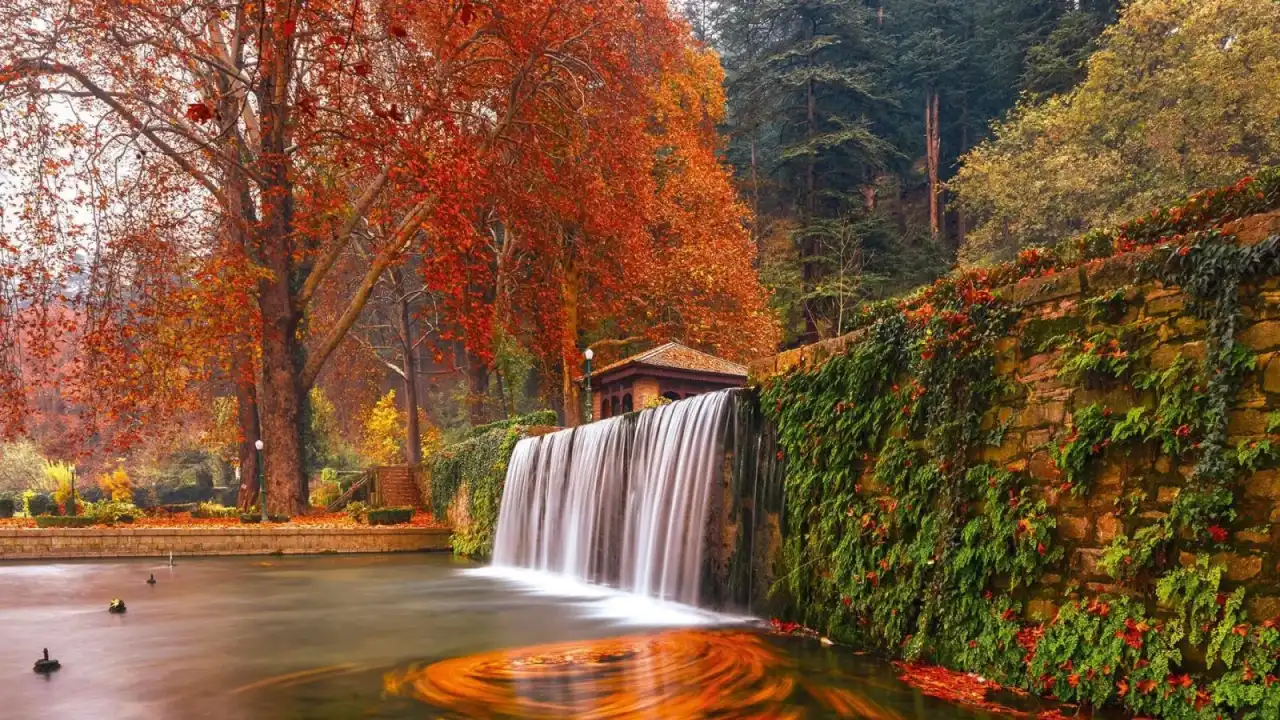
Best time to visit: Late October to mid-November.
Best for: Foliage, food, lakes, slow travel
Kashmir is the strongest domestic answer to the foliage question, and it runs almost exactly opposite to the summer rush. Chinar leaves turn in late October, and Naseem Bagh at Kashmir University, roughly a thousand chinars planted in the Mughal era, is the densest concentration in the valley.
Pampore's saffron fields bloom for about two weeks from late October, a strange low purple landscape worth the short detour from Srinagar. Pahalgam, Betaab and Aru hold poplar and willow colour. Gulmarg's gondola runs with far shorter queues than in winter.
What to do during your fallcation:
- Walk Naseem Bagh in the first week of November
- See the saffron harvest at Pampore
- Take a morning shikara on Dal Lake, before the mist lifts
- Eat a proper wazwan, then drink kahwa afterwards
Don't miss: Nishat Bagh in late afternoon light, with the chinars going copper.
Fallcation tip: Nights drop close to freezing by mid-November. Houseboats vary enormously in heating. Ask specifically.
10. Meghalaya and the Northeast, India: Post-Monsoon Clarity
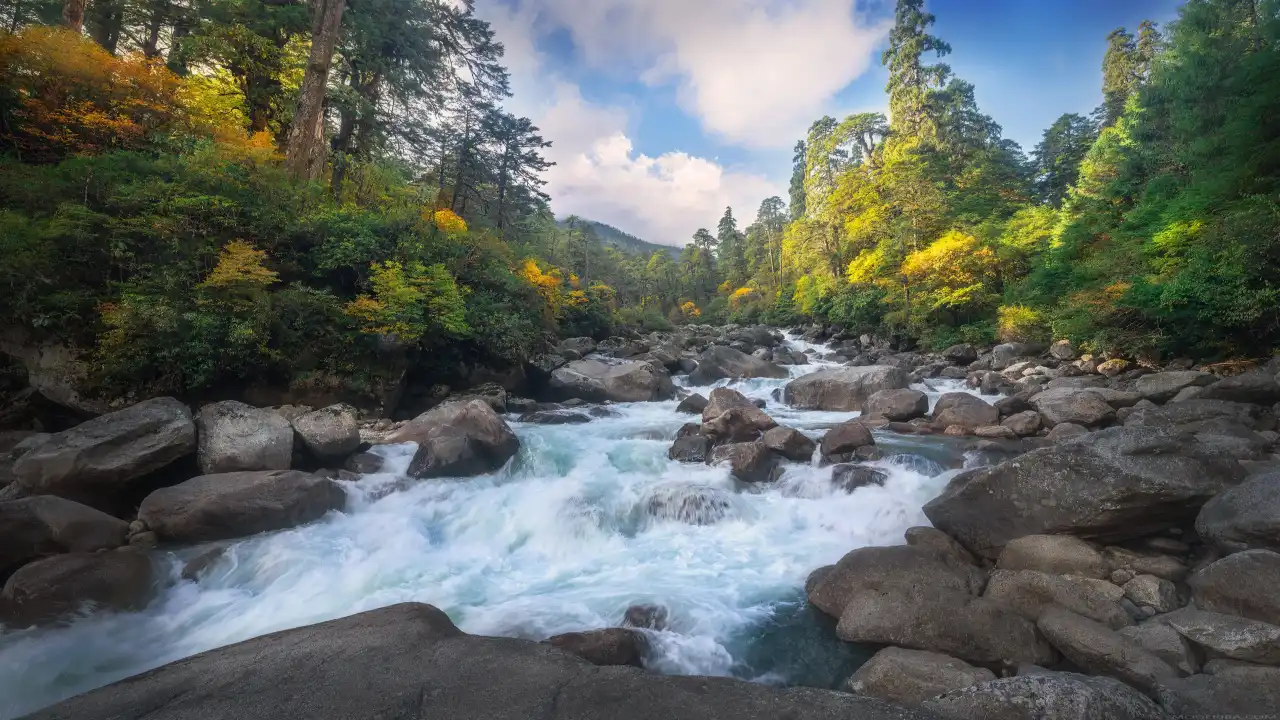
Best time to visit: Mid-October to November.
Best for: Waterfalls, trekking, clear skies, road travel
The monsoon finishes, and the Northeast becomes a different region. Waterfalls are still full, haze is gone, and roads are no longer washing out. Short window, and the best one the region has.
The double-decker living root bridge at Nongriat is a descent of roughly 3,000 steps from Tyrna village; the climb back takes most people two hours. Dawki's Umngot River runs clear enough to see the riverbed. Laitlum Canyons, 25 km from Shillong, is a cliff-edge viewpoint most visitors skip.
What to do during your fallcation:
- Trek to Nongriat and stay overnight rather than day-tripping
- Drive the Shillong to Cherrapunji road slowly
- Visit Mawlynnong and Riwai's single root bridge
- Try jadoh and tungrymbai in Shillong
Don't miss: Sunrise at Laitlum before the cloud fills the valley.
Fallcation tip: Inner Line Permits are required for Arunachal Pradesh and Nagaland. Apply online before travelling.
What to Do on a Fallcation Besides Chasing Autumn Leaves
Find a seasonal café menu. Roasteries change their offer in October. Pumpkin gets overexposed, but chestnut lattes in Seoul, marron desserts in Kyoto, and persimmon anything in Korea are seasonally specific and worth planning around.
Take an autumn food tour. Harvest markets peak now: Náplavka in Prague, Union Square in New York, Viktualienmarkt in Munich.
Plan a scenic road trip. This is the one season when the drive competes with the destination. The Alpenstraße, Route 100, the Kancamagus, the Srinagar to Pahalgam road.
Visit a harvest or autumn festival. Oktoberfest, Fête des Vendanges, Signal Festival, Diwali, Samhuinn, Ziro. September to November is the densest festival stretch of the northern hemisphere year.
Take a photography walk. Light stays low and warm for longer, so the good window runs roughly 7 am to 9 am and again from 4 pm.
Try a seasonal outdoor activity. Vineyard visits in September, hiking in October, salmon-run viewing in the Pacific Northwest.
Best Fall Destinations by Month
Where should you go in September?
Bavaria and the Austrian Alps for Almabtrieb and early larch colour. Prague for burčák. Scotland, before daylight shortens. Northern Vermont and the White Mountains in the final week.
Where should you go in October?
New England at peak, Seoul as colour reaches the city, Paris and Prague at their best, Kashmir from the last week, Meghalaya once the monsoon clears. The broadest month of the three.
Where should you go in November?
Kyoto, unambiguously. Also Kashmir in the first fortnight, New York for late city foliage, southern Japan and Taiwan, and most of India as the post-monsoon season opens.
Best Fall Destinations for Different Types of Travellers
Couples do best in walkable cities with long evenings, hence Kyoto and Prague. Families need short distances between stops, and Bavaria's villages sit close enough together that nobody is stuck in a car for four hours. For budget travellers, the best places to visit in autumn are almost always in Central Europe from late October, when rates drop and the cities are still pleasant.
What to Pack for a Fallcation
Clothing. Layers, because a 16-degree afternoon can be a 4-degree morning. A light insulated jacket, two sweaters, and walking shoes already broken in.
Weather essentials. Compact umbrella, packable rain shell, waterproofing for whatever carries the camera. Edinburgh, Prague, and Kyoto all get real rain.
Travel essentials. Universal adapter, power bank (cold drains phone batteries faster than people expect), reusable bottle, printed visa and insurance copies.
Pro tip: Check the destination forecast about five days out and again the night before you pack, not three weeks ahead. Autumn forecasts past a week are close to useless, and the difference between a dry October week in Prague and a wet one changes what should go in the bag.
Fallcation vs Summer Vacation: Which Is Better?
Neither wins outright. Summer has daylight and reliability; autumn has comfort, food, and better light. The point is only that autumn now deserves treating as a primary travel window rather than a fallback.
How to Plan the Perfect Fallcation
Check the exact foliage period. Japan, Korea, and the US all publish forecast maps that update weekly through the season. Use them before locking flights, because the best places to visit in autumn shift by a week or two every year.
Book the popular things early. Huwon Garden slots, Kyoto illuminations, Cadillac Mountain vehicle reservations, New England inns. These go months out.
Check local events. A festival can double room rates or make the trip. Either way, know first.
Do not build the whole trip around leaves. Keep museums, markets and neighbourhoods in reserve for the days the weather refuses to cooperate.
Choose the destination around the dates. Leave fixed for late November? Kyoto and Kashmir are sensible. Bavaria is not.
Make Fall Your Reason to Travel
Summer does not have to be the default. Autumn offers a different kind of trip: cooler streets, landscapes that shift week to week, harvest menus, festival calendars, and destinations that look nothing like the versions most people photographed in July. The best places to visit in autumn tend to reward planning rather than spontaneity, which is the one real cost of travelling in this window.
Travel Junky builds autumn itineraries around this kind of timing: Kashmir and Northeast India packages sized to the short post-monsoon window, and international routes through Japan, Europe and South Korea planned against foliage dates rather than a generic departure calendar. If the travel dates are already fixed, that is the more useful place to start, and the Travel Junky team can work backwards from there.
Conclusion
We have compiled everything you need to know to plan a perfect fall vacation, and I know all of us want to experience fall with the exact magic we see it on our screens. However, a “perfect tour” comes with a lot of planning and discussions, so leave that part to Travel Junky officials while you focus on what to pack. Fall is a season of fashion, so go grab that flight and serve looks while the background turns golden.
Frequently Asked Questions About Fallcations
What is a fallcation?
A holiday taken during autumn, September to November, planned specifically around what that season offers in a given destination.
Where is the best place to travel in fall?
No single answer, and anyone giving one is guessing. For foliage, Kyoto in late November or northern New England in early October. For food and cities, Paris or Prague. For Indian travellers wanting something short, Kashmir or Meghalaya.
What are the best countries to visit in autumn?
It comes down to about six: Japan for foliage and food, South Korea for city colour, Germany and Austria for alpine road trips, the United States for the classic New England run, the Czech Republic for value, and India for its post-monsoon window.
Where is the best fall foliage in the world?
Kyoto and the Japanese Alps, New England, Ontario and the Canadian Maritimes, Korea's Seoraksan and Naejangsan, the Dolomites, and Kashmir's chinar groves.
Is September a good month to travel?
Yes for Europe, where the weather holds, and crowds have thinned. Less so for Japan and parts of Southeast Asia, where typhoon and monsoon risk is still live.
Is October a good month for international travel?
Arguably the strongest month of the year for it. Broad coverage, moderate crowds, foliage arriving across three continents. Most lists of the best places to visit in autumn are weighted towards October for good reason.
Where should I travel in November?
Kyoto, Kashmir, Taiwan, southern Japan, and most of India.
What should I pack for an autumn holiday?
Layers, a rain shell, proper walking shoes, a power bank, and one warmer item than the forecast suggests.
Is fall travel cheaper than summer travel?
Sometimes, the blanket claim deserves scepticism. Mediterranean Europe and Southeast Asia get cheaper. Japan in November, Munich during Oktoberfest, and New England at peak foliage cost as much as summer, occasionally more.